

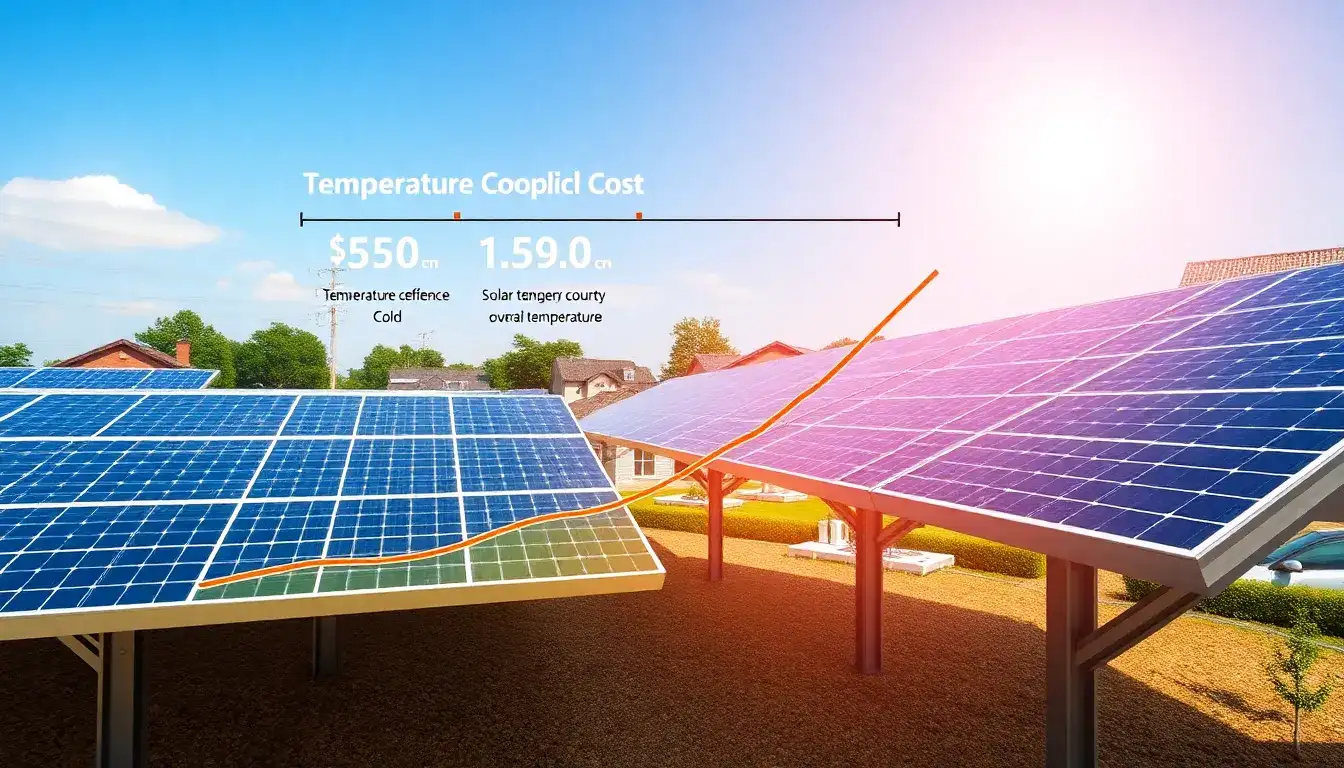
The temperature coefficient of solar panels affects their overall efficiency and, consequently, the cost of solar energy. Here’s how:
- Efficiency Reduction with Temperature Increase: Most solar panels have a negative temperature coefficient, meaning their efficiency decreases as temperature rises. For instance, a common coefficient range is -0.3% to -0.5% per degree Celsius above 25°C (77°F), which can result in lower energy output during hot conditions. This efficiency loss translates into reduced power generation from your solar panel system.
- Energy Production Impact: While the impact of the temperature coefficient on energy production might seem minimal, it adds up over time; especially in climates with frequent high temperatures. For example, if solar panels frequently reach 95°F (35°C), their efficiency might decrease by 3-4% or more compared to their maximum potential at 77°F (25°C). This reduced energy production means homeowners might not maximize their potential savings from solar energy.
- Cost Considerations:
- System Size and Cost: To compensate for efficiency loss, a larger or more efficient solar panel system might be required, increasing upfront costs.
- Performance and ROI: Over time, reduced efficiency due to temperature can impact the return on investment (ROI) for solar systems, potentially extending the payback period.
- Maintenance and Lifetime: The heat can also affect the lifespan of solar panels, though most modern panels are designed to withstand high temperatures without significant degradation.
- Countermeasures and Solutions:
- Cooling Systems: Implementing cooling systems can help maintain optimal temperatures for solar panels, improving efficiency and potentially reducing costs in the long run.
- Advanced Materials and Technologies: Some newer technologies, like Maxeon panels or thin-film solar cells, have lower temperature coefficients, reducing the impact of high temperatures.
In summary, while the temperature coefficient doesn’t directly increase the cost of solar panels, it can affect the overall efficiency and energy production, potentially increasing the system size required or impacting the ROI over time. However, with advanced materials and cooling technologies, these effects can be mitigated.
Original article by NenPower, If reposted, please credit the source: https://nenpower.com/blog/how-does-the-temperature-coefficient-affect-the-overall-cost-of-solar-energy/

