

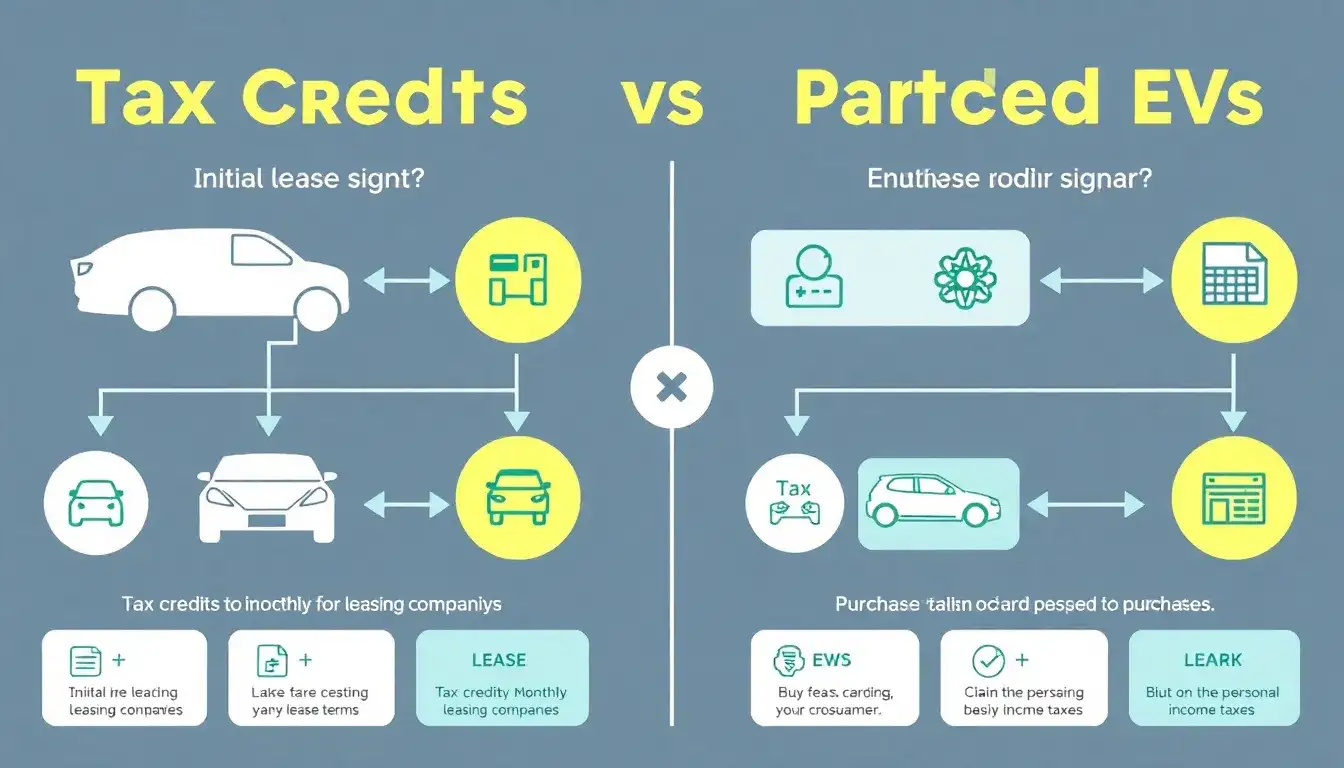
The tax credit process for leased electric vehicles (EVs) differs significantly from that for purchased EVs. Here’s a breakdown of how it works for each scenario:
Purchased EVs
- Eligibility: Purchasers may qualify for a federal tax credit of up to $7,500, depending on whether the vehicle meets certain battery and sourcing requirements.
- Claiming the Credit: To claim the credit, buyers must file IRS Form 8936 with their tax return. The seller typically provides a time-of-sale report, and the vehicle’s VIN is required.
- Benefits: The credit directly reduces the buyer’s tax liability, providing immediate financial relief at tax time.
Leased EVs
- Eligibility: Leased EVs do not qualify the lessee (the person leasing the vehicle) for the federal tax credit. Instead, the credit typically goes to the lessor (the leasing company) if they meet the eligibility criteria.
- Pass-Through Benefits: While lessees do not receive the tax credit directly, leasing companies might pass on some of the savings through lower monthly lease payments.
- Claiming the Credit: The leasing company would handle the tax credit claim, as they are considered the owner of the vehicle for tax purposes.
In summary, while purchasers of EVs can directly claim the tax credit, those leasing EVs are not eligible and may instead benefit from lower lease rates due to savings passed on by the leasing company.
Original article by NenPower, If reposted, please credit the source: https://nenpower.com/blog/how-does-the-tax-credit-process-work-for-leased-evs-compared-to-purchased-evs/

