

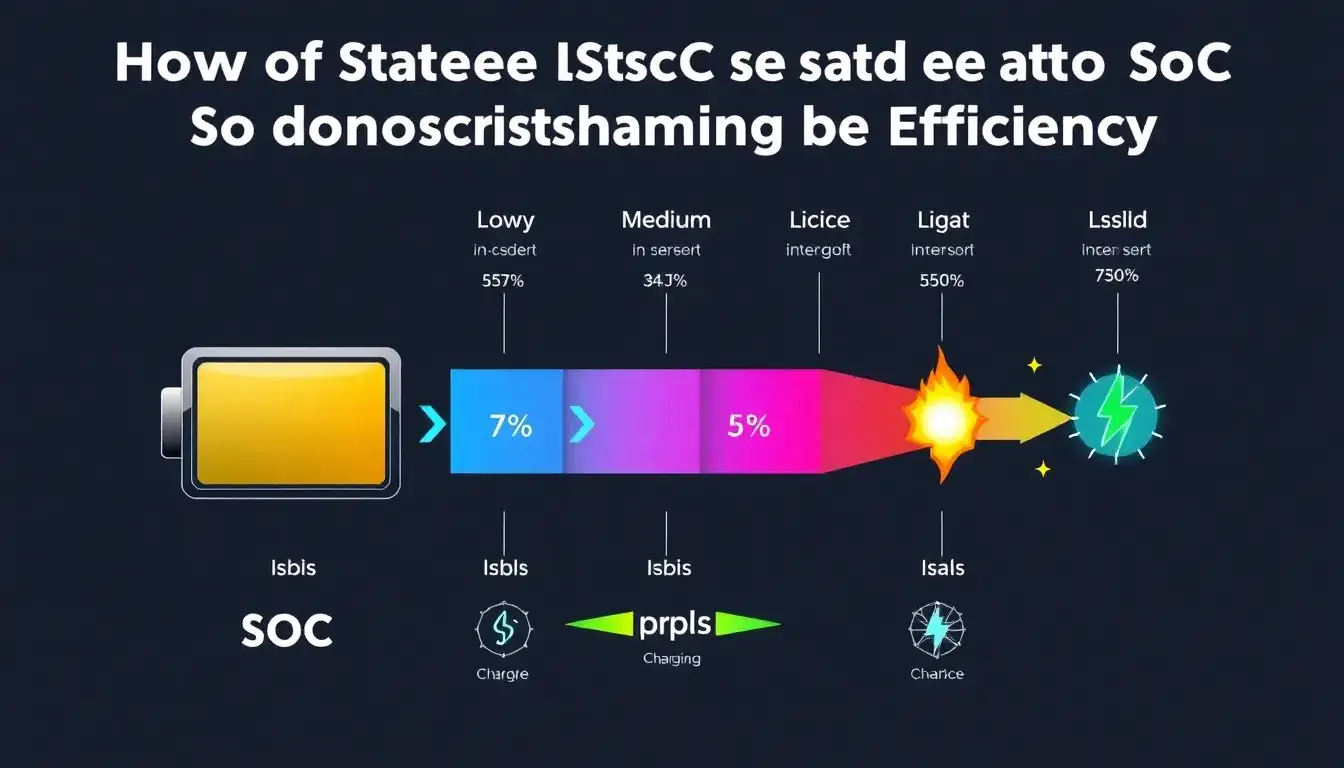
The state of charge (SoC) significantly impacts the charging efficiency of electric vehicle batteries in several ways:
Impact on Charging Efficiency
- Decreased Efficiency at Higher SoC: As the battery’s SoC increases, particularly above 80%, charging efficiency tends to decrease. This is because more energy is lost due to internal resistance, which causes heat dissipation.
- Tapered Charging: To prevent overcharging and damage to the battery, charging speeds are intentionally reduced as the SoC reaches higher levels. This tapered or constant voltage charging ensures that the battery does not overcharge, but it also results in lower efficiency during the final stages of charging.
- Optimal Charging Power: Studies suggest that there is an optimal charge power at which efficiency is maximized. Too much current can reduce efficiency, indicating a “Goldilocks zone” for charging, where neither too high nor too low power is ideal.
Factors Influencing SoC and Charging Efficiency
- Charge and Discharge Current: The speed at which a battery is charged or discharged affects its SoC. High currents can lead to faster charging but also increase energy losses.
- Charging Voltage: A higher charging voltage can increase SoC faster but must be controlled to avoid overcharging, which can decrease efficiency.
In summary, managing the SoC is crucial for optimizing charging efficiency, as both the charging rate and efficiency are influenced by the battery’s current state of charge.
Original article by NenPower, If reposted, please credit the source: https://nenpower.com/blog/how-does-the-state-of-charge-soc-impact-charging-efficiency/

