

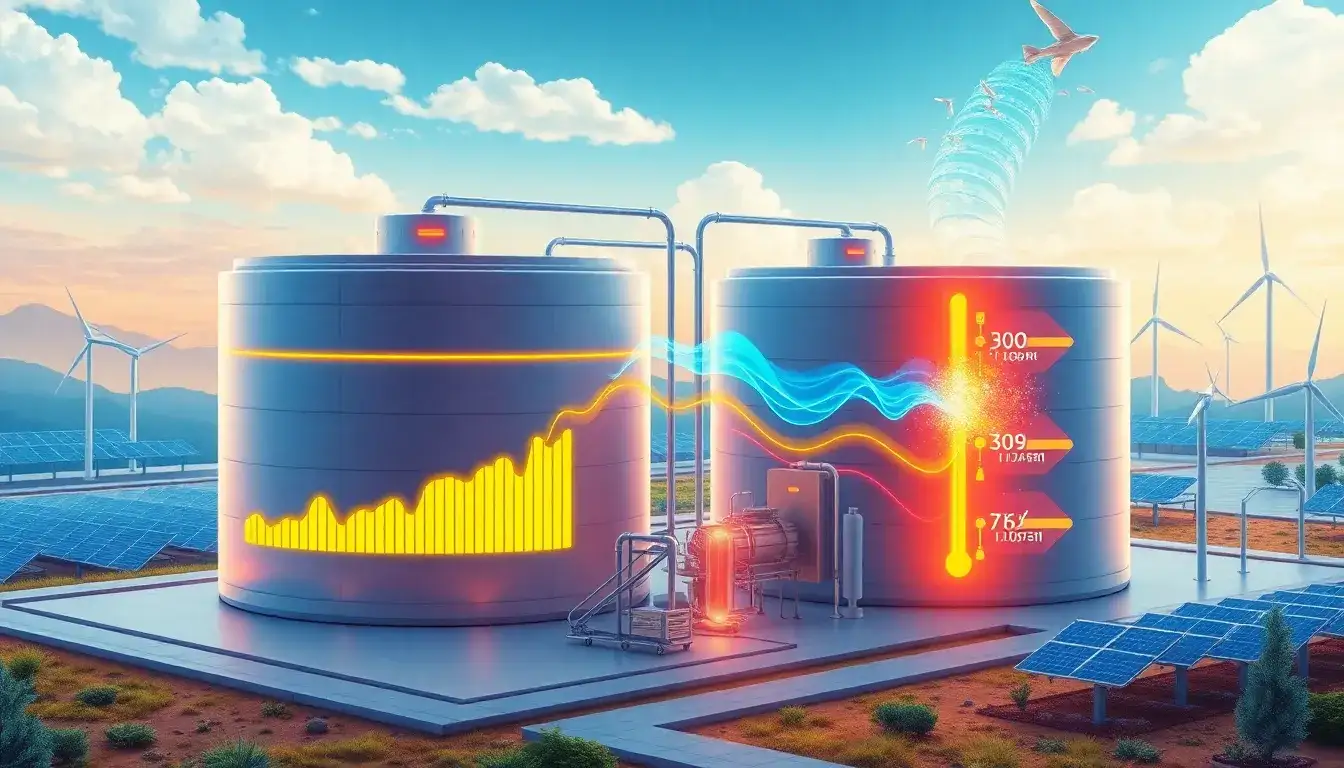
The speed of charging and discharging can significantly impact the efficiency of thermal energy storage systems. Here’s how:
Impact on Efficiency
- Heat Transfer Rate: A faster charging or discharging process requires high heat transfer rates to maintain efficiency. This means that the system’s components, such as heat exchangers, need to be designed to handle rapid energy transfer without significant losses. High heat transfer rates are essential for achieving high energy storage density and minimizing thermal losses during both charging and discharging phases.
- Energy Losses: Rapid charging and discharging can increase energy losses due to higher thermal gradients and potential thermal shock on materials. This can lead to reduced overall efficiency, as increased heat transfer rates might result in higher thermal resistance and losses during these processes.
- System Design and Materials: The selection of materials and system design plays a crucial role in maintaining efficiency during fast charging and discharging cycles. Some materials, like phase-change materials (PCMs), may perform better under rapid thermal cycles due to their ability to store and release thermal energy efficiently. For instance, high-efficiency systems like those developed by Argonne can achieve energetic efficiencies greater than 95%, partly due to innovations in material selection and system design.
- Round-Trip Efficiency (RTE): The speed of charging and discharging affects the round-trip efficiency, which measures the percentage of energy recovered after a complete cycle. Faster cycles may reduce RTE due to increased thermal losses unless the system is optimized for rapid thermal exchange.
Factors Influencing Efficiency
- Technology Type: Different technologies have varying capabilities for handling fast charging and discharging. For example, systems like Kraftblock offer high flexibility in charging and discharging rates, which helps in managing energy use and operating costs efficiently.
- Storage Duration and Equipment Efficiency: The duration of storage and equipment efficiency also influence overall system efficiency. Systems designed for rapid charging and discharging might need better insulation and more efficient heating or cooling mechanisms to minimize losses over time.
In summary, while fast charging and discharging can introduce challenges such as increased thermal losses, well-designed systems with appropriate materials and high heat transfer rates can minimize these effects and maintain high efficiency.
Example High-Efficiency Systems
- Kraftblock: Offers flexibility with high round-trip efficiency over 95%, benefiting from waste heat and adaptable discharging options.
- Argonne’s System: Demonstrates high efficiencies over 95% with innovations in materials like graphite foam and phase-change materials, optimizing thermal performance.
Original article by NenPower, If reposted, please credit the source: https://nenpower.com/blog/how-does-the-speed-of-charging-and-discharging-affect-the-efficiency-of-thermal-energy-storage-systems/

