

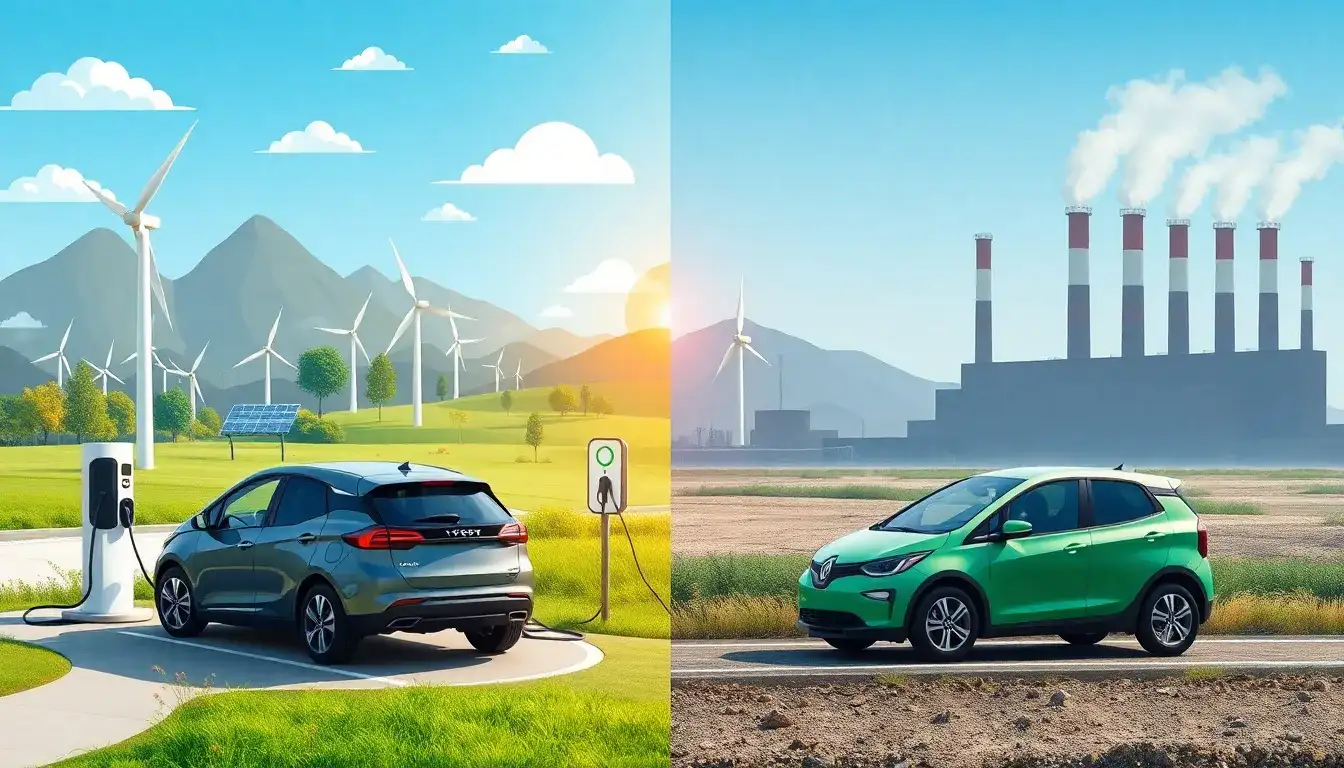
The source of electricity used to charge electric vehicles (EVs) heavily influences their environmental benefits, particularly in terms of carbon emissions and overall greenhouse gas (GHG) impact.
Impact of Electricity Source on EV Emissions
- Renewable Energy Charging: Charging EVs using renewable sources such as wind, solar, or hydroelectric power leads to significantly lower carbon emissions. For example, an EV charged with wind power produces less than 0.1 pounds of CO2 per mile, which is drastically lower than the emissions from gasoline vehicles (over 1.0 pounds CO2 per mile) and underscores a strong environmental benefit.
- Fossil Fuel Charging: Conversely, when EVs are charged from electricity generated by fossil fuels—especially coal—the carbon emissions can be much higher. In some cases, EV charging from coal-powered grids can produce even more CO2 than a comparable gasoline vehicle, potentially reducing or negating the environmental benefits of EVs.
- Grid Mix Variability: The environmental impact varies regionally due to differences in electricity grid composition. Grids with a higher share of renewables and nuclear power tend to have a cleaner electricity mix, improving the carbon footprint of EV charging. In the U.S., as of 2022, approximately 60% of electricity came from fossil fuels, 20% from nuclear, and 20% from renewables, so regional differences are substantial.
Additional Factors Affecting Environmental Benefits
- Charging Timing: Charging during periods when the grid is supplied by cleaner energy (e.g., daytime solar production) can reduce EV-related emissions by as much as 90% compared to charging during times when fossil fuels dominate the load (like evening hours).
- Life Cycle Considerations: While EVs have higher emissions associated with manufacturing—particularly battery production—the emissions from electricity consumption during use dominate the total life cycle carbon footprint. Smart charging strategies that optimize for low-emission electricity periods can further reduce the overall environmental impact.
- Energy Efficiency: EVs convert approximately 87%-91% of their battery energy into movement, which is far more efficient than gasoline vehicles that convert only about 16%-25% of fuel energy into motion. This efficiency advantage remains meaningful across different electricity sources, although it is maximized when clean electricity is used.
Summary
The environmental benefits of electric vehicles are strongly dependent on the source of electricity used to charge them. Using renewable energy minimizes carbon emissions and enhances the sustainability of EVs, while reliance on fossil-fuel-based electricity can significantly diminish or even negate these benefits. Regional grid mixes, timing of charging, and smart charging practices play crucial roles in maximizing the positive climate impact of EVs.
Thus, the continued decarbonization of the electricity grid alongside the adoption of EVs is essential to achieving the full environmental advantages of electric mobility.
Original article by NenPower, If reposted, please credit the source: https://nenpower.com/blog/how-does-the-source-of-electricity-used-to-charge-evs-affect-their-environmental-benefits/

