

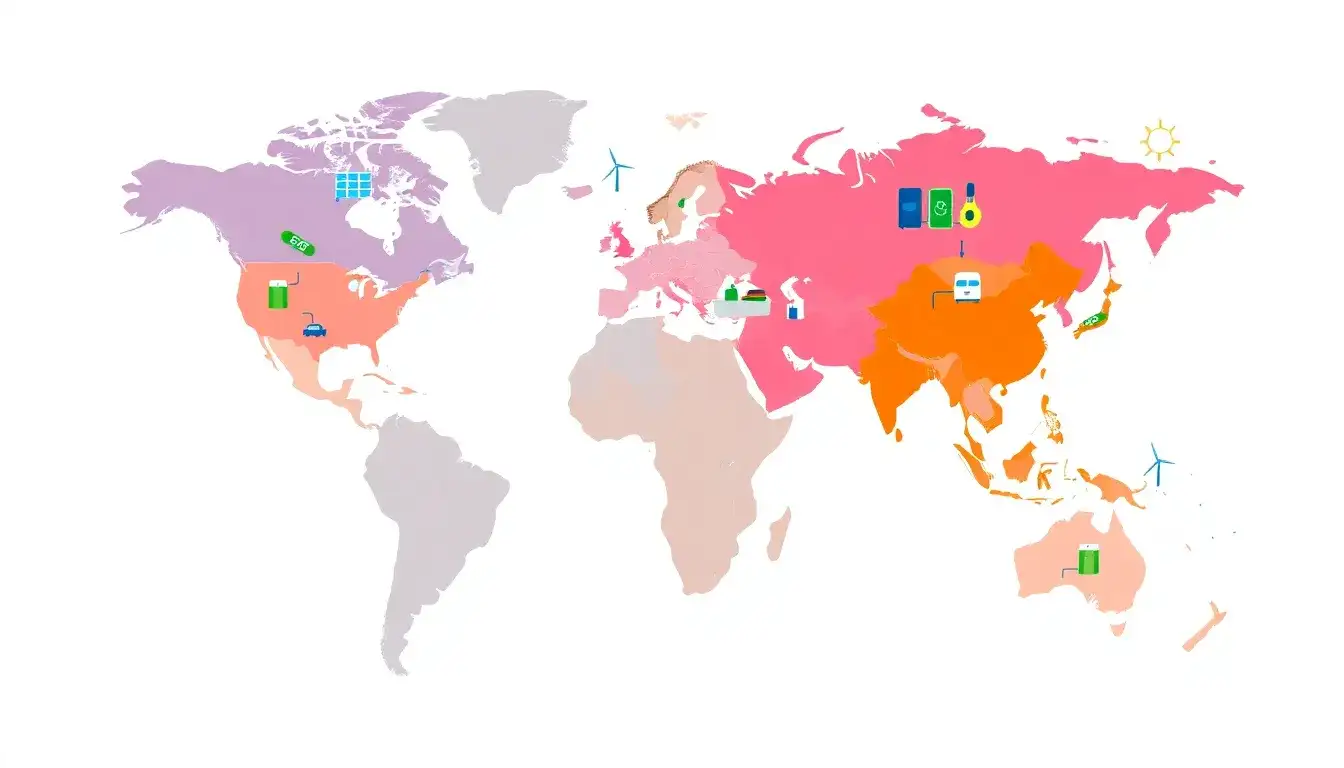
The source of electricity for charging electric vehicles (EVs) varies significantly by region, depending primarily on the local power grid characteristics and available energy generation methods.
Regional Variations in Electricity Sources for EV Charging
1. Predominance of the Electric Grid
Across most regions, the primary source of power for EV charging stations is the local electric grid, which supplies electricity generated from a mix of sources including fossil fuels, nuclear, hydro, and renewables. The electric grid provides a consistent and reliable power supply essential for regular EV charging needs.
2. Voltage Differences Affect Charging Practices
- In regions with power grids operating at 220 volts or higher—typical in Europe, Australia, large parts of Latin America, and most of Asia—EV owners often recharge using regular domestic sockets overnight. This simplifies home charging and reduces the need for specialized chargers.
- In contrast, regions with lower voltage grids (100-120 volts), like the United States and Canada, experience slower charging speeds from standard home sockets. To recharge EVs within a reasonable time (under ten hours), these regions often require dedicated home charging equipment. This need for specialized chargers imposes higher costs and infrastructure requirements, especially in places with limited private parking or developing countries with ambitious electrification goals.
3. Role of On-Site Renewable Energy
Some charging stations increasingly incorporate on-site solar panels. These systems use solar energy to generate electricity stored in batteries, which then supply DC power to charge EVs. Solar-powered charging stations are environmentally friendly and can reduce utility costs but may be limited by sunlight availability and higher upfront installation costs.
Examples by Region
- United States and Canada: The majority of EV charging happens at home using dedicated chargers due to the 100-120V grid limiting regular socket charging speed. Public and workplace charging stations rely on grid electricity, with states like California leading in charging infrastructure supported by public funding programs.
- Europe and parts of Asia and Latin America: Higher grid voltages allow EV users to charge conveniently at home with regular outlets, which simplifies the charging infrastructure requirements.
- Developing countries with electrification challenges: Countries such as Indonesia, Costa Rica, and Colombia face hurdles like the cost of charger installation and lower availability of private parking. This makes reliance on public charging stations—which draw from the local grid—more necessary.
In summary, while the electric grid is the universal source for EV charging stations, the voltage characteristics and energy mixes of regional grids influence the charging methods and infrastructure needed. Renewables such as solar power are supplementary sources gaining traction, particularly for environmental and economic benefits.
Original article by NenPower, If reposted, please credit the source: https://nenpower.com/blog/how-does-the-source-of-electricity-for-charging-evs-vary-by-region/

