

Primary Factors
1. Electricity Source
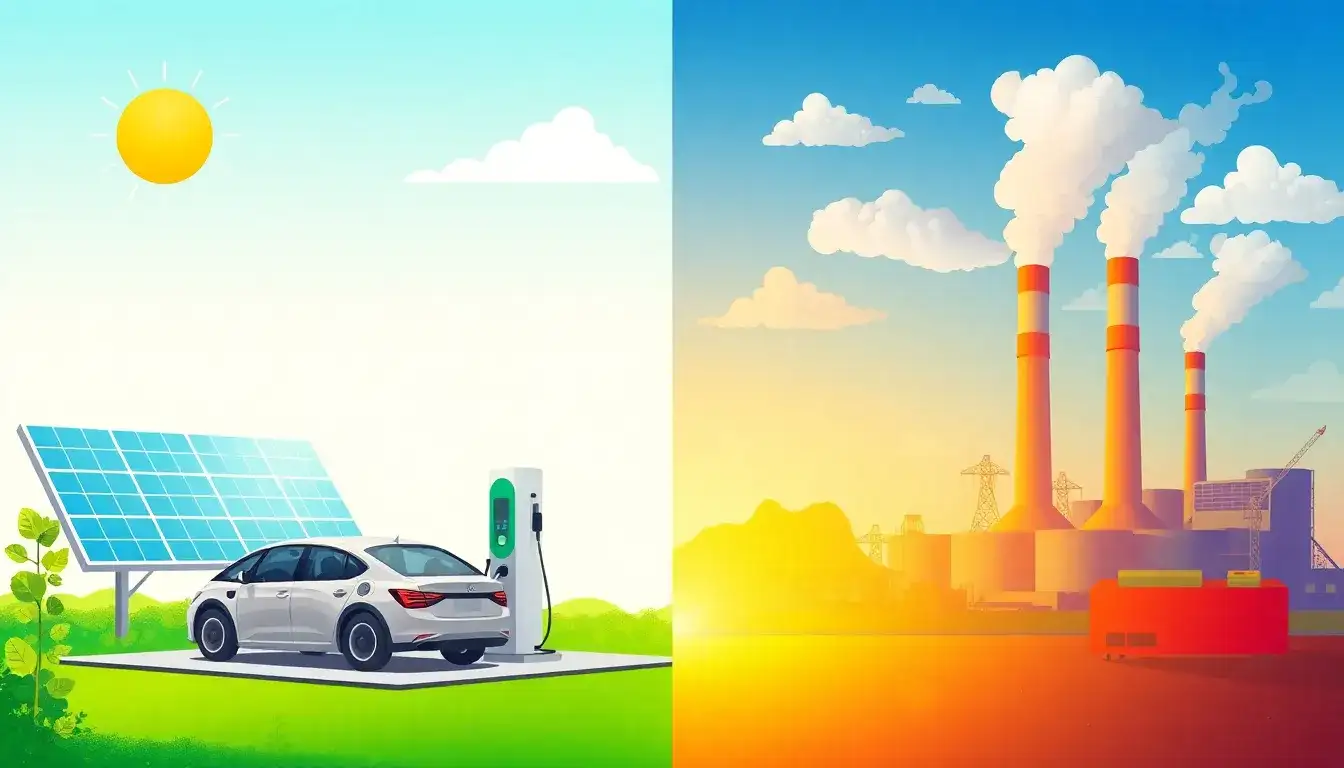
Charging with renewable energy (wind, solar, hydro) produces minimal emissions—less than 0.1 lbs of CO₂ per mile. In contrast, coal-powered electricity can result in EVs emitting 50% more CO₂ than gasoline vehicles, though averages across most grids still favor EVs.
2. Grid Composition
The local energy mix determines emissions intensity. For example:
- U.S. grids (2022): ~60% fossil fuels, 20% nuclear, 20% renewables.
- Regions with higher renewables (e.g., solar-rich areas) yield lower EV emissions.
3. Charging Timing and Strategy
- Daytime solar charging reduces emissions by up to 90% compared to evening fossil-heavy grid use.
- Marginal emissions (energy added to meet demand) vary: nighttime charging often relies on fossil “peaker” plants.
Comparative Emissions
- EVs: ~2,817 lbs CO₂ annually (U.S. average).
- Gasoline vehicles: ~12,594 lbs CO₂ annually—220% higher than EVs.
Even with fossil-dependent grids, EVs generally outperform gasoline cars due to higher energy efficiency and cleaner grid trends. Transitioning to renewables further widens this gap.
Original article by NenPower, If reposted, please credit the source: https://nenpower.com/blog/how-does-the-source-of-electricity-for-charging-evs-impact-their-overall-carbon-footprint/

