

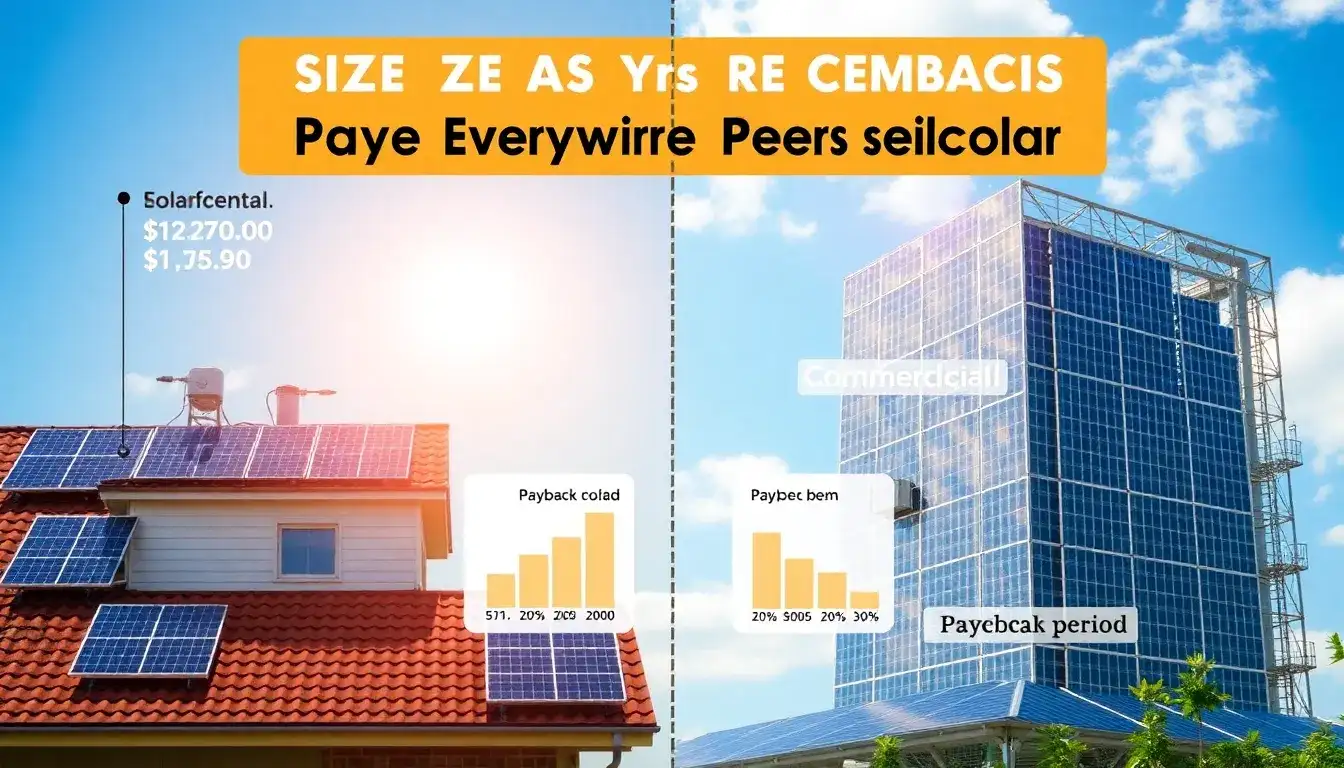
The size of a solar panel system significantly influences its payback period due to several key factors:
- Cost per Watt: Larger solar installations generally benefit from economies of scale, meaning the cost per watt decreases. This can lead to a lower overall cost for the system, which in turn reduces the payback period.
- Annual Savings: A larger solar panel system generates more electricity, leading to greater annual savings on utility bills. This increased savings potential accelerates the payback process.
- Installation Costs: While larger systems have higher upfront costs, the reduced cost per watt and higher energy output can offset these costs over time, potentially shortening the payback period.
- Incentives: Larger systems may also qualify for more substantial incentives, such as tax credits, which further reduce the effective cost and can accelerate the payback period.
However, the optimal size of the solar panel system should be matched to the household’s or business’s energy needs to maximize efficiency and minimize unnecessary additional costs. A system that is too large for the premises may not provide additional savings and could extend the payback period unnecessarily due to higher upfront costs.
Original article by NenPower, If reposted, please credit the source: https://nenpower.com/blog/how-does-the-size-of-the-solar-panel-system-influence-the-payback-period/

