

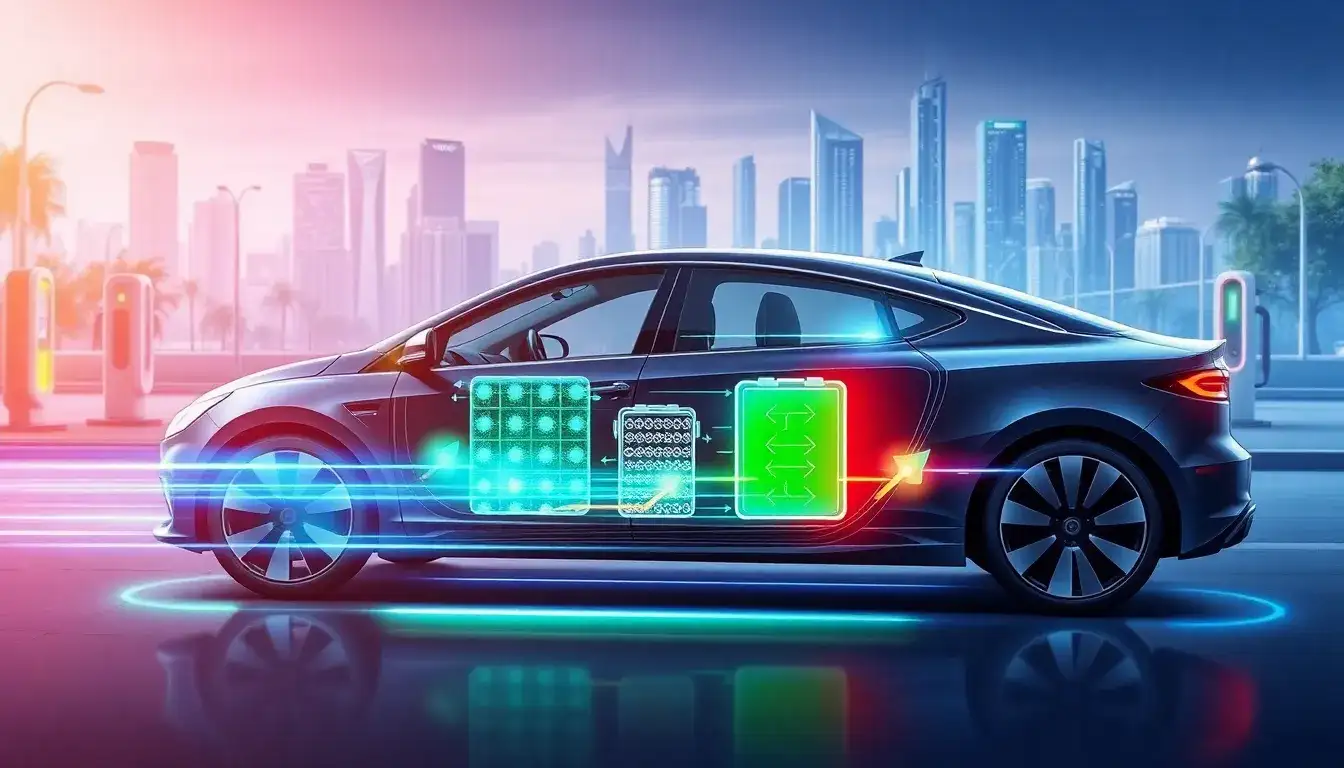
The size of the battery in plug-in hybrid electric vehicles (PHEVs) significantly affects their regenerative braking capabilities:
- Battery Capacity and Energy Recovery:
- Larger batteries in PHEVs are capable of storing more energy recovered through regenerative braking. This means that vehicles with higher capacity batteries can potentially recover a greater amount of kinetic energy and convert it into electrical energy to be stored in the battery.
- However, this also depends on the battery’s power handling capabilities, which determine how quickly it can absorb energy during braking.
- Power Handling:
- While larger batteries generally allow for more energy storage, the power handling (the rate at which energy can be absorbed) is crucial for effective regenerative braking. A more powerful battery system can capture more energy during rapid deceleration.
- The ability of a PHEV to utilize regenerative braking efficiently is influenced by both its battery capacity and its power handling capabilities.
- Temperature and Efficiency:
- Regenerative braking efficiency is also affected by temperature. Lower temperatures can decrease the efficiency of regenerative braking due to reduced battery performance, which impacts the overall energy recovery and storage in PHEVs.
- Cycle Life and Durability:
- PHEV batteries typically undergo more charge/discharge cycles than hybrid electric vehicles but fewer than battery electric vehicles (BEVs). Frequent charging and discharging, such as that from regenerative braking, contribute to wear on the battery, though PHEVs are designed to manage these cycles effectively.
In summary, larger batteries in PHEVs generally enhance the capability to utilize regenerative braking by allowing more energy to be stored and potentially improving power handling. However, optimal performance also depends on factors like battery design, power electronics, and operating conditions.
Original article by NenPower, If reposted, please credit the source: https://nenpower.com/blog/how-does-the-size-of-the-battery-in-phevs-affect-their-regenerative-braking-capabilities/

