

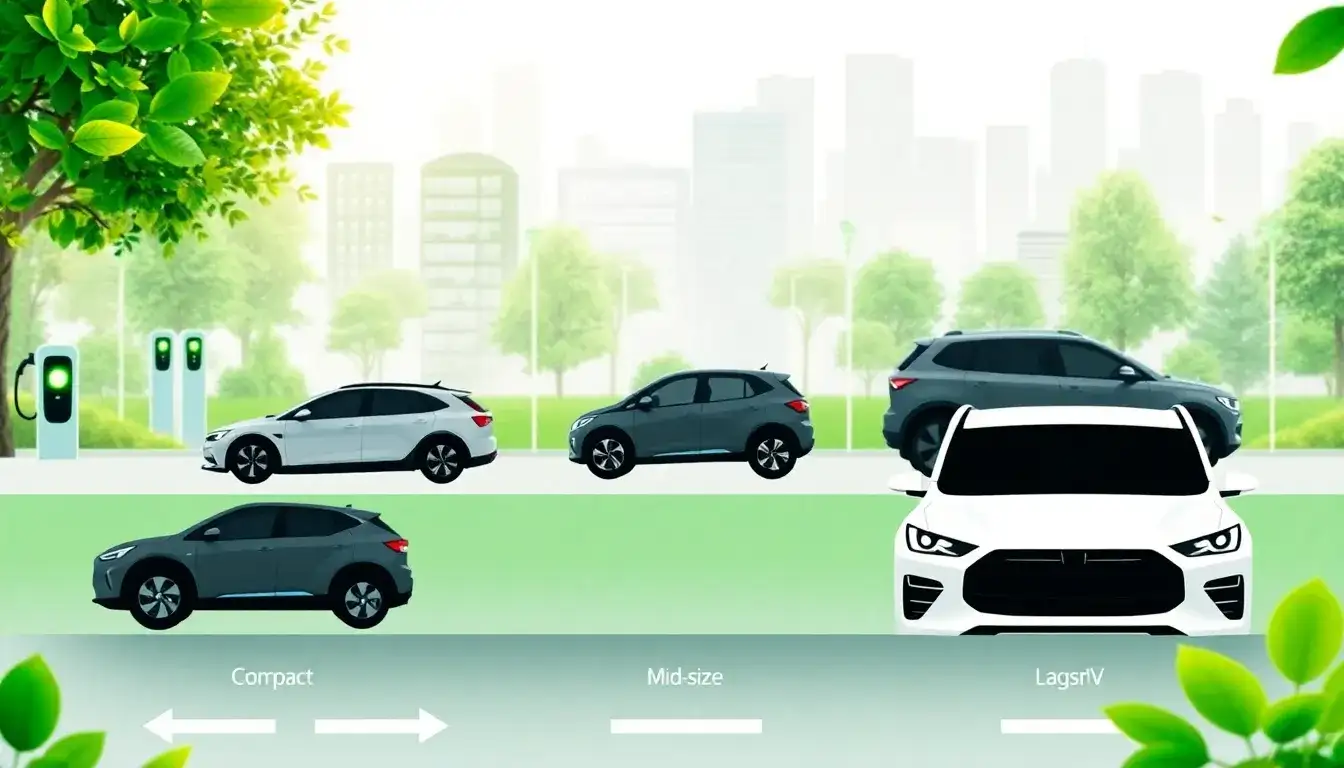
The size and battery capacity of an EV significantly influence its lifecycle emissions through multiple factors:
Battery Size and Energy Efficiency
Larger EV batteries increase energy consumption during driving due to added weight and greater demand for thermal management. For example, switching from a 28-kWh to a 116-kWh battery raises energy use by 13-17%, depending on driving patterns. Urban commuters, who take frequent short trips, face a 20% emissions increase when doubling battery size due to repeated cabin/battery heating/cooling cycles.
Vehicle Size and Efficiency Gains
Larger EVs (e.g., SUVs) still outperform internal combustion engine (ICE) counterparts in emissions. A large battery electric SUV emits ~20% more CO₂ than a medium-sized EV but 40% less than a medium gasoline car and 60% less than an ICE SUV. Electrification mitigates the size penalty:
| Vehicle Type | Emissions vs. Medium ICE Car |
|---|---|
| Large ICE SUV | +50% |
| Large Electric SUV | -40% |
Lifecycle Emissions Breakdown
- Manufacturing: Larger batteries require more energy-intensive production, creating an initial emissions “debt.”
- Operation: EVs compensate through zero tailpipe emissions and higher efficiency (87-91% energy use vs. 16-25% for gasoline vehicles). A typical EV offsets its manufacturing emissions within 1-2 years of driving.
- Grid Dependency: Emissions during operation depend on the energy mix. As grids decarbonize, larger EVs will see faster emission reductions.
Key Trade-offs
Smaller EVs with modest batteries offer the lowest emissions for most drivers, particularly urban users. However, larger EVs remain preferable to ICE vehicles of any size for lifetime emission reductions.
Original article by NenPower, If reposted, please credit the source: https://nenpower.com/blog/how-does-the-size-of-an-ev-impact-its-overall-emissions/

