

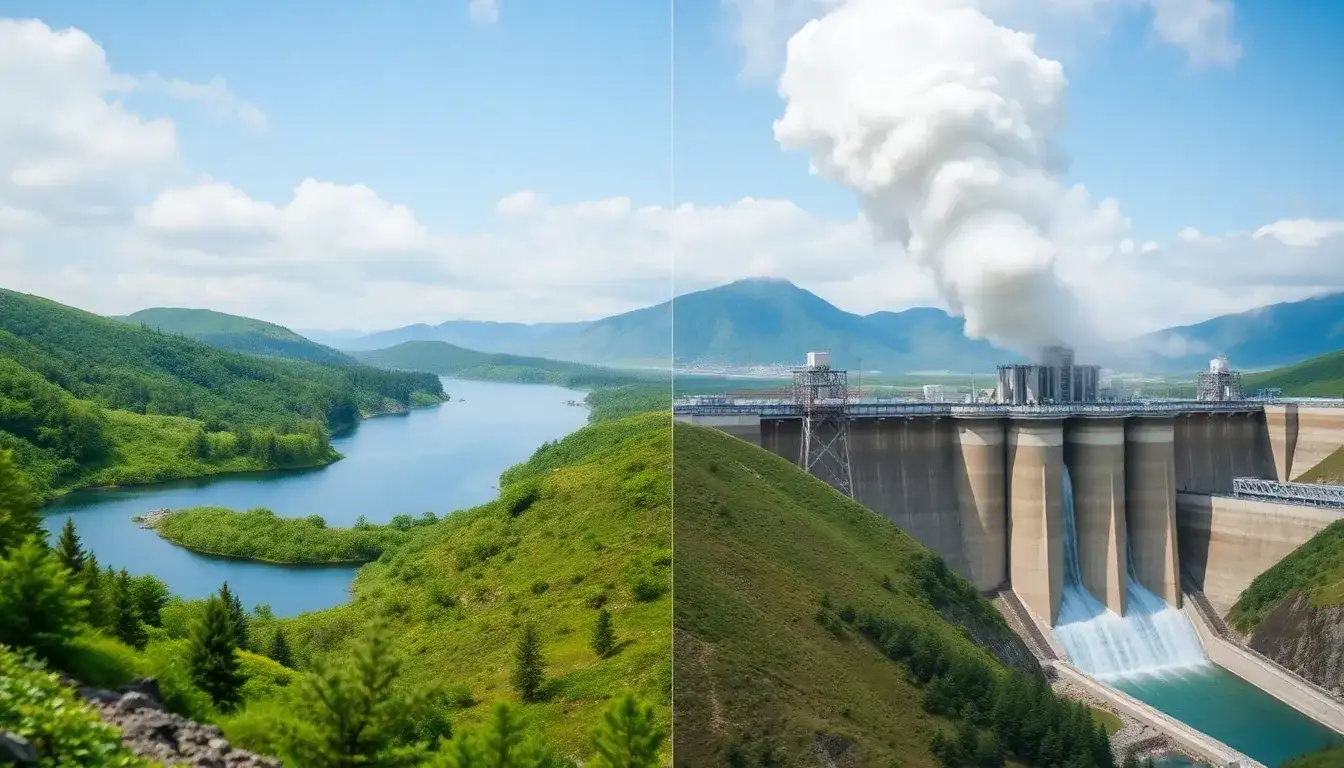
How Reservoir Size Affects GHG Emissions
- Surface Area and Shallow Zones:
Larger reservoirs generally have a greater surface area, which can increase the total emissions of methane (CH4) and carbon dioxide (CO2) from the water surface. Shallow areas, more common in large reservoirs with extensive shallow zones, promote methane ebullition (bubble release), because bubbles can more easily travel to the surface in low-pressure conditions. - Depth and Water Pressure:
Deep reservoirs tend to suppress methane emissions from ebullition because higher water pressure at depth prevents methane bubbles from rising. Thus, larger reservoirs that are also deeper often have lower GHG emissions per unit of energy generated compared to large but shallow reservoirs. This is especially true in tropical regions where deep reservoirs can produce significant energy with relatively low carbon footprints. - Carbon Burial vs. Emissions:
Reservoirs act both as carbon sinks and sources. Larger reservoirs can store (bury) more carbon due to higher sedimentation rates, which can offset some emissions. However, conditions that enhance carbon burial can also promote methane production because organic material decomposition happens under anaerobic conditions that favor methane generation. The size, shape, and depth of the reservoir collectively influence this balance. - Residence Time of Water:
The time water remains in a reservoir influences carbon cycling. Larger reservoirs may have longer residence times, allowing more organic matter decomposition and potentially more methane generation. This residence time effect is part of the broader impact of reservoir size on GHG emissions. - Impoundment Area and Soil Carbon:
The carbon released after flooding is largely from the topsoil in the impoundment area rather than vegetation. Larger reservoirs inundate more soil area, potentially releasing more carbon initially. However, the long-term emissions depend on ongoing biogeochemical processes within the reservoir ecosystem.
Summary
| Factor | Effect of Larger Reservoir Size | Impact on GHG Emissions |
|---|---|---|
| Surface Area & Shallow Zones | Increased surface area and shallow zones | More methane ebullition, higher emissions |
| Depth | Often deeper in large reservoirs | Suppresses methane bubbles, lowers emissions per kWh |
| Carbon Burial | More sedimentation and carbon burial | Can offset emissions but also linked to methane production |
| Water Residence Time | Longer residence time | Increases organic decomposition and emissions |
| Impoundment Area Carbon | More soil carbon exposed initially | Initial CO2 and methane release increases |
Overall, large deep reservoirs tend to have a lower carbon footprint per unit of energy generated compared to shallow, extensive reservoirs, due to the suppressing effect of depth on methane emissions and greater carbon burial. The size effect is complex, involving trade-offs between increased emission sources like surface area and methane ebullition with increased sinks like carbon burial and depth effects.
Thus, the size of a reservoir affects the greenhouse gas emissions from pumped hydroelectric systems through its influence on reservoir depth, surface area, sedimentation, water residence time, and carbon cycling processes. Large, deep reservoirs generally produce fewer GHG emissions per unit energy, while large shallow reservoirs with extensive surface areas may have higher emissions.
Original article by NenPower, If reposted, please credit the source: https://nenpower.com/blog/how-does-the-size-of-a-reservoir-affect-the-greenhouse-gas-emissions-from-pumped-hydroelectric-systems/

