

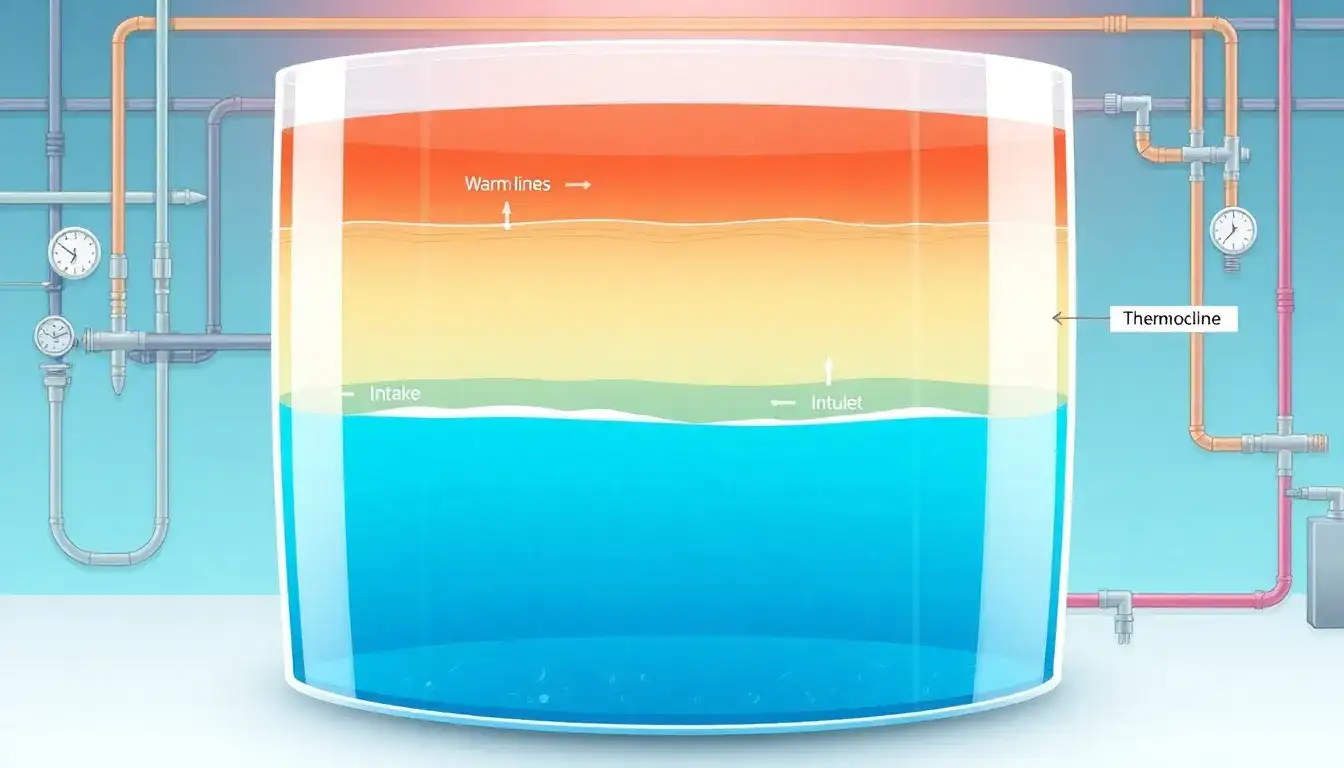
A single-tank thermocline thermal energy storage system stores and retrieves thermal energy using stratification of hot and cold regions separated by a temperature gradient (thermocline) within a single tank. Here’s how it operates:
Basic Operation
- Storage medium: Uses a solid filler material (e.g., silica sand) or fluid (e.g., molten salt, water, or liquid metal) in a single tank. During operation, hot and cold regions coexist, divided by the thermocline layer.
- Charging phase:
- High-temperature heat-transfer fluid enters the top of the tank, displacing colder fluid downward and pushing the thermocline lower.
- Heat is absorbed by the filler material (if present) or stored directly in the fluid.
- Discharging phase:
- Flow direction reverses: cold fluid enters from the bottom, pushing hot fluid out of the top and shifting the thermocline upward.
- Hot fluid exits to generate steam or meet thermal demands.
Key Features
- Efficiency: Relies on thermal stratification (density differences) to minimize mixing. A sharp thermocline indicates minimal mixing and higher efficiency.
- Cost reduction: Eliminates the need for a second tank, reducing material and space requirements compared to dual-tank systems.
- Challenges:
- Thermocline degradation: Excessive inflow velocity or high thermal conductivity materials (e.g., liquid metals) can widen the thermocline, reducing usable energy.
- Filler materials: Solids like silica sand or specialized pebbles improve energy density and stabilize stratification.
Fluid Dynamics
- Inlet/outlet design: Diffusers or screens ensure smooth flow to avoid disturbing the thermocline.
- Thermal conductivity trade-off: Low-conductivity fillers (e.g., quartzite) help maintain stratification, while high-conductivity fluids (e.g., molten salt) enhance heat transfer.
This design is used in concentrating solar-thermal power plants and chilled-water storage systems, balancing cost and efficiency.
Original article by NenPower, If reposted, please credit the source: https://nenpower.com/blog/how-does-the-single-tank-thermocline-system-work/

