

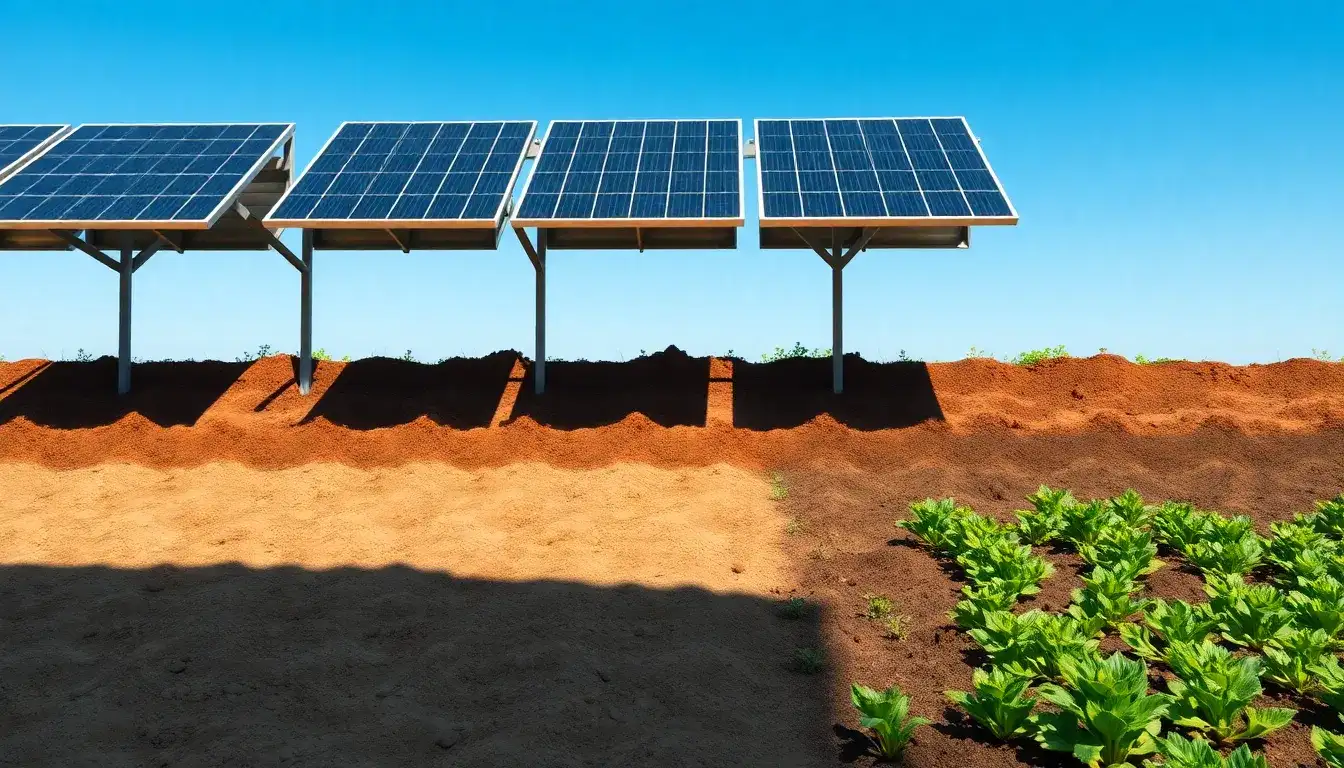
The shade provided by solar panels positively affects water retention in soil through several interrelated mechanisms:
- Reduced Soil Temperature and Evaporation: Solar panels shade the soil beneath them, leading to cooler soil temperatures. This shading effect reduces the direct exposure of soil to solar radiation, which in turn lowers evaporation rates from the soil surface. As a result, soil moisture is retained for a longer duration than in unshaded areas.
- Improved Water Retention and Soil Microclimate: The cooler, shaded microclimate beneath solar panels not only maintains higher soil moisture but also promotes increased water retention by reducing runoff and erosion risk. This enhanced retention supports a more stable soil environment beneficial for plant roots and soil microbes.
- Enhanced Soil Biological Activity and Biomass: Studies have shown that biological soil crusts and microbial biomass under solar panels are significantly more abundant compared to areas without shade. For example, cyanobacteria in biocrusts, which help hold soil particles together and aid in water retention, are more extensive under the panels. This microbial activity further improves soil structure and moisture-holding capacity.
- Agrivoltaic Benefits for Crops and Pasture: In agricultural settings, solar panels help conserve water by shading crops, which reduces plant stress and water loss while increasing soil moisture availability. Research from agricultural panels indicates higher late-season soil moisture and increased pasture biomass under shaded conditions, mitigating water stress during dry periods.
- Water Conservation and Drought Mitigation: By reducing soil evaporation and maintaining moisture, solar panels help conserve local water resources and mitigate the impacts of drought, particularly in arid and semi-arid environments. This also reduces the risk of drought-related fires and aids in aquifer recharge through decreased runoff.
In summary, the shade created by solar panels lowers soil temperature and evaporation, promotes water retention, enhances soil microbial life, and supports better plant growth by maintaining soil moisture, contributing to more sustainable water management in ecosystems and agricultural lands where they are installed.
This multifaceted effect makes solar panel shading a beneficial factor in conserving soil moisture and improving soil and crop health.
Original article by NenPower, If reposted, please credit the source: https://nenpower.com/blog/how-does-the-shade-from-solar-panels-affect-water-retention-in-soil/

