

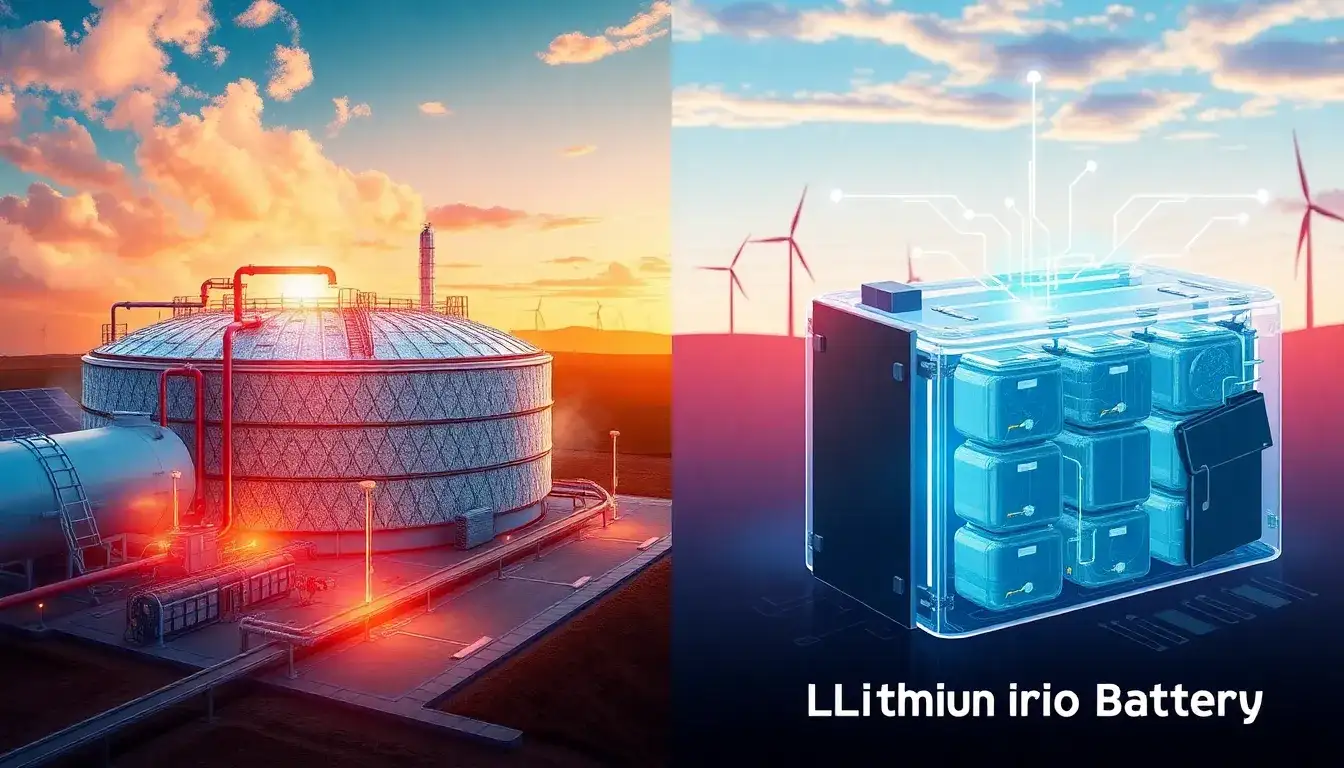
Scalability of Thermal Energy Storage
Thermal energy storage (TES) systems are highly scalable and adaptable to various applications, from small-scale building cooling to large industrial process heating. Their scalability advantages include:
- Cost-Effectiveness: TES systems like molten salt or phase-change materials are becoming more cost-effective and can be scaled up or down depending on the application, making them suitable for both large industrial processes and smaller-scale heating and cooling needs.
- Material Variety: TES can use a wide range of materials, including salts, metals, and phase-change materials, which can be tailored to different temperature requirements and applications.
- Decarbonization Potential: TES plays a crucial role in decarbonizing hard-to-electrify industries such as cement and steel by using renewable energy sources.
- Application Flexibility: From ice-based cooling systems to high-temperature industrial processes, TES offers versatility in application.
Scalability of Lithium-Ion Batteries
Lithium-ion batteries are also scalable but face different challenges:
- Energy Density: Lithium-ion batteries store energy in a more compact form than TES systems but are less effective for large-scale thermal energy needs.
- Cost and Materials: While costs are decreasing, lithium-ion batteries still face supply chain challenges related to materials like lithium and cobalt.
- Application Limitations: Primarily suited for electric power storage, lithium-ion batteries are less applicable to high-temperature industrial processes or large-scale thermal energy storage.
Comparison Summary
| Feature | Thermal Energy Storage | Lithium-Ion Batteries |
|---|---|---|
| Scalability | Highly scalable for various applications; suitable for large industrial processes. | Scalable but more limited in scale for high-temperature or large thermal energy storage applications. |
| Cost-Effectiveness | Cost-effective, particularly for large-scale thermal storage; utilizes cheap materials and renewable energy. | Becoming more cost-effective, but still faces material cost and supply chain challenges. |
| Application Flexibility | Adaptable for high-temperature processes, building heating/cooling, and decarbonization of industries. | Primarily used for electric power storage; less suitable for high-temperature industrial processes. |
| Decarbonization Role | Essential for decarbonizing industrial processes and providing a pathway for using renewable energy in manufacturing sectors. | Important for electrification and renewable integration but limited in direct industrial thermal applications. |
In summary, while lithium-ion batteries are scalable for electrical energy storage, thermal energy storage systems offer greater versatility and scalability for large-scale thermal energy needs across various sectors.
Original article by NenPower, If reposted, please credit the source: https://nenpower.com/blog/how-does-the-scalability-of-thermal-energy-storage-systems-compare-to-that-of-lithium-ion-batteries/

