

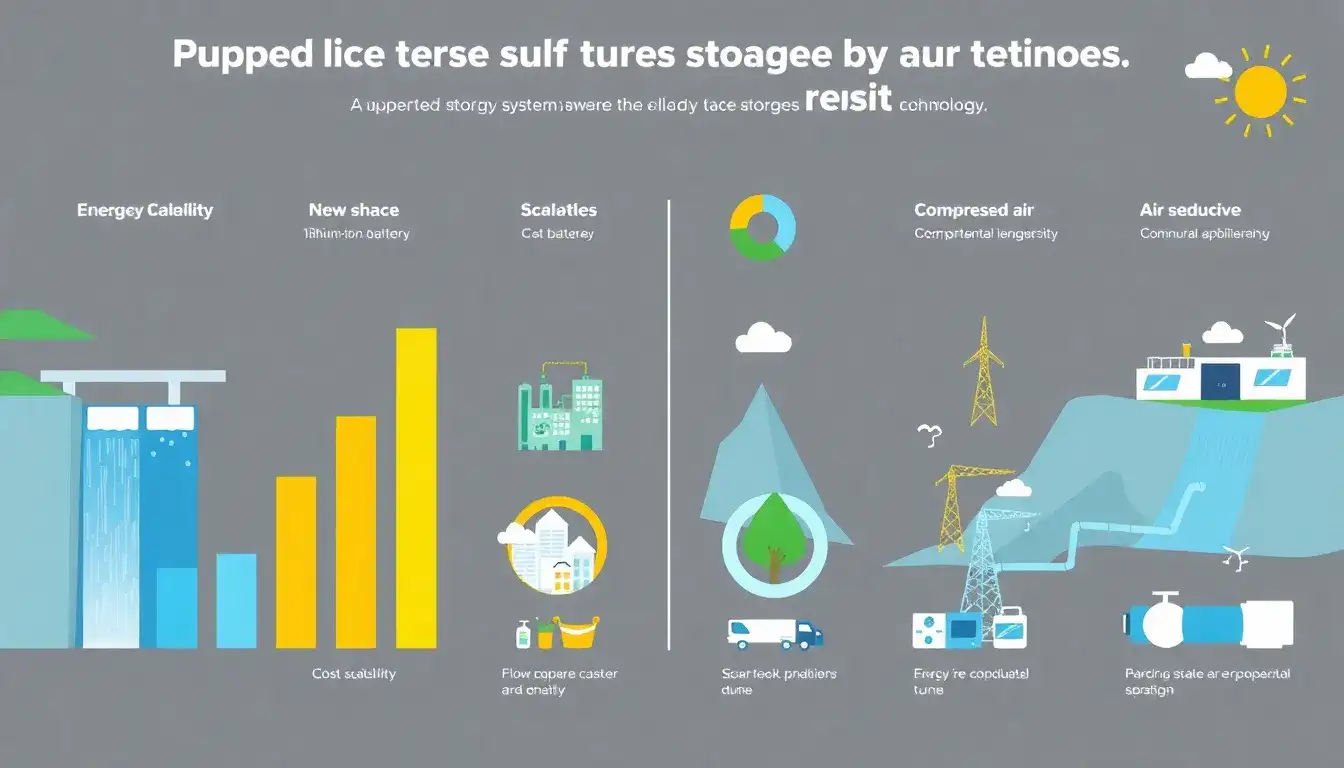
Pumped Hydrolectric Energy Storage (PHES) Systems
Pumped hydroelectric energy storage (PHES) systems are highly scalable compared to many other energy storage technologies for several reasons:
Scalability of PHES Compared to Other Technologies
Advantages of PHES
- Capacity: PHES accounts for the largest capacity of grid-scale energy storage worldwide, with over 94% of installed energy storage capacity and a total installed storage capacity of over 1.6 TWh as of 2020. This high capacity is essential for balancing large-scale energy systems.
- Scalability and Flexibility: PHES is very flexible and scalable; it can be designed to provide energy storage from a few hours to several days. This is crucial for managing grid stability and providing a buffer during peak demand periods or when renewable energy sources are intermittent.
- Energy Storage Duration: PHES can store energy over long periods, unlike some other technologies like batteries, which might have shorter discharge times and lower storage capacities.
- Efficiency: Although PHES has a round-trip efficiency of 70-80%, it remains a vital tool for energy balancing, as it allows the sale of electricity at higher prices during peak demand.
Comparison with Other Energy Storage Technologies
- Battery Storage: While battery technologies are improving rapidly in efficiency and cost, they still cannot match the scale and long-duration storage capabilities of PHES. Batteries are ideal for short-duration, high-power applications but lack the long-term energy storage capacity of PHES.
- Compressed Air Energy Storage (CAES): CAES also provides long-duration energy storage but has limited sites suitable for deployment compared to PHES. Additionally, CAES is less efficient than PHES and requires specific geological conditions.
- New Technologies: Emerging technologies like hydrogen storage and flow batteries are promising but still in earlier stages of development and deployment compared to PHES.
Challenges in Scalability
Despite its advantages, PHES faces challenges such as geographical limitations (it requires suitable terrain), environmental impacts, and high upfront costs. These factors limit its scalability in regions without suitable landscapes or where environmental concerns are significant.
In summary, PHES is highly scalable and critical for grid stability, offering a large capacity and flexibility that is unmatched by most other energy storage technologies. However, its deployment is constrained by geographical and environmental factors.
Original article by NenPower, If reposted, please credit the source: https://nenpower.com/blog/how-does-the-scalability-of-pumped-hydroelectric-energy-storage-systems-compare-to-other-energy-storage-technologies/

