

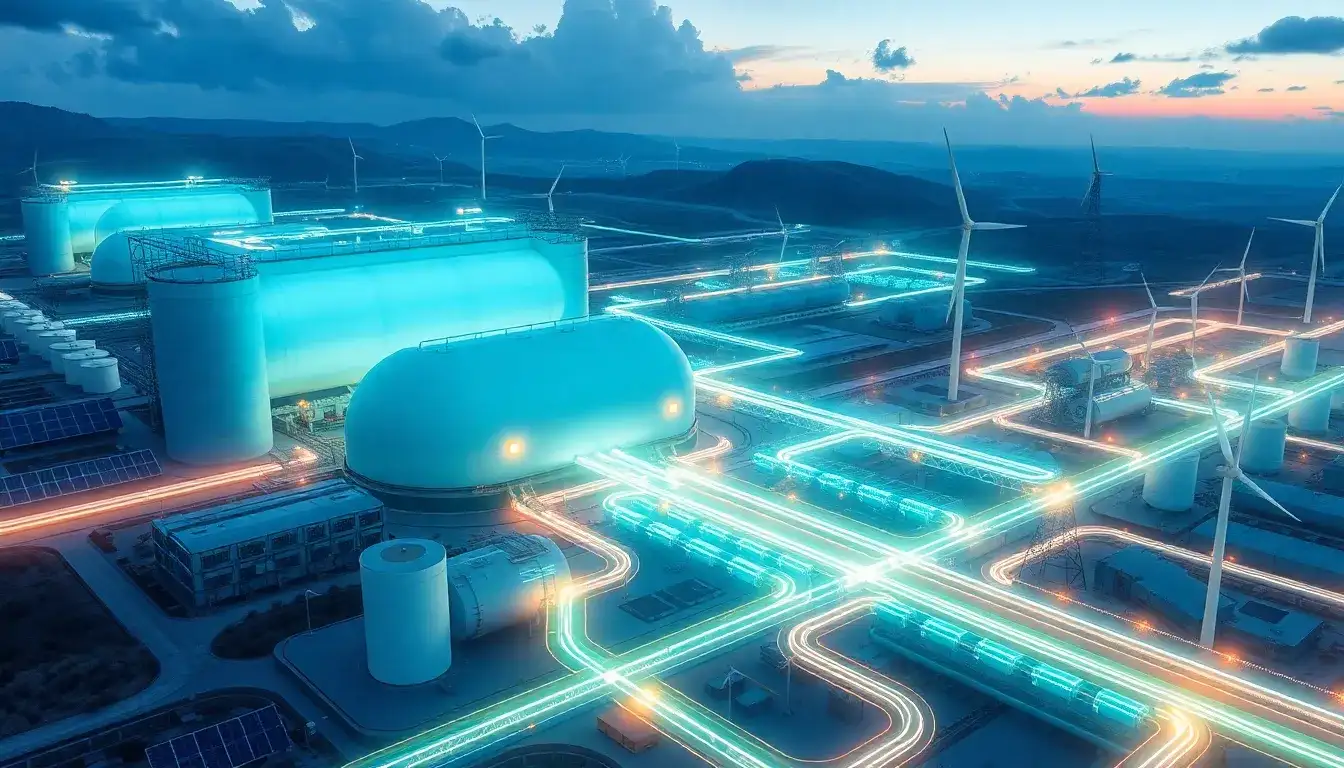
The scalability of Liquid Air Energy Storage (LAES) significantly enhances its potential for grid-scale applications in several key ways:
Scalability Benefits
- Flexibility and Location: LAES systems can be deployed in a wide range of locations, including urban areas, without relying on specific geographical features like pumped hydro storage. This flexibility allows LAES to be integrated into diverse energy systems, making it more versatile for grid-scale needs.
- Energy Storage Capacity: LAES can store large amounts of energy, making it suitable for grid-scale applications. The technology supports storage capacities ranging from 20 MWh to 1,000 MWh, which is crucial for balancing intermittent renewable energy sources and meeting peak demand.
- Commercial and Industrial Applications: The scalability of LAES means it can serve both commercial and industrial sectors, providing long-duration energy storage that can be scaled according to specific needs.
Challenges and Opportunities
Despite these advantages, LAES faces challenges. The technology is still in its early stages of commercialization, needs further research for cost reduction, and has a relatively low round-trip efficiency compared to other storage technologies like lithium-ion batteries. However, its adaptability and the potential to utilize waste heat could improve efficiency and economic viability in the future, especially in regions with aggressive decarbonization targets.
Overall, the scalability of LAES provides a promising solution for grid-scale energy storage by offering flexible deployment options and the ability to handle large storage needs without geographical constraints.
Original article by NenPower, If reposted, please credit the source: https://nenpower.com/blog/how-does-the-scalability-of-laes-impact-its-potential-for-grid-scale-applications/

