

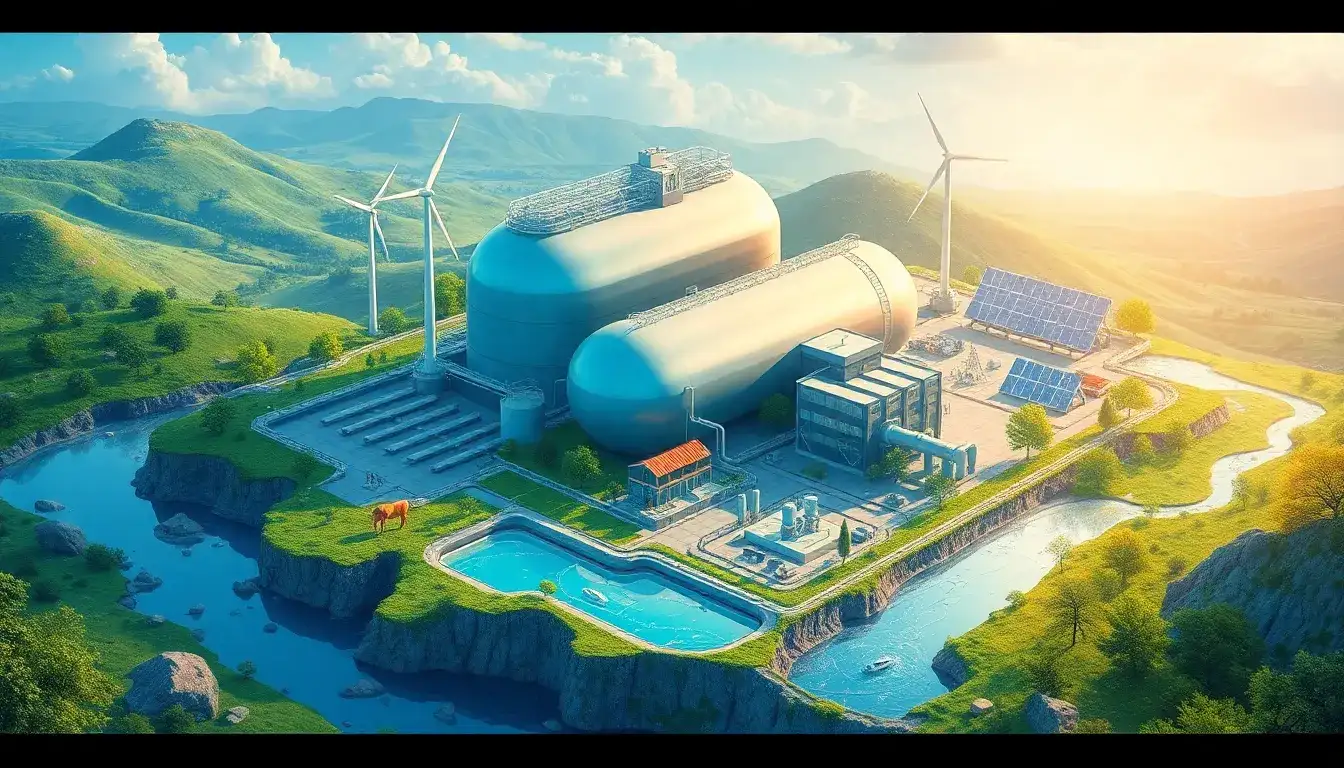
Scalability and Environmental Benefits
1. Large-Scale Energy Storage with Minimal Environmental Impact
LAES systems can be scaled from smaller applications to large utility-scale storage installations, enabling storage capacities in the order of multiple GWh without geographic constraints. This scalability allows widespread deployment across diverse locations—including urban areas—without the need for specific topographical features required by alternatives like pumped hydro.
Because LAES uses air, an abundant and non-toxic storage medium, the environmental impact is inherently low. The system does not rely on hazardous materials or rare earth elements, reducing upstream environmental damage linked to resource extraction and material disposal.
2. Supports Renewable Energy Integration and Emission Reduction
Scalable LAES helps reduce the ‘curtailment’ or waste of renewable energy generation by storing excess electricity that might otherwise be lost. Simulation studies show LAES deployment can reduce renewable energy curtailment by over 40% and CO2 emissions by up to 21% or more in grid systems, contributing to cleaner electricity grids and reduced fossil fuel reliance.
3. Durable and Long-Lived Components
The components of LAES systems, such as cryogenic tanks and turbines, have long operational lifespans which further minimize environmental impact by reducing the frequency of replacements and associated manufacturing emissions over time.
4. Flexible Siting and Reduced Land Use Impact
Unlike large-scale hydro or battery farms, scalable LAES plants can be located in a variety of environments, including brownfield or landfill sites, minimizing land use conflicts and habitat disruption.
5. Efficiency Improvements Will Further Enhance Environmental Performance
Ongoing efforts to improve the thermodynamic efficiency of LAES systems will increase the net energy output per unit input, thus reducing the overall environmental footprint associated with the electricity used to charge the system.
Summary Table of Scalability Effects on Environmental Footprint
| Aspect | Effect of Scalability | Environmental Impact |
|---|---|---|
| Storage Capacity | Large-scale (multiple GWh) storage possible | Enables more renewable energy integration |
| Location Flexibility | Installable in urban and varied sites | Reduces land use conflicts and ecosystem impact |
| Storage Medium | Air-based, non-toxic, abundant | Minimal direct environmental harm |
| Component Durability | Long-lasting cryogenic tanks and turbines | Less frequent replacements, lower lifecycle impact |
| Emission Reduction | Curtails renewable energy waste, reduces fossil fuel use | Significant CO2 emission reductions (up to 21%) |
| Material Use | No hazardous or rare earth materials | Lower environmental impact in material sourcing |
| Efficiency Improvements | Ongoing to reduce input energy requirements | Further decreases environmental footprint |
In essence, the scalability of LAES amplifies its capacity to store clean energy reliably and flexibly, thereby significantly enhancing its positive environmental footprint through emission reductions, sustainable siting options, and minimal material impacts.
Original article by NenPower, If reposted, please credit the source: https://nenpower.com/blog/how-does-the-scalability-of-laes-affect-its-environmental-footprint/

