

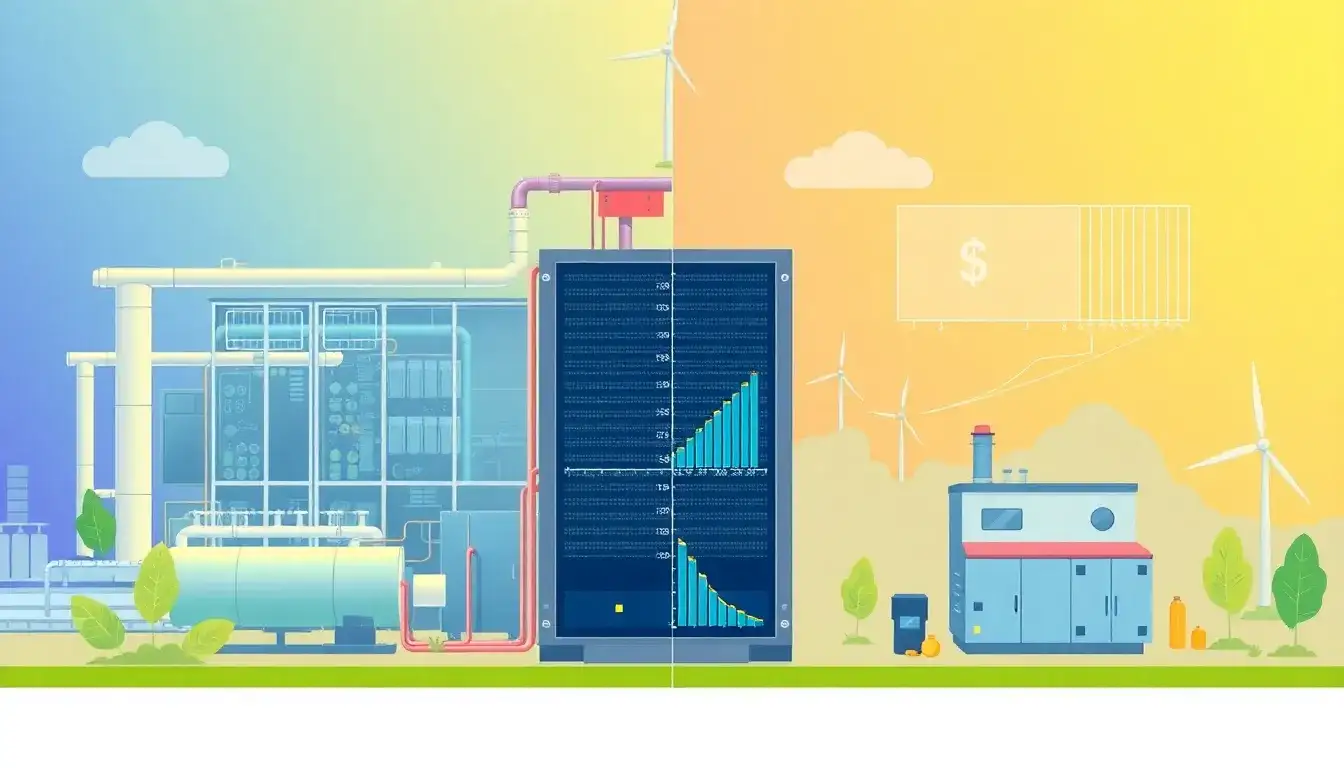
Scalability Features of Flow Batteries
- Decoupling of Energy and Power: Flow batteries allow for the separation of energy storage (in large tanks) from the power conversion process (at the electrochemical reactor). This means that if more energy storage is needed, only the size of the tanks needs to be increased, which is relatively inexpensive compared to adding more power conversion units.
- Modular Design: Flow batteries can be designed in a modular fashion, allowing for easy expansion or modification as needs change. This modular approach can reduce upfront costs when smaller initial configurations are installed, with the ability to scale up over time.
- Cost per Unit Energy: As flow batteries scale up, their cost per unit energy decreases. This is because larger tanks and more electrolyte can be added without proportionally increasing other system costs, making them more cost-effective for large-scale applications.
Cost-Effectiveness Benefits
- Reduced Upfront Costs for Large-Scale Applications: While the initial capital expenditure (Capex) for flow batteries might be higher than lithium-ion batteries, they become more competitive as they are scaled up for longer-duration energy storage applications.
- Lower Maintenance and Replacement Costs: The long lifespan of flow batteries (often over 20 years) and their resistance to capacity fade result in lower maintenance and replacement costs over time compared to lithium-ion batteries, which tend to degrade faster.
- Potential for Cost Reductions: Reports suggest that strategic investments in innovation could further reduce the levelized cost of storage (LCOS) for flow batteries, making them even more cost-effective in the future.
Challenges
- Higher Initial Capital Costs: Flow batteries still have higher upfront costs compared to some other technologies like lithium-ion, which can hinder initial adoption.
- Electrolyte Degradation: Flow batteries face challenges related to electrolyte degradation and crossover, which can affect their efficiency and longevity.
Conclusion
The scalability of flow batteries enhances their cost-effectiveness by offering a flexible and modular design that allows for efficient expansion and customization to meet specific energy storage needs. While they face challenges such as higher initial costs, their long-term benefits in cost savings and durability position them as a promising technology for long-duration energy storage applications.
Original article by NenPower, If reposted, please credit the source: https://nenpower.com/blog/how-does-the-scalability-of-flow-batteries-impact-their-cost-effectiveness/

