

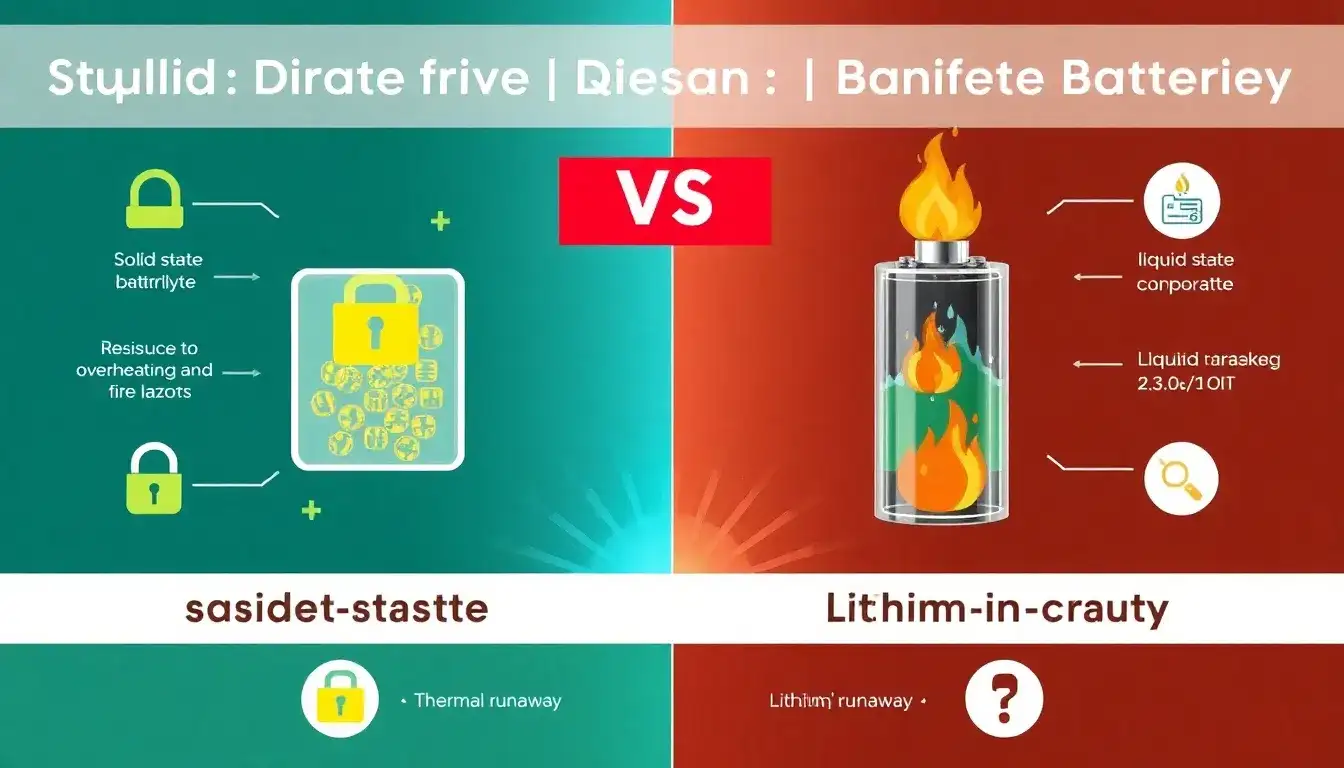
Solid-state batteries offer significantly improved safety compared to traditional lithium-ion batteries, primarily due to the nature of their electrolyte and overall design.
Safety Advantages of Solid-State Batteries Over Lithium-Ion Batteries
- Elimination of Flammable Electrolytes: Traditional lithium-ion batteries use liquid electrolytes that are flammable and prone to causing thermal runaway—an uncontrollable increase in temperature—which can lead to fires or explosions. Solid-state batteries replace these liquids with solid electrolytes, which are inherently non-flammable, substantially reducing fire risks.
- Higher Thermal Stability: Solid electrolytes in solid-state batteries are chemically and thermally more stable than the liquid electrolytes in lithium-ion batteries. This stability allows solid-state batteries to tolerate higher temperatures without degradation or safety hazards.
- Reduced Risk of Internal Shorts: Lithium-ion batteries can suffer internal shorts due to damage or defects in the separator, often leading to catastrophic failure. Solid-state batteries, with their solid electrolytes and improved internal structure, are less prone to internal shorts and subsequent failure.
- Lower Likelihood of Overheating and Swelling: Lithium-ion batteries are prone to overheating, swelling, and related safety issues during operation or charging. Solid-state batteries show reduced risk in these areas, further enhancing their safe operation.
Summary Table of Safety Differences
| Safety Aspect | Solid-State Battery | Lithium-Ion Battery |
|---|---|---|
| Electrolyte Type | Solid, non-flammable | Liquid, flammable |
| Risk of Thermal Runaway | Low | Higher |
| Thermal Stability | High | Moderate |
| Susceptibility to Internal Short | Low | Higher |
| Fire/Explosion Risk | Significantly Reduced | Present |
| Overheating & Swelling Issues | Minimal | Common |
While solid-state batteries provide a safer alternative due to these factors, practical challenges remain, such as higher production costs and manufacturing complexities, which currently limit their widespread commercial adoption.
In conclusion, solid-state batteries are inherently safer than lithium-ion batteries as they greatly reduce the risks of fire, thermal runaway, and internal short circuits through the use of solid, non-flammable electrolytes and enhanced thermal stability.
Original article by NenPower, If reposted, please credit the source: https://nenpower.com/blog/how-does-the-safety-of-solid-state-batteries-compare-to-lithium-ion-batteries/

