

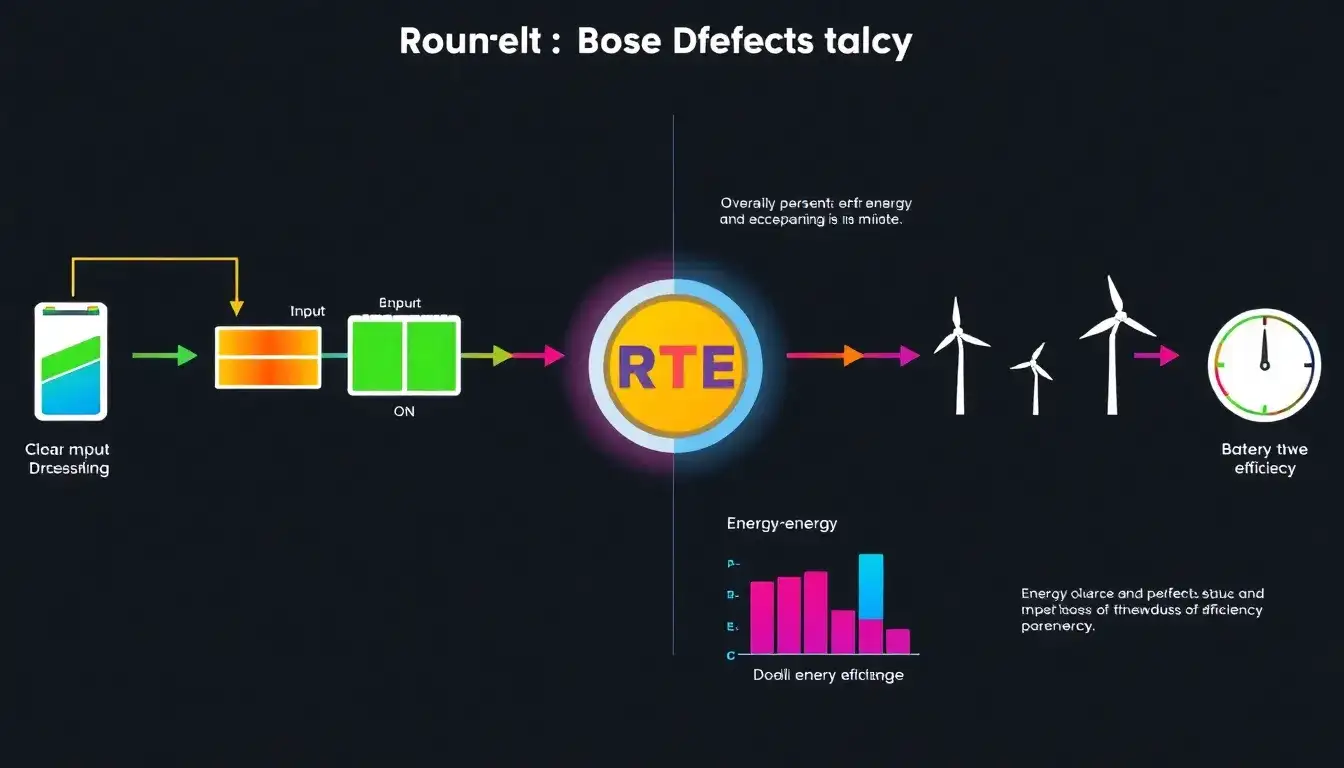
Impact of Round-Trip Efficiency (RTE) on Battery Energy Storage Systems (BESS) Performance
Round-Trip Efficiency (RTE) is a critical metric that measures how efficiently a battery can store and discharge energy. It is the ratio of the total energy output by a battery to the total energy input, expressed as a percentage. The RTE directly affects the overall performance of Battery Energy Storage Systems (BESS) in several ways:
Key Aspects of RTE Impact:
- Energy Loss Reduction
The higher the RTE, the less energy is lost during the storage process. This means that more of the input energy is available for use, resulting in a more efficient system overall. For example, a system with an RTE of 90% will lose less energy compared to one with an RTE of 80%. - Economic Viability
Higher RTE values can lead to better economic outcomes. By reducing energy loss, systems require less input energy to achieve the same output, potentially lowering operational costs. This is particularly important in commercial and utility-scale applications where energy costs can be significant. - System Reliability and Durability
Higher efficiency often reflects well-designed systems with less heat generation and internal resistance, which can improve the lifespan and reliability of battery components. - Integration with Renewables
As renewable energy sources like solar and wind become more prevalent, efficient battery storage is crucial for stabilizing the grid. High RTE ensures that the stored energy is maximized, making the system more effective at balancing supply and demand fluctuations. - Operational Flexibility
Systems with higher RTE can provide more flexible operation, supporting both short-term and long-term storage needs without significant energy degradation.
Typical RTE Values for Different Technologies:
- Lithium-Ion Batteries: Around 83% but can reach up to 86% in some advanced systems.
- LiFePO4 Batteries: Can achieve up to 93%.
- Pumped Hydro Storage: Typically around 79% to 81%.
- Flywheels: Between 80% and 90%.
Conclusion:
The round-trip efficiency of BESS has a profound impact on its overall performance by determining the energy efficiency, economic viability, reliability, and operational flexibility of the system. As the energy sector continues to evolve towards more renewable sources, optimizing RTE will remain a key focus in maintaining grid stability and efficiency.
Original article by NenPower, If reposted, please credit the source: https://nenpower.com/blog/how-does-the-round-trip-efficiency-rte-of-bess-impact-its-overall-performance/

