

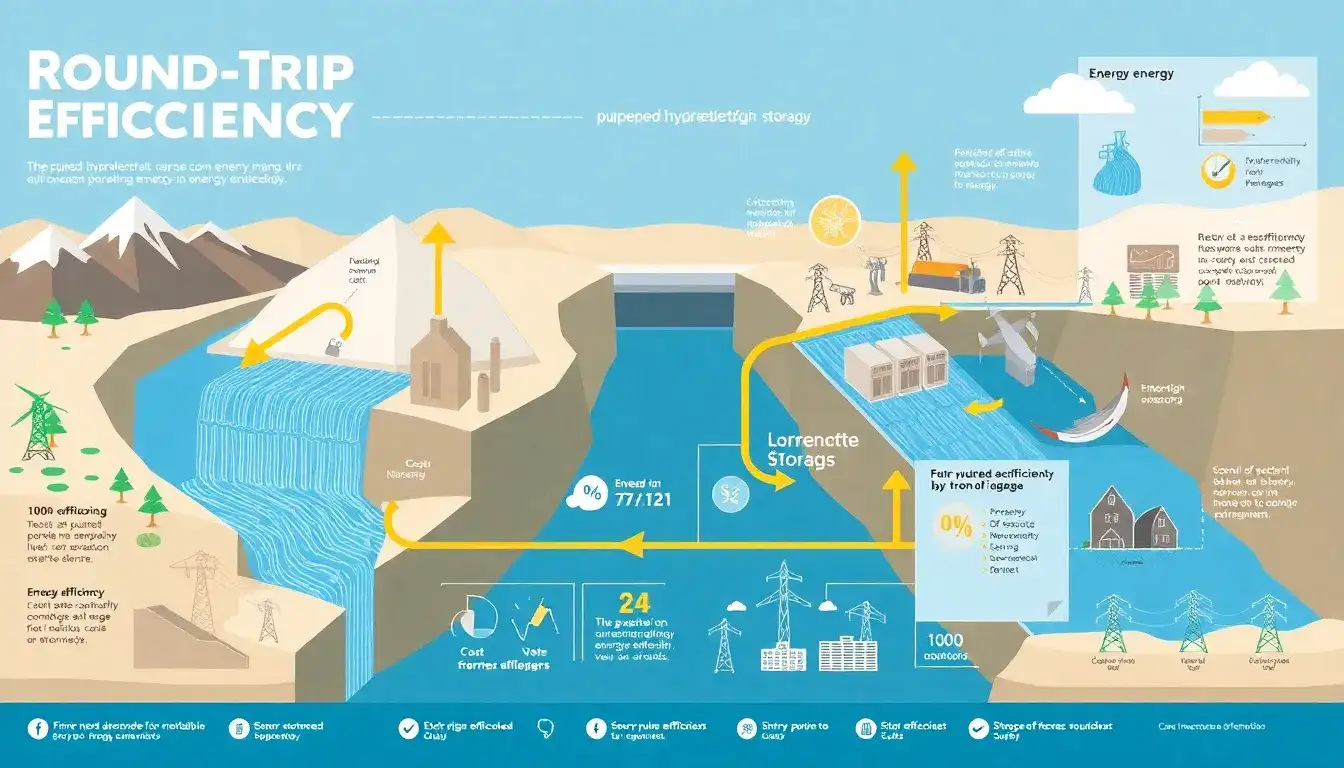
The round-trip efficiency of pumped hydroelectric energy storage (PSH) typically ranges between 70% and 80%, with some reported values up to 87% depending on technology and operation specifics. This efficiency measure represents the percentage of electrical energy put into storage (used to pump water uphill) that is later recovered when water is released to generate electricity.
Impact of Round-Trip Efficiency on Cost-Effectiveness
1. Energy Losses and Net Energy Consumption
Because the round-trip efficiency is less than 100%, some energy is inevitably lost during the pumping and generation processes. This means pumped storage plants are net consumers of energy — they consume more electricity during pumping than they produce during generation. These losses impact overall operational costs since more input electricity is required to provide a given amount of output electricity.
2. Financial Viability Through Price Arbitrage
Despite energy losses, PSH plants capitalize on the difference between electricity prices at low-demand (off-peak) and high-demand (peak) times. They use cheaper electricity during off-peak hours to pump water and generate electricity during peak hours when prices are higher. Higher round-trip efficiency limits energy losses, thereby improving the margin between cost of input energy and revenue from output energy, enhancing cost-effectiveness.
3. Efficiency and Operating Costs
Higher round-trip efficiency reduces wasted electricity and thus fuel cost equivalent for the storage operation, lowering overall operating costs. Conversely, lower efficiency means greater losses and higher operational costs for the same energy output, reducing profitability.
4. Influence on Capital and Maintenance Costs
While round-trip efficiency primarily affects operating costs, it also indirectly impacts capital investments. Efficient systems may allow smaller or optimized infrastructure because less energy input is needed, helping reduce capital costs over time. However, improvements to efficiency often involve more sophisticated and potentially costlier components.
Summary Table of Effects
| Aspect | Impact of Higher Round-Trip Efficiency | Impact of Lower Round-Trip Efficiency |
|---|---|---|
| Energy Loss | Reduced losses, more energy recovered | Increased losses, less net energy recovered |
| Operating Cost | Lower energy input cost, better profitability | Higher energy input cost, reduced profitability |
| Revenue from Price Arbitrage | Greater margin due to less wasted energy | Reduced margin due to increased losses |
| Capital/Infrastructure | Potentially smaller or optimized infrastructure | May require overbuilding to compensate losses |
Conclusion
The round-trip efficiency of pumped hydroelectric energy storage critically impacts its overall cost-effectiveness by influencing energy losses, operational costs, and revenue potential. Efficiencies in the range of 70-80% strike a balance that allows PSH to remain competitive by enabling effective price arbitrage, despite being a net consumer of energy. Improving round-trip efficiency directly enhances economic returns and system performance, making it a fundamental parameter for assessing PSH viability.
Original article by NenPower, If reposted, please credit the source: https://nenpower.com/blog/how-does-the-round-trip-efficiency-of-pumped-hydroelectric-energy-storage-impact-its-overall-cost-effectiveness/

