

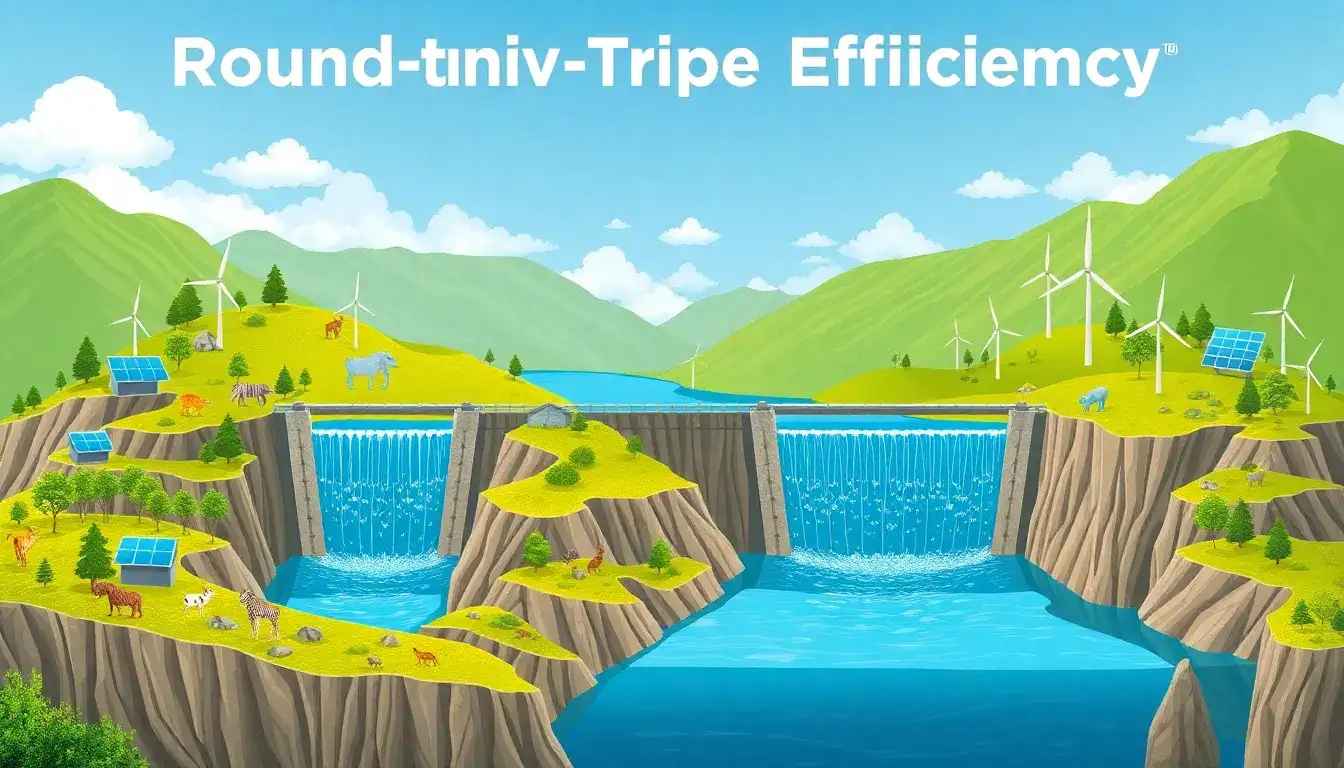
Impact of Round-Trip Efficiency on Environmental Footprint
Energy Loss and Net Consumption
Because PSH systems are not 100% efficient, there are inherent energy losses primarily due to the pumping process and turbine conversion inefficiencies. This means that more electricity is consumed to pump the water up than is generated when water flows back down. The system is thus a net consumer of energy overall.
Trade-Offs with Peak Demand and Grid Stability
Despite these losses, PSH contributes positively to the grid by shifting electricity use from periods of low demand (often when renewable energy generation is high and electricity is cheaper) to periods of peak demand (when electricity prices and emissions from peaker plants tend to be higher). This ability helps integrate more renewable energy, reduces reliance on fossil-fuel power plants running at peak times, and can lower overall emissions associated with electricity generation.
Influence on Environmental Impact
The less efficient the round-trip process is, the more “extra” electricity must be generated (often from other sources) to compensate for losses, which can increase environmental impacts indirectly, especially if the additional electricity comes from fossil fuels. Conversely, higher round-trip efficiency means fewer losses, less additional generation needed, and thus a smaller environmental footprint per unit of usable stored energy.
Closed-Loop Systems and Environmental Benefits
Closed-loop PSH systems, which use reservoirs isolated from natural inflows, tend to have lower environmental impacts compared to open-loop systems because they reduce disruption of natural waterways and ecosystems. Their efficiencies are similar, so improvements in efficiency in closed-loop systems enhance their environmental advantages.
Summary
| Factor | Impact Due to Round-Trip Efficiency |
|---|---|
| Round-trip efficiency (%) | Typically 70% – 80% |
| Energy losses | Lead to net energy consumption, requiring more generation |
| Environmental footprint | Higher efficiency reduces extra generation and emissions |
| Grid impact | Enables peak demand shifting, integration of renewables |
| System type influence | Closed-loop PSH usually lowers environmental disruptions |
In essence, the round-trip efficiency of pumped hydroelectric energy storage directly affects its environmental footprint by determining how much extra electricity must be generated to compensate for storage losses. Higher efficiency means lower overall environmental impact, while lower efficiency increases indirect emissions and resource use. However, PSH’s ability to time-shift electricity demand and support renewable integration generally leads to a net positive environmental outcome despite the losses inherent in storage.
Original article by NenPower, If reposted, please credit the source: https://nenpower.com/blog/how-does-the-round-trip-efficiency-of-pumped-hydroelectric-energy-storage-impact-its-environmental-footprint/

