

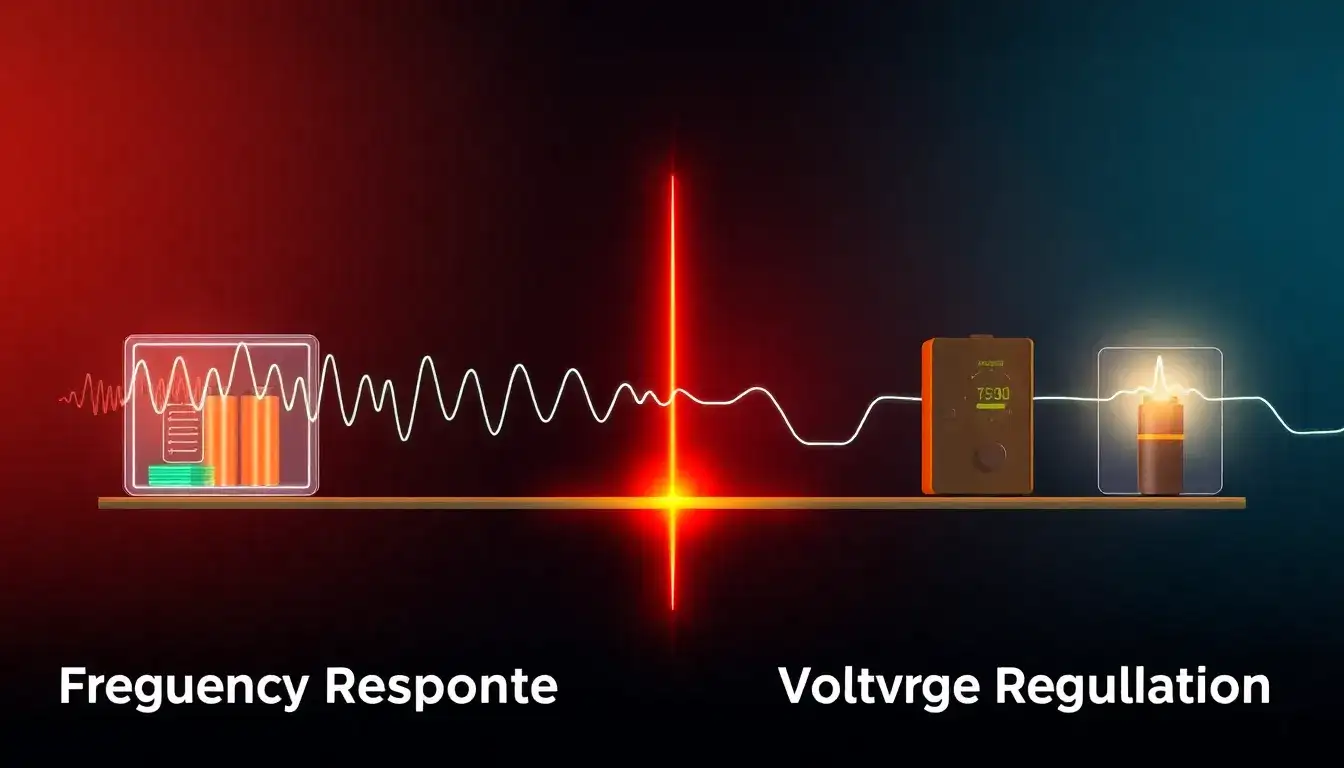
The role of batteries in frequency response and voltage regulation differs primarily in the parameter they stabilize and the nature of the grid stability they provide.
Frequency Response
- Purpose: Frequency response is crucial for maintaining the grid frequency close to its nominal value (e.g., 60 Hz in the United States) by balancing supply and demand in real-time. This ensures grid stability, preventing outages that can occur due to frequency deviations.
- Mechanism: Batteries rapidly adjust their active power output to stabilize the grid frequency when it deviates from the nominal value. This is achieved by either absorbing or injecting electricity into the grid.
- Key Benefits: The ability of batteries to respond quickly (often in sub-seconds) makes them highly effective for frequency regulation without any startup time.
Voltage Regulation
- Purpose: Voltage regulation focuses on maintaining stable voltage levels across the electrical grid. Fluctuations in voltage can lead to equipment damage or inefficiencies, and maintaining these levels ensures safe and efficient operation of electrical devices.
- Mechanism: Voltage regulation involves adjusting the reactive power (which does not contribute to actual work but influences the voltage level) rather than the active power used for frequency control. Devices like reactive compensators or battery storage systems capable of reactive power management can stabilize voltage levels.
- Key Benefits: By ensuring consistent voltage levels, batteries help in preventing equipment failures and improving overall grid efficiency.
Comparison
| Feature | Frequency Response | Voltage Regulation |
|---|---|---|
| Parameter | Frequency (e.g., 60 Hz) | Voltage level |
| Mechanism | Active power adjustment | Reactive power adjustment |
| Stability Goal | Maintain frequency stability | Maintain voltage stability |
| Key Benefits | Rapid response; prevents outages | Prevents equipment damage; improves efficiency |
In summary, while both roles are critical for grid stability, frequency response involves stabilizing grid frequency to prevent immediate disruptions, whereas voltage regulation ensures safe operating conditions by maintaining stable voltage levels.
Original article by NenPower, If reposted, please credit the source: https://nenpower.com/blog/how-does-the-role-of-batteries-in-frequency-response-differ-from-their-role-in-voltage-regulation/

