

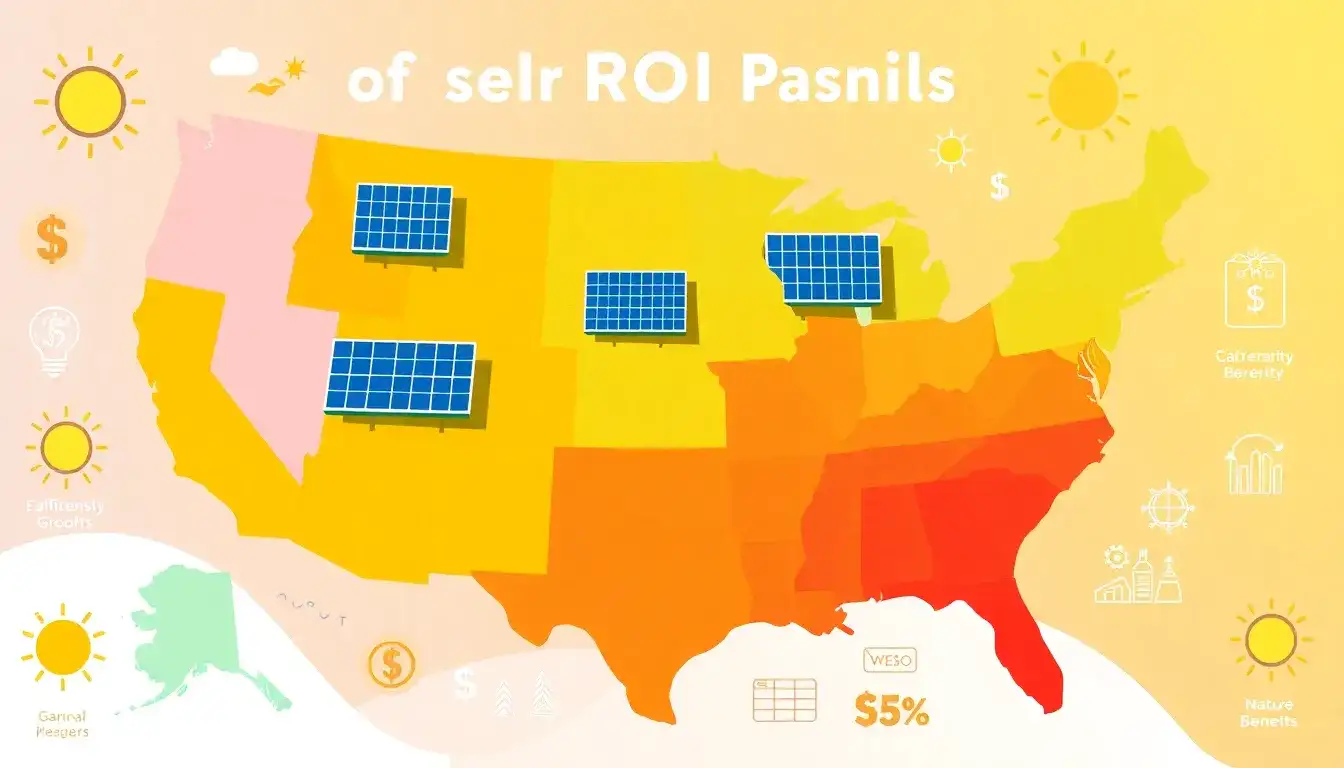
The Return on Investment (ROI) of solar panels varies significantly by state due to differences in solar incentives, electricity rates, and sunshine levels. Here’s a breakdown of how these factors affect ROI across different states:
Factors Affecting Solar Panel ROI
1. Solar Incentives
- State-specific incentives: States like New Jersey and Massachusetts offer strong incentives that boost the ROI through programs like SRECs in New Jersey and the SMART program in Massachusetts.
- Federal Solar Credit: Applies uniformly across the U.S., providing a 30% tax credit for solar installations, but state-specific incentives can enhance this benefit.
2. Electricity Rates
- Higher electricity rates in states like Massachusetts and Rhode Island make solar more financially appealing, as the savings from reduced utility bills are greater.
- Areas with lower electricity costs, such as the Midwest, might have a longer payback period unless offset by strong incentives.
3. Sunshine Levels
- States with high sunshine levels, like California and Arizona, can generate more electricity from solar panels, improving the ROI.
- Regions with less sunlight, such as the Northeast, might have a slower ROI unless they have favorable policies or high electricity rates to compensate.
4. Policy and Legislation
- Renewable Portfolio Standards (RPS) and Net Metering: Policies that encourage solar adoption and allow homeowners to sell excess energy back to the grid can positively impact ROI.
Best States for Solar ROI
- New Jersey: Offers a 5.5-year payback period due to strong incentives.
- Massachusetts: Also has a 5.5-year payback period, benefiting from high electricity rates and state incentives.
- California: With a payback period around 5.9 years, it benefits from high sunshine levels and supportive policies.
States with Longer Payback Periods
- Areas with lower electricity costs or fewer incentives may have payback periods closer to the national average of 7 to 10 years.
Overall, the ROI of solar panels is influenced by a combination of state policies, electricity costs, and local climate conditions. Understanding these factors is crucial for determining whether solar is a viable investment in your area.
Original article by NenPower, If reposted, please credit the source: https://nenpower.com/blog/how-does-the-roi-of-solar-panels-vary-by-state/

