

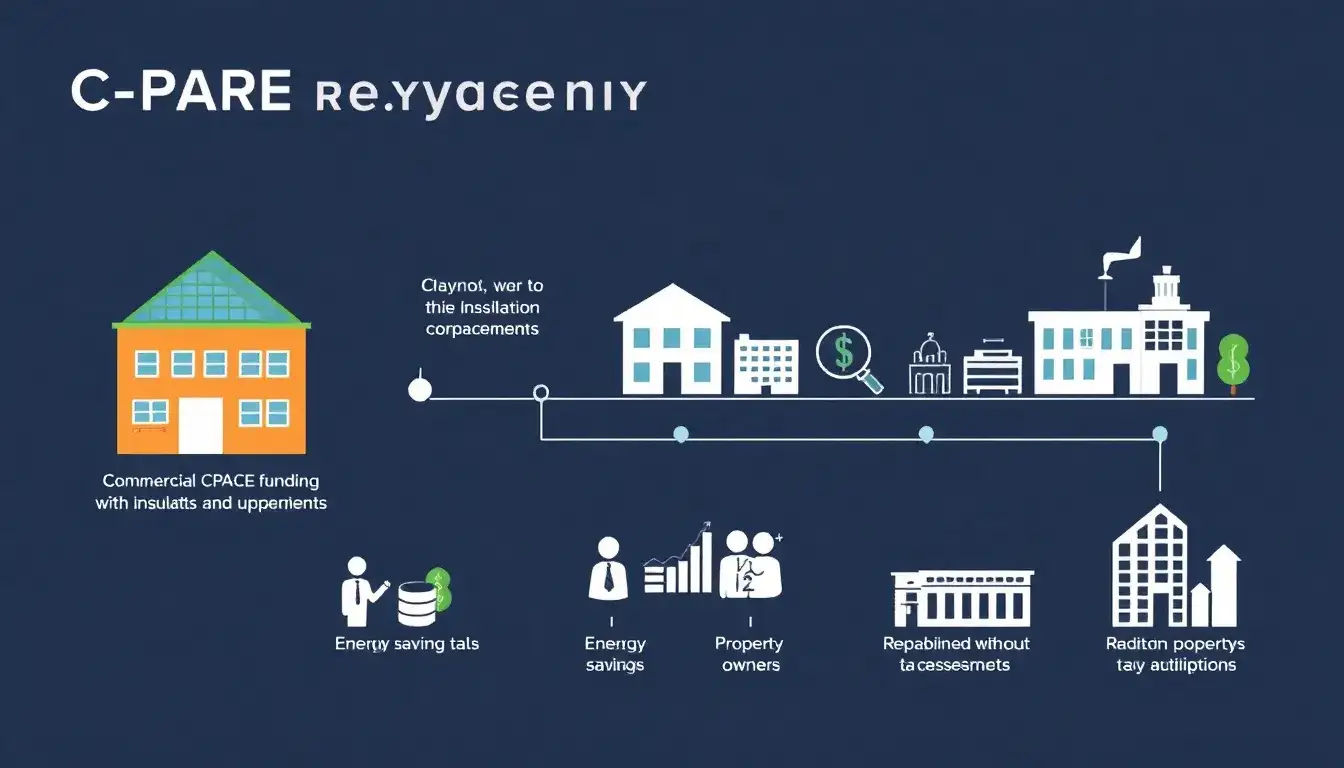
The repayment process for Commercial Property Assessed Clean Energy (C-PACE) financing is unique compared to traditional loans. Here’s a detailed overview:
Key Elements of C-PACE Repayment
- Assessment Basis: Repayment is made through a voluntary property tax assessment. This assessment is tied to the property rather than the property owner, ensuring that if the property is sold, the repayment obligation transfers to the new owner.
- Repayment Period: The term of the repayment typically matches the useful life of the improvements, which can range from 10 to 30 years. This extended period helps align the repayment with the time it takes for energy-efficient improvements to pay for themselves through savings.
- Payment Structure: Payments are usually made semi-annually or annually as part of the regular property tax payments. The local tax collector collects these payments and remits them to the C-PACE lender.
- Senior Lien Position: The C-PACE assessment often holds a senior lien position, meaning it takes priority over existing mortgage debt in case of default. However, this security structure is beneficial because it reduces the risk for lenders and allows for more favorable loan terms.
- Non-Recourse and Transferable: C-PACE financing is non-recourse, meaning the borrower’s personal assets are not at risk if the project fails. Additionally, the loan is transferable, ensuring that repayment obligations remain with the property if it changes hands.
- Cash Flow Benefits: The setup is designed so that energy savings from the improvements typically exceed the annual assessment payments, creating a positive cash flow for property owners.
Implications for Property Owners
- Positive Cash Flow: The structure ensures that savings from energy-efficient improvements often exceed the cost of the assessments.
- No Personal Liability: Non-recourse financing protects borrowers from personal liability in case of default.
- Flexible Terms: C-PACE financing often offers longer repayment terms and lower interest rates compared to traditional financing options like mezzanine debt.
Overall, C-PACE financing provides a cost-effective and sustainable way for commercial property owners to invest in energy-efficient projects by leveraging a unique property tax-based repayment mechanism.
Original article by NenPower, If reposted, please credit the source: https://nenpower.com/blog/how-does-the-repayment-process-for-c-pace-financing-work/

