

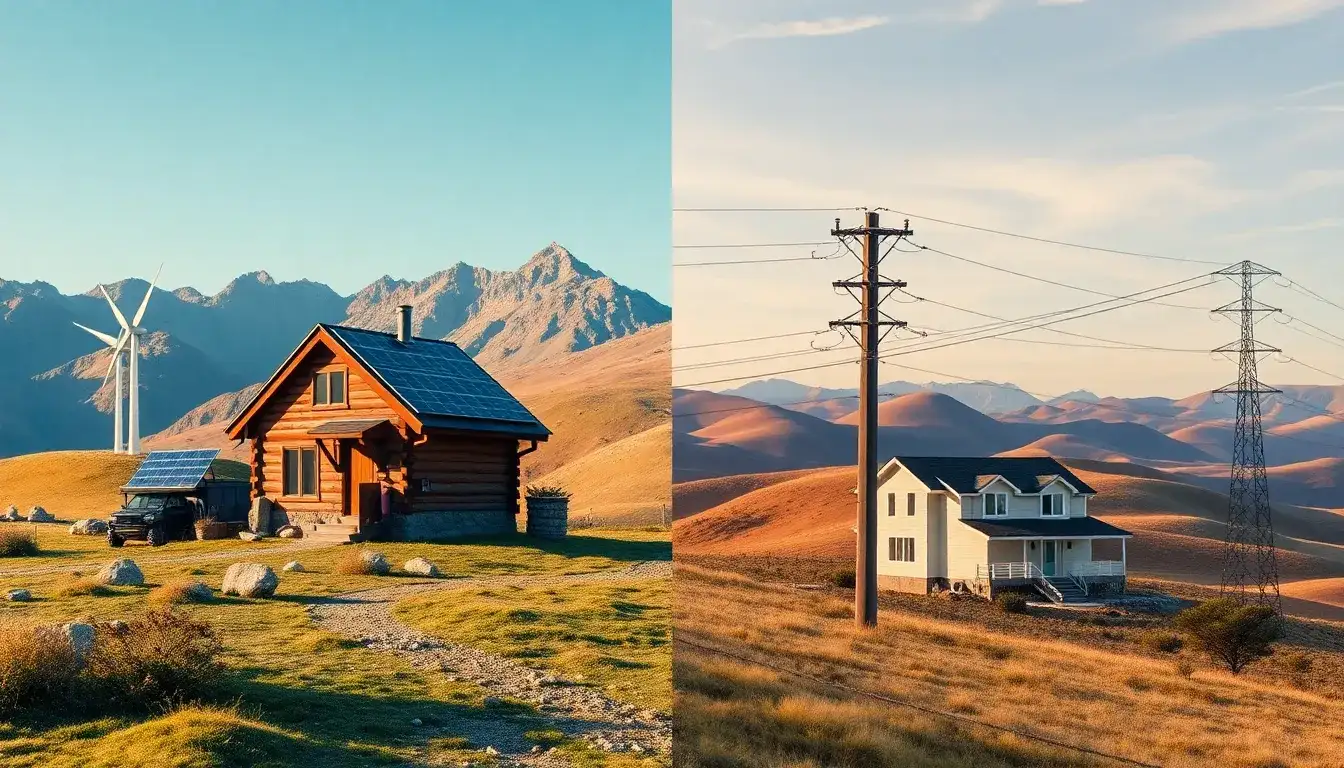
The reliability of off-grid and grid-tied solar systems in remote areas differs significantly based on their design and functionalities.
Off-Grid Solar Systems
Reliability in Remote Areas:
Off-grid solar systems are highly reliable in remote areas because they operate independently of the utility grid. They consist of solar panels, batteries, and an inverter, which allow them to provide electricity even when the sun is not shining or during power outages on the grid. This independence is crucial in remote areas where grid access might be unreliable or non-existent.
Pros:
- Energy Independence: Off-grid systems provide complete self-sufficiency, making them ideal for areas not connected to the grid.
- No Grid Dependence: They are not affected by grid outages.
Cons:
- Higher Upfront Costs: Off-grid systems require expensive battery storage, which increases the initial investment.
- Complex Maintenance: Battery management and potential generator backup add complexity.
Grid-Tied Solar Systems
Reliability in Remote Areas:
Grid-tied systems are less reliable in remote areas primarily because they rely on the utility grid to function fully. While they can reduce electricity bills and provide surplus energy back to the grid, they require consistent grid access to work at their best. In areas with unreliable grid access, they may not be effective during power outages unless paired with a backup battery system.
Pros:
- Cost-Effective: Lower initial costs without the need for battery storage.
- Unlimited Power Supply: Access to grid electricity ensures a steady energy supply when solar production is low.
Cons:
- Dependent on Grid: Vulnerable to grid outages unless a battery backup is installed.
- Less Control: Remain partially dependent on utility companies.
Conclusion
Off-grid systems are more reliable in remote areas due to their independence from the grid, while grid-tied systems are more suitable for areas with reliable grid access. However, hybrid systems, which combine elements of both, offer a balanced approach by providing energy independence and grid connectivity.
Original article by NenPower, If reposted, please credit the source: https://nenpower.com/blog/how-does-the-reliability-of-off-grid-systems-compare-to-grid-tied-systems-in-remote-areas/

