

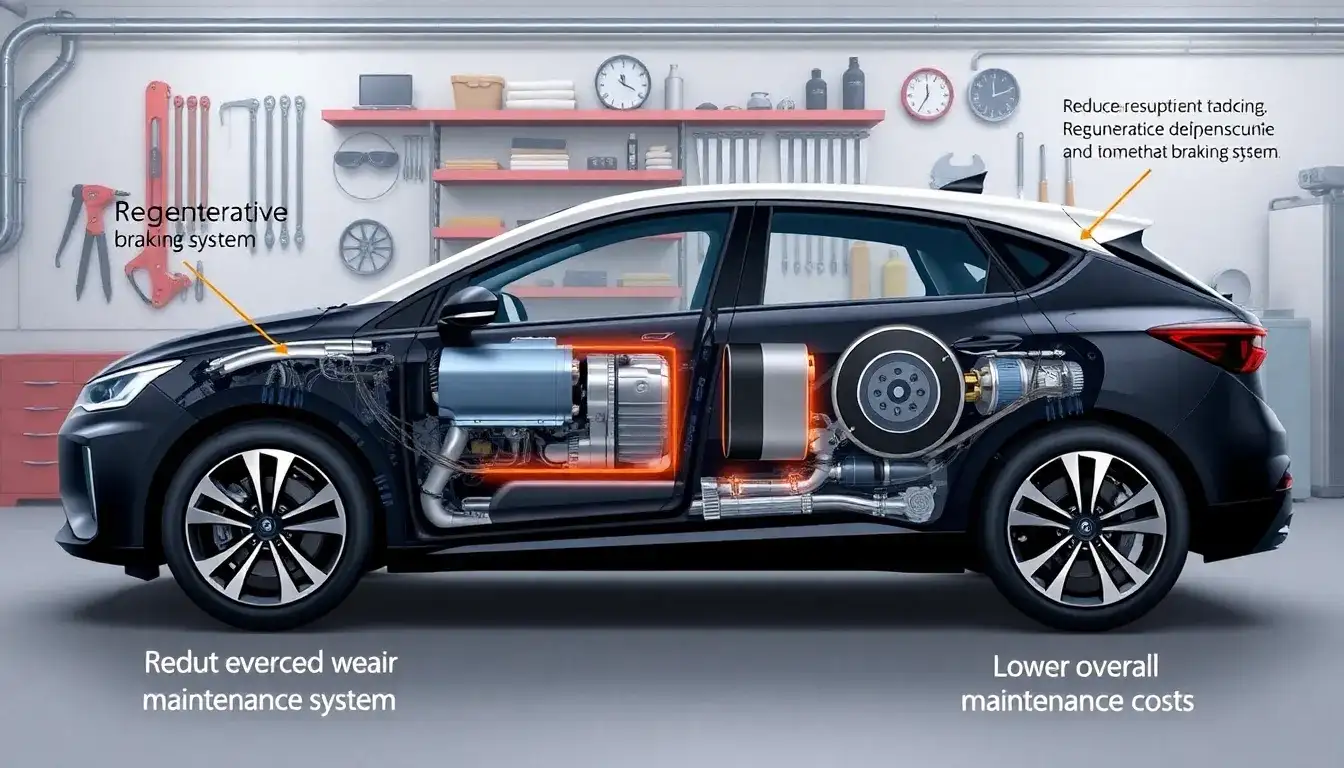
The regenerative braking system in plug-in hybrid electric vehicles (PHEVs) reduces overall maintenance costs primarily by decreasing wear on braking components and improving efficiency of the hybrid system. Here’s how:
- Brake wear reduction: Regenerative braking uses the electric motor to slow the vehicle, recovering energy and reducing reliance on traditional friction brakes. This significantly extends the lifespan of brake pads and rotors, with some hybrids requiring brake service less than half as often as conventional vehicles.
- Lower friction component costs: By handling most low-speed braking through regeneration, the system minimizes heat and wear on mechanical brake parts, translating to fewer replacements and lower maintenance expenses over time.
- Engine wear reduction: The electric motor assists during acceleration and low-speed driving, reducing strain on the gasoline engine. This can delay oil changes (depending on usage patterns) and prolong engine component life.
While PHEVs retain combustion engine maintenance needs (oil changes, belt replacements, etc.), their blended powertrain design and regenerative braking create net cost savings compared to conventional vehicles. Consumer Reports data shows PHEVs average 3 cents per mile in maintenance costs versus 6 cents for gasoline vehicles, with lifetime costs roughly half those of conventional cars ($4,600 vs $9,200 over 200k miles). However, actual savings depend on how often drivers use electric-only mode to minimize engine runtime.
Original article by NenPower, If reposted, please credit the source: https://nenpower.com/blog/how-does-the-regenerative-braking-system-in-phevs-impact-overall-maintenance-costs/

