

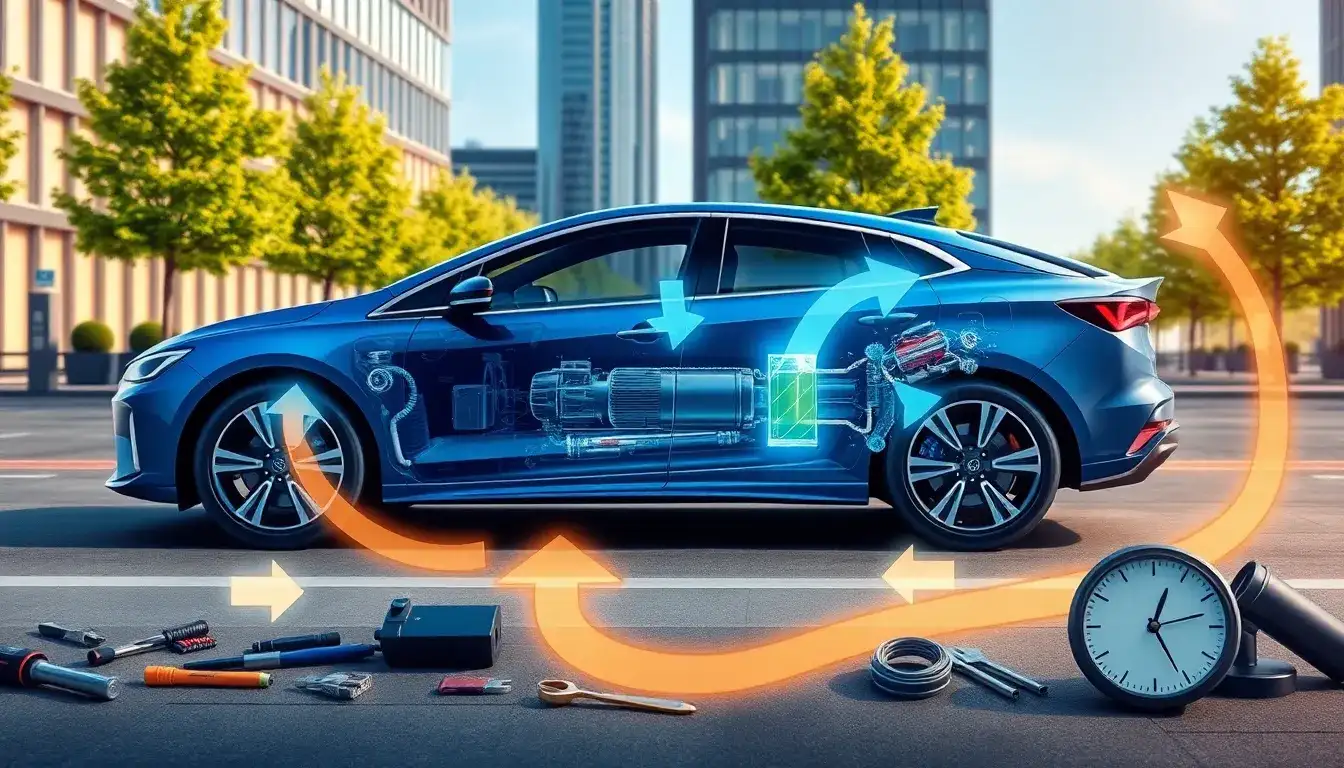
The regenerative braking system in Plug-in Hybrid Electric Vehicles (PHEVs) significantly impacts overall maintenance by extending the lifespan of critical components and improving vehicle efficiency.
Reduced Wear and Tear on Brakes
- Longer Brake Life: Regenerative braking reduces the reliance on conventional friction brakes, such as brake pads and discs, by capturing kinetic energy and converting it into electrical energy. This results in less frequent use of mechanical brakes, leading to extended lifetimes for brake components. Brake pads and rotors typically last longer, requiring less frequent replacement and reducing maintenance costs.
- Less Heat and Dust: Reduced use of friction brakes leads to less heat buildup and brake dust accumulation, which enhances both the longevity of brake components and the aesthetic appeal of the vehicle.
Enhanced Vehicle Efficiency and Environmental Benefits
- Improved Fuel Economy: By recovering and utilizing kinetic energy, regenerative braking enhances fuel economy and extends the electric-only driving range in PHEVs.
- Environmental Advantages: This technology helps reduce greenhouse emissions by optimizing energy use and supporting cleaner mobility.
Maintenance Considerations for PHEVs
- Specialized Maintenance Needs: PHEVs require regular maintenance of both conventional and electric components, including engine checks, battery health assessments, and software updates. This ensures optimal performance of both the gasoline engine and electric motor.
Overall, the regenerative braking system in PHEVs contributes to cost-effective maintenance, improved vehicle efficiency, and a reduced environmental impact.
Original article by NenPower, If reposted, please credit the source: https://nenpower.com/blog/how-does-the-regenerative-braking-system-in-phevs-impact-overall-maintenance/

