

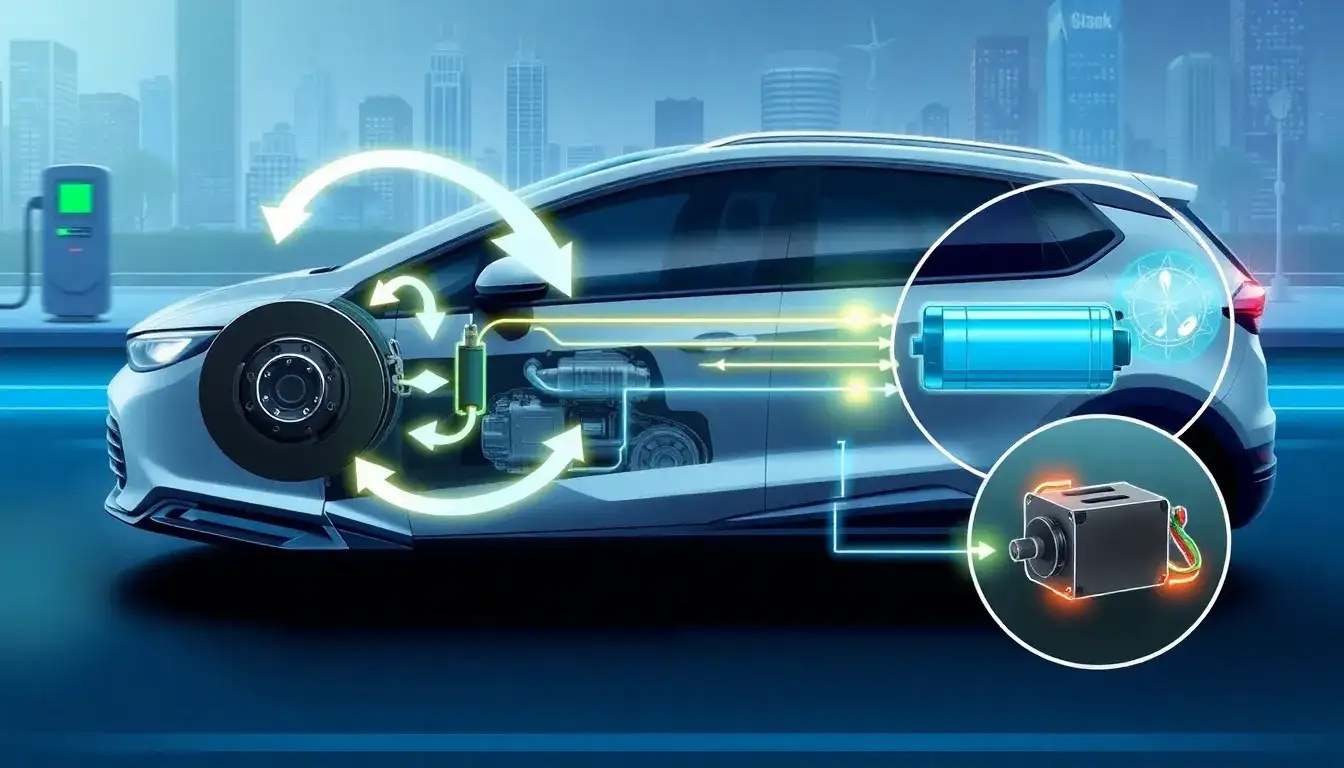
Advantages of Regenerative Braking in PHEVs
1. Improved Energy Efficiency
Regenerative braking captures kinetic energy that would otherwise be wasted as heat during traditional braking. This energy is converted into electricity and stored in the vehicle’s battery, which can then be used to power the electric motor. This process optimizes performance and extends the vehicle’s electric range, reducing the need for frequent recharging or fuel use.
2. Extended Electric Range
By recharging the battery during braking, regenerative braking helps maximize the vehicle’s electric range. This is particularly beneficial in city driving, where frequent stops and starts are common, allowing the vehicle to rely more on electric power and less on the gasoline engine.
3. Reduced Brake Wear
Regenerative braking reduces the reliance on friction brakes, which minimizes wear and tear on brake pads, discs, and drums. This extends the lifespan of brake components and lowers maintenance costs.
4. Smoother Driving Experience
The system provides smoother deceleration, improving the overall driving experience, especially in stop-and-go traffic conditions.
5. Environmental Benefits
By recovering energy and reducing the vehicle’s reliance on the gasoline engine, regenerative braking contributes to lower CO2 emissions and a smaller carbon footprint, aligning with the eco-friendly nature of hybrid vehicles.
Overall, regenerative braking is a crucial feature that enhances the efficiency, performance, and environmental sustainability of PHEVs.
Original article by NenPower, If reposted, please credit the source: https://nenpower.com/blog/how-does-the-regenerative-braking-system-in-phevs-enhance-their-overall-efficiency/

