

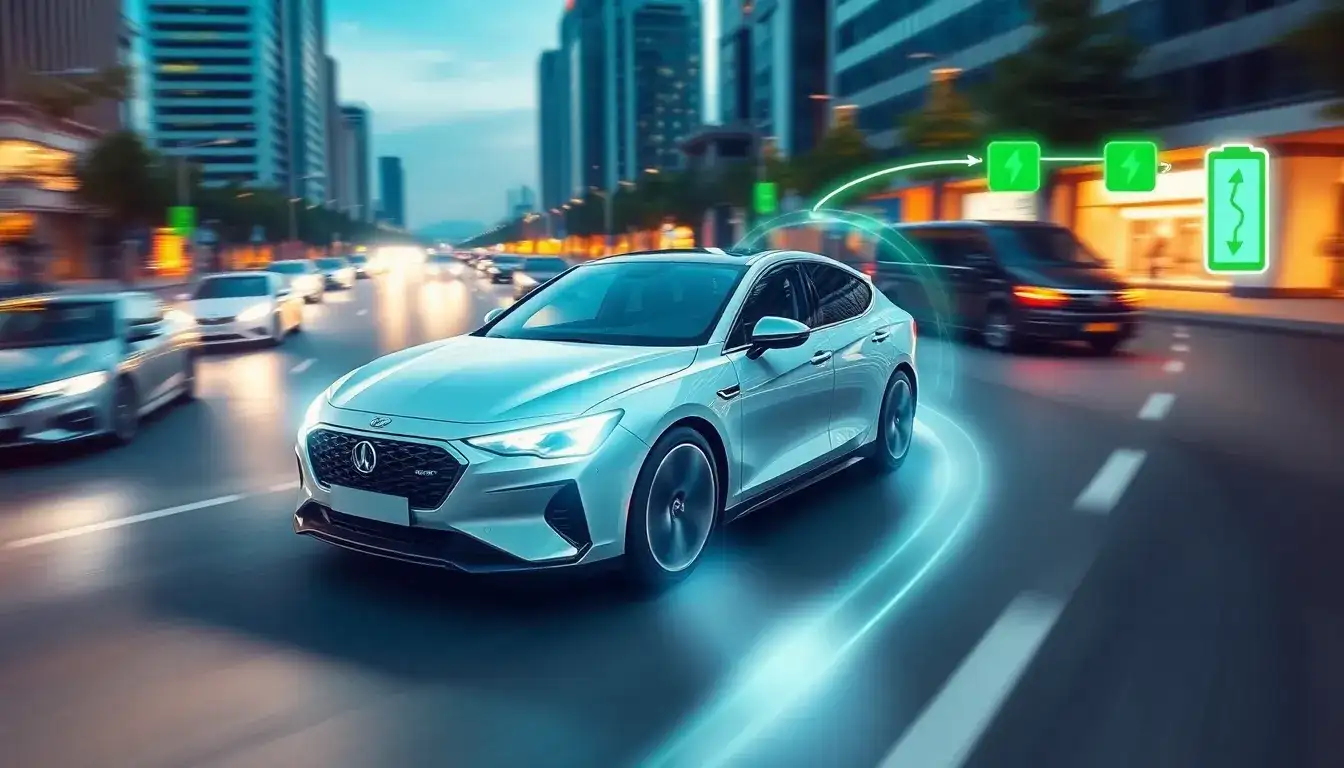
Regenerative braking in HEVs and PHEVs significantly affects driving dynamics and efficiency. Here’s how it shapes the experience:
Driving Sensations
Regenerative braking introduces resistance when decelerating, often creating a mild drag effect as soon as the accelerator is released. Drivers may perceive this as a firmer or more responsive brake pedal compared to conventional cars. Some systems allow adjustable regeneration levels, enabling customization of coasting behavior.
Energy Efficiency
The system recovers kinetic energy during deceleration, converting it to electricity stored in the battery. This reduces reliance on:
- Friction brakes: Less wear and tear on traditional braking components
- Gasoline engines: Stored energy powers electric motors, lowering fuel consumption
Operational Benefits
- Extended electric range: In PHEVs, recovered energy supplements plug-in charging, enhancing electric-only driving capability
- Smoother deceleration: Gradual energy recovery can reduce abrupt stops, particularly beneficial in urban driving
- Reduced maintenance: Regenerative systems decrease mechanical brake usage, potentially extending service intervals
Adaptation Challenges
New drivers often require adjustment to:
- One-pedal driving: Strong regeneration settings allow speed modulation via accelerator alone
- Predictive braking: Optimal efficiency demands anticipating stops to maximize energy recovery
This technology fundamentally alters vehicle behavior, prioritizing energy conservation without sacrificing drivability.
Original article by NenPower, If reposted, please credit the source: https://nenpower.com/blog/how-does-the-regenerative-braking-system-impact-the-overall-driving-experience-in-hevs-and-phevs/

