

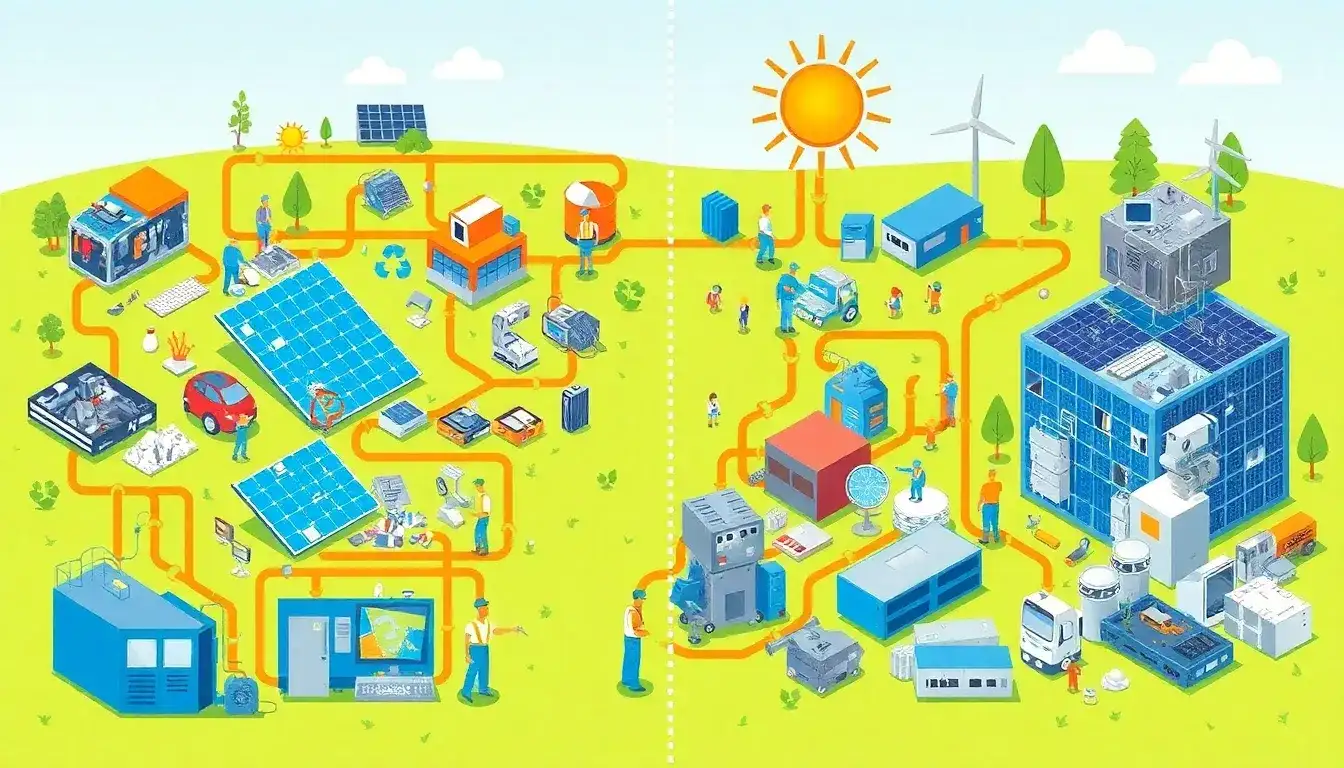
The recycling process of solar panels differs from that of other types of electronics primarily because of the materials involved and the methods used to recover them efficiently.
Specifics of Solar Panel Recycling
Material Composition and Initial Disassembly:
Solar panels, especially silicon-based photovoltaic (PV) panels, mainly consist of glass, aluminum frames, silicon cells, plastics, and small amounts of valuable metals like silver and copper. The recycling process begins by removing the aluminum frame and the junction box, which are 100% reusable.
Separation of Glass and Thermal Processing:
The glass, which makes up about 95% of the panel, is separated typically on a conveyor belt and can be reused almost entirely. After glass removal, the panels are subjected to thermal processing around 500°C. This step evaporates the encapsulating plastic layers and allows for easier removal and recovery of the silicon cells. The plastic from the encapsulant can be used as a heat source in the thermal process itself, minimizing waste.
Silicon Recovery and Refinement:
After thermal treatment, silicon wafers—key components in solar panels—are physically separated. Approximately 85% of silicon material can be recovered by etching away wafers with acid or melting broken wafers to reuse them in new panels. This silicon recycling step is specialized and distinct compared to typical electronic recycling.
Advanced Mechanical Processing for Thin-Film Panels:
Thin-film solar panels, which differ in technology from silicon-based ones, are shredded and ground into small particles. This allows separation of lamination materials so that valuable components can be extracted.
Proprietary Multi-Step Processes:
Some modern recyclers use automated and proprietary multi-step methods to cleanly remove glass, shred the remaining laminate (containing cells and plastic layers), and separate plastics from metals like silver, silicon, and copper with high recovery rates (up to 95% material value recovery).
How This Differs from Other Electronics Recycling
- Material Focus: Electronics recycling focuses extensively on extracting metals (gold, copper, aluminum, rare earths) from circuit boards and plastics, often requiring complex chemical or mechanical processing to separate small components. Solar panels emphasize recovering large quantities of glass, aluminum, and silicon wafers.
- Thermal Processing Stage: The high-temperature treatment (around 500°C) to evaporate encapsulating plastics is unique to solar panels to free silicon wafers, which is not typical in standard electronic waste recycling.
- Silicon Wafer Recovery: The refining of silicon wafers through chemical etching and melting is specific to solar panels to enable reuse in new modules, unlike general electronics recycling, where silicon chips on circuit boards are not typically reusable in this way.
- Scale and Form Factor: Solar panels are large, flat panels with defined separable layers (glass, frame, laminate), making mechanical separation steps (like frame removal and glass separation) straightforward but requiring careful treatment of encapsulated silicon cells.
Summary Table
| Aspect | Solar Panel Recycling | Typical Electronics Recycling |
|---|---|---|
| Key materials recovered | Glass (95%), Aluminum (100%), Silicon (85%), Metals | Precious metals, plastics, circuit boards, metals |
| Initial disassembly | Frame and junction box removal | Component removal, circuit board extraction |
| Thermal processing | Yes, ~500°C to evaporate plastics | Rarely used or lower temperature methods |
| Silicon wafer treatment | Chemical etching and melting to reclaim silicon | Silicon chips usually not recycled for reuse |
| Mechanical separation | Glass separated via conveyor belts, shredding | Shredding, magnetic separation, chemical baths |
| Recovery rates | Up to ~95% material value recovered | Varies, often focused on metals recovery |
In conclusion, solar panel recycling employs specialized thermal and chemical methods focused on recovering silicon wafers and large volumes of glass and aluminum, distinguishing it from the more metal- and plastic-centric processes typical of general electronics recycling.
Original article by NenPower, If reposted, please credit the source: https://nenpower.com/blog/how-does-the-recycling-process-of-solar-panels-differ-from-other-types-of-electronics/

