

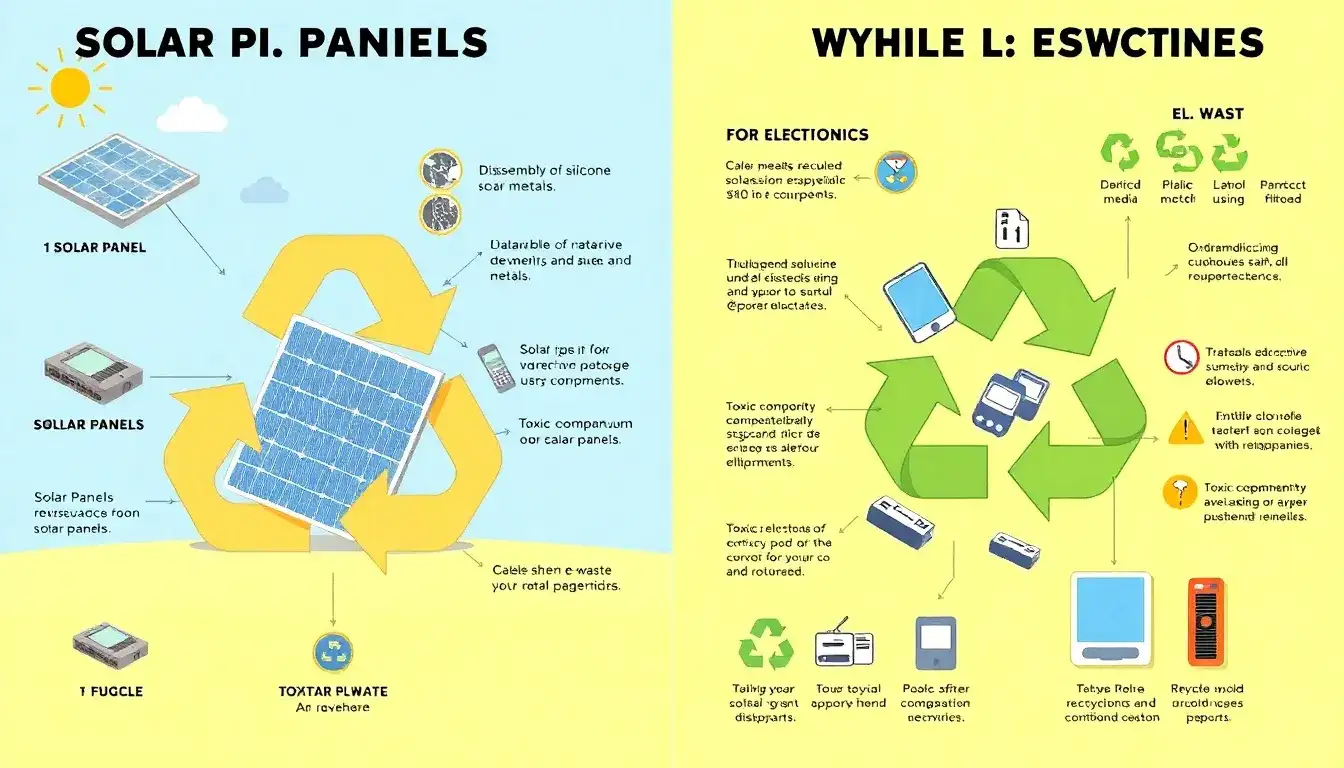
The recycling process for solar panels differs from that of other electronics primarily due to the unique composition and construction of solar panels, which are mainly made up of glass, aluminum, silicon cells, and various plastics.
Key Differences in Solar Panel Recycling
Material Composition and Initial Disassembly
– Solar panels mostly consist of glass (up to 95% by weight), aluminum frames, silicon-based cells, and encapsulating plastic layers. In contrast, typical electronics contain a mix of plastics, metals like copper, gold, and rare earth elements, and circuit boards.
– Recycling solar panels starts with disassembling the aluminum frame and junction box, which are removed and recycled separately, recovering almost 100% of the aluminum.
Separation of Glass
– Almost all (about 95%) of the glass in solar panels can be directly recovered and reused, often by mechanically separating it on conveyor belts. Glass is much more abundant in panels than in most electronics.
Thermal Processing
– A critical step in solar panel recycling is thermal treatment at around 500°C to evaporate the encapsulating plastic and facilitate separation of silicon cells from the glass and other materials. This step is somewhat unique to solar panels due to the durable plastic lamination used to protect the cells.
– Typical electronics recycling rarely involves such high-temperature treatments focused on plastic encapsulation removal.
Silicon Cell Recovery
– After thermal processing, further chemical processing (etching with acid) is used to recover silicon wafers. About 85% of silicon material can be reclaimed and reused for new solar modules. This silicon recovery is a distinctive feature of solar panel recycling since silicon wafers are not present in most other electronics.
Proprietary Multi-step Processes for Material Separation
– Some solar recycling facilities use proprietary automated processes to separate plastics, silver, silicon, copper, and other valuable metals from shredded remaining laminate material. This is tailored to the layered structure of solar panels and differs from typical electronic waste recycling, which focuses more on circuit board and metal recovery.
Summary Table
| Aspect | Solar Panel Recycling | Typical Electronics Recycling |
|---|---|---|
| Main materials recovered | Glass (95% reusable), Aluminum (100%), Silicon (85%) | Metals (copper, gold, rare earths), Plastics |
| Initial disassembly | Aluminum frame and junction box removal | Battery removal, circuit board extraction |
| Thermal processing | ~500°C to evaporate encapsulating plastic | Rarely involves thermal plastic removal |
| Silicon recovery | Acid etching and melting to reclaim silicon wafers | Not applicable |
| Plastic separation | Multi-step processes after shredding laminates | Mechanical and chemical plastic separation |
In essence, solar panel recycling is tailored to reclaim glass, aluminum, and especially silicon materials using thermal and chemical treatments unique to photovoltaic panels, setting it apart from the more metal- and plastic-focused recycling processes of typical electronic devices.
Original article by NenPower, If reposted, please credit the source: https://nenpower.com/blog/how-does-the-recycling-process-for-solar-panels-differ-from-other-types-of-electronics/

