

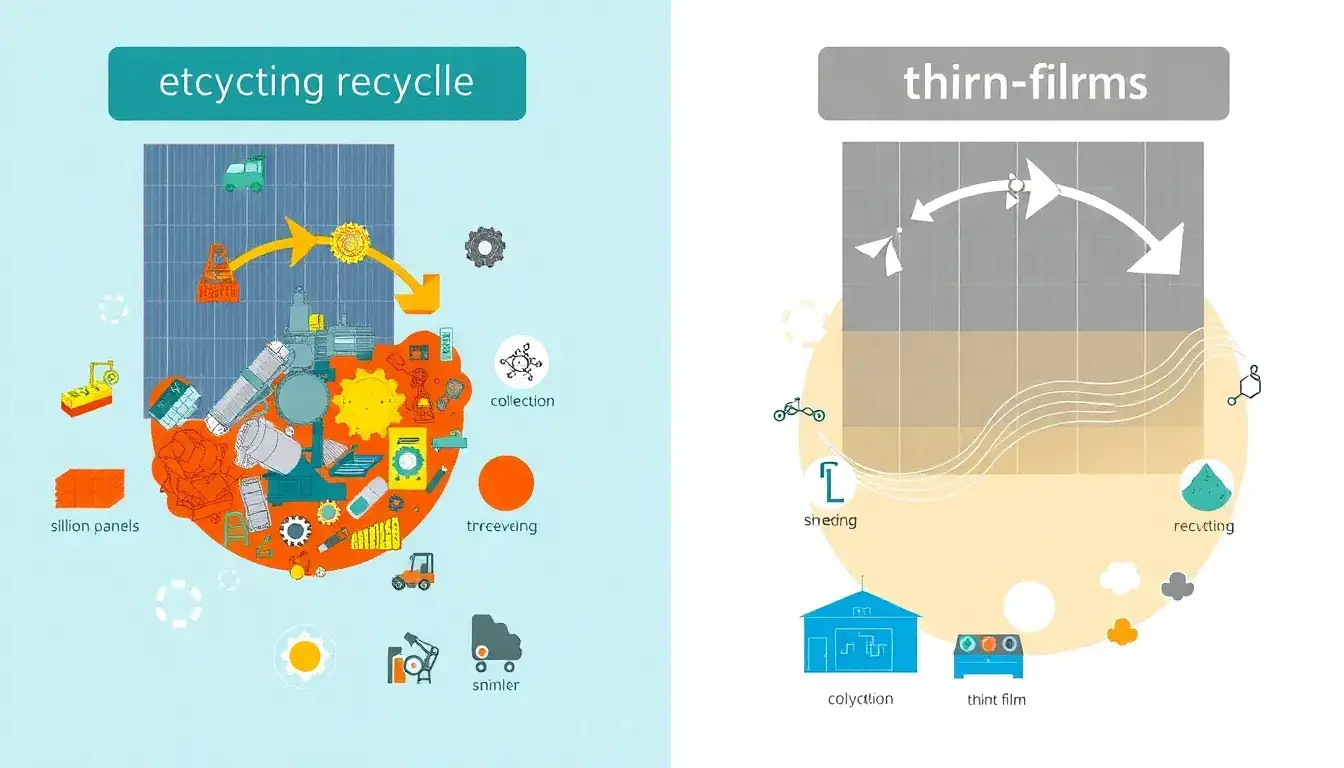
The recycling process for silicon-based solar panels and thin-film solar panels differs significantly due to the materials used in each type of panel.
Silicon-Based Solar Panels
The recycling process for silicon-based panels begins with:
- Disassembly: Removing external components such as aluminum frames and copper cables. Aluminum frames are 100% reusable.
- Glass Separation: Glass is separated from the panel body using conveyor belts, with about 95% of it being reusable.
- Thermal Treatment: Panels are heated to 500°C to evaporate encapsulating plastics and facilitate the separation of silicon cells.
- Silicon Recovery: Silicon wafers are etched with acid and smelted for reuse, achieving an 85% recycling rate for silicon.
Thin-Film Solar Panels
The recycling process for thin-film panels involves:
- Shredding: Panels are first shredded into smaller pieces.
- Hammermilling: Shredded pieces are further reduced using a hammermill to break down lamination, allowing material separation.
- Separation and Refining: Unlike silicon-based panels, this process does not specifically focus on glass or aluminum separation but rather on breaking down the panel into its basic components for material recovery.
In summary, silicon-based panels are recycled with a focus on reusing glass, aluminum, and silicon, while thin-film panels require a more aggressive mechanical breakdown to separate materials.
Original article by NenPower, If reposted, please credit the source: https://nenpower.com/blog/how-does-the-recycling-process-differ-between-silicon-based-and-thin-film-solar-panels/

