

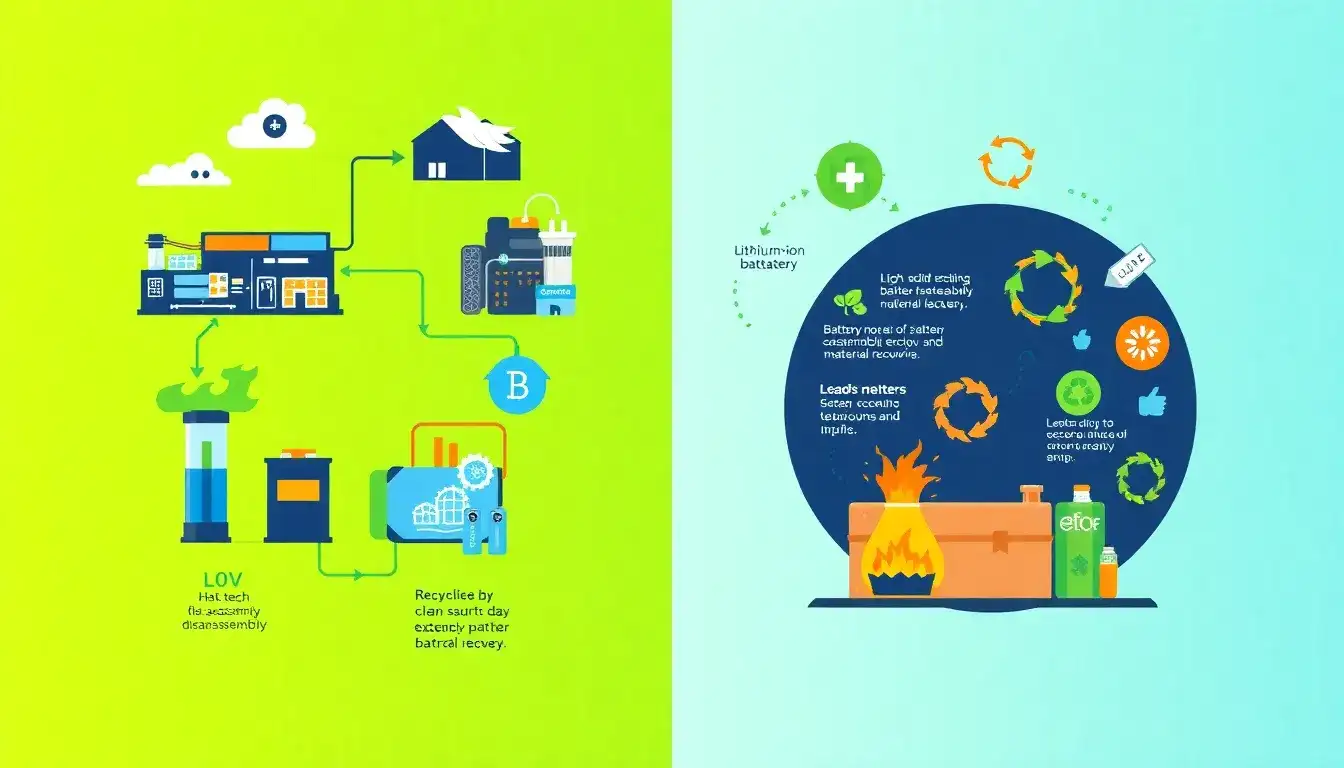
The recycling efficiency of lithium-ion batteries compares as follows to that of lead-acid batteries:
- Lithium-ion batteries currently have a recycling efficiency requirement of about 50% or more in the EU, with some advanced commercial processes achieving up to 91% material recovery by mass. Specific metals are recovered at high rates: lithium around 80%, cobalt and nickel approximately 95%. Overall, a global average recycling rate for batteries, including lithium-ion, is estimated around 59%.
- Lead-acid batteries have a much more mature and efficient recycling system, with nearly 100% of automotive lead-acid batteries in the US being recycled. Their collection and recycling infrastructure is very well established due to strict regulations and the high value of recycled lead. Lead-acid recycling processes typically operate at very high recovery rates and collection efficiencies close to 99%.
In summary, lead-acid battery recycling is significantly more efficient and widely practiced currently, with collection and recycling rates near total recovery, whereas lithium-ion recycling is improving rapidly but still lags behind due to newer technologies and less established infrastructure. However, top commercial lithium-ion recycling facilities are closing the gap with high recovery rates for critical materials.
Original article by NenPower, If reposted, please credit the source: https://nenpower.com/blog/how-does-the-recycling-efficiency-of-lithium-ion-batteries-compare-to-that-of-lead-acid-batteries/

