

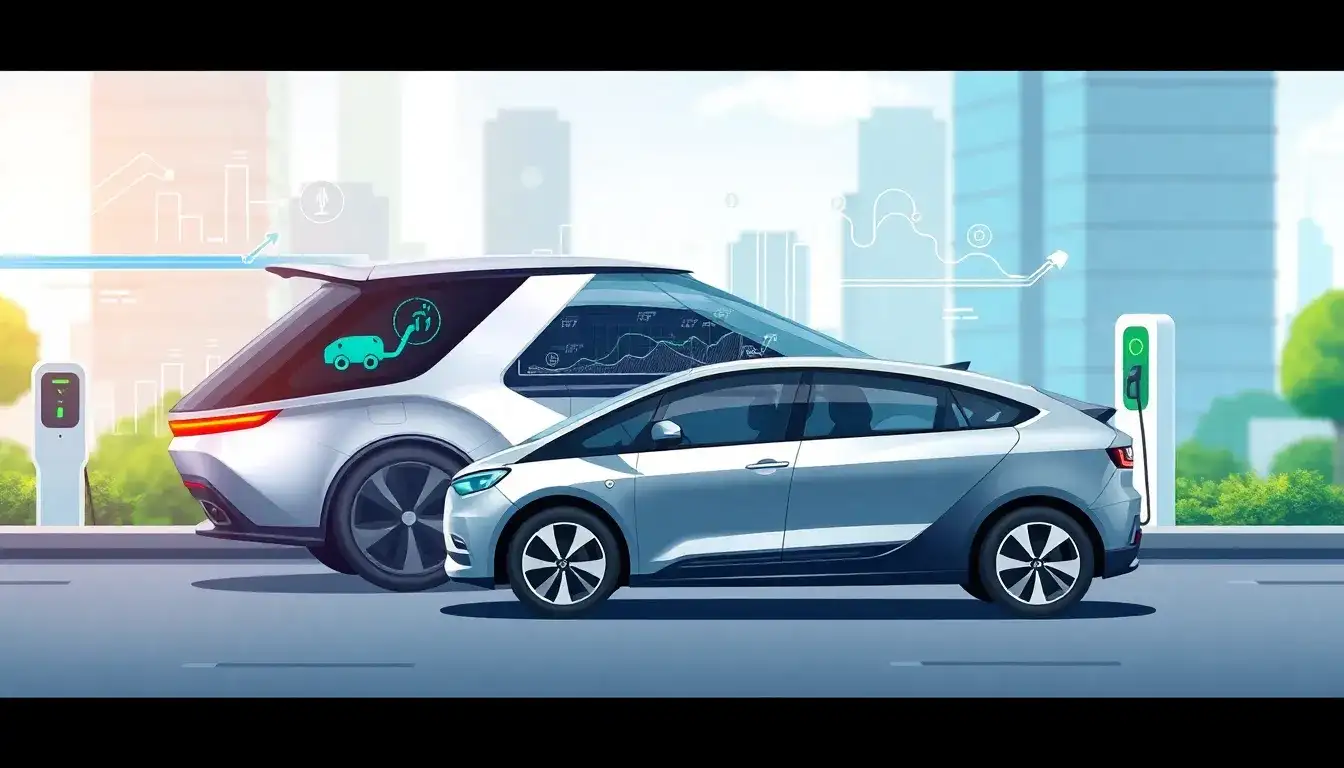
Impact on Older EV Models
1. Reduced Market Competitiveness and Depreciation
Newer EV models benefit from improved battery capacity, longer driving ranges, faster charging times, and advanced features powered by AI, such as predictive maintenance and better battery management. These technological leaps make older models comparatively less attractive to buyers, accelerating depreciation and reducing resale values. For example, older EVs with shorter ranges and slower acceleration are less appealing compared to newer models offering better performance and convenience.
2. Obsolescence of Battery and Charging Technology
Rapid progress in battery technology, especially the widespread adoption of high-energy-density lithium-ion batteries, means older EVs may have outdated batteries with lower capacity and efficiency. Additionally, newer fast-charging and wireless charging methods enhance usability but may not be compatible with older models, limiting their convenience and usability.
3. Limited Software and AI Capabilities
Modern EVs increasingly rely on AI and machine learning to optimize driving experience, energy efficiency, and safety through continuous software updates. Older EV models often lack hardware and software infrastructure to support such updates or AI-driven features like smart charging, adaptive range prediction, and autonomous driving aids, leaving them behind in terms of user experience and operational efficiency.
4. Maintenance and Efficiency Differences
While electric motors generally require less maintenance than internal combustion engines, advancements in motor and battery management systems improve the efficiency and longevity of newer EVs. Older models, while simpler in design, might suffer from faster degradation of batteries and components, potentially increasing maintenance costs over time relative to improved new models.
Summary
Overall, the rapid advancement in EV technology tends to render older models less efficient, less convenient, and less desirable in the market. This forces owners of older EVs to face challenges such as lower resale value, limited access to fast or smart charging infrastructure, and lack of advanced AI-driven features. Consequently, older models may see reduced demand and face accelerated obsolescence as technology continues to evolve at pace.
Original article by NenPower, If reposted, please credit the source: https://nenpower.com/blog/how-does-the-rapid-advancement-of-ev-technology-affect-older-models/

