

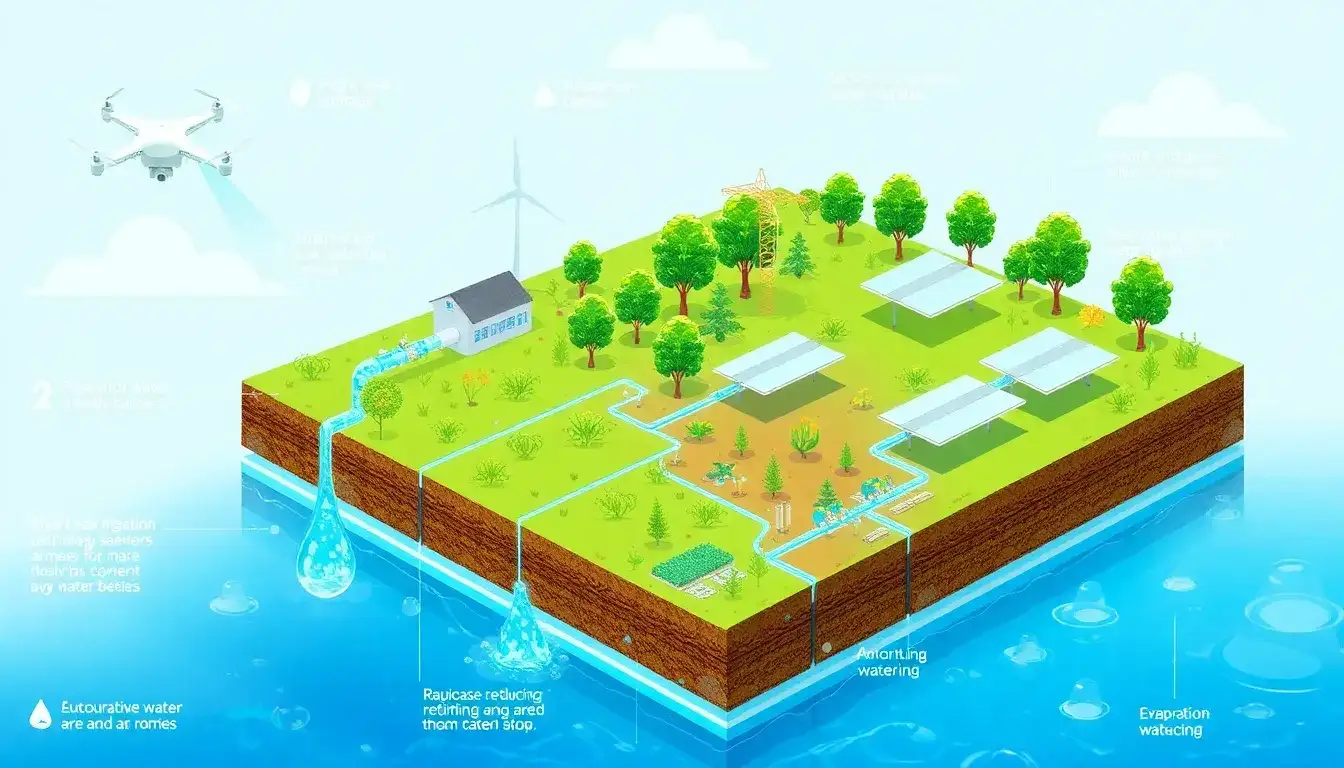
To address water loss through seepage and evaporation, the project likely employs a combination of technological, operational, and preventive strategies based on industry best practices:
Seepage Mitigation
Active leakage control (ALC) uses sensors and remote monitoring to detect subsurface leaks in distribution networks, which account for ~90% of seepage losses. Methods include:
- Sonic leak-detection equipment to locate underground leaks.
- Network segmentation to isolate and assess high-loss sections.
- Rapid repair protocols for identified leaks.
Preventive measures include:
- Replacing aging infrastructure and installing flow-reducing devices.
- Corrosion control to minimize pipe degradation.
- Pressure management to reduce stress on pipelines.
Evaporation Reduction
While less emphasized in water distribution systems, evaporation is typically managed through:
- Reservoir covers (if applicable, though not explicitly mentioned in sources).
- Efficient metering and monitoring to track usage patterns and identify abnormal losses.
- Public education programs to reduce discretionary water use, indirectly lowering evaporation in stored water.
Cross-Cutting Strategies
- Advanced metering infrastructure to detect unauthorized consumption and quantify losses.
- AI-driven analytics for real-time anomaly detection in networks without preexisting smart capabilities.
- Proactive maintenance of appliances and infrastructure to prevent leaks.
For systems prioritizing seepage, the focus remains on rapid detection, infrastructure upgrades, and pressure regulation.
Original article by NenPower, If reposted, please credit the source: https://nenpower.com/blog/how-does-the-project-address-water-loss-through-seepage-and-evaporation/

