

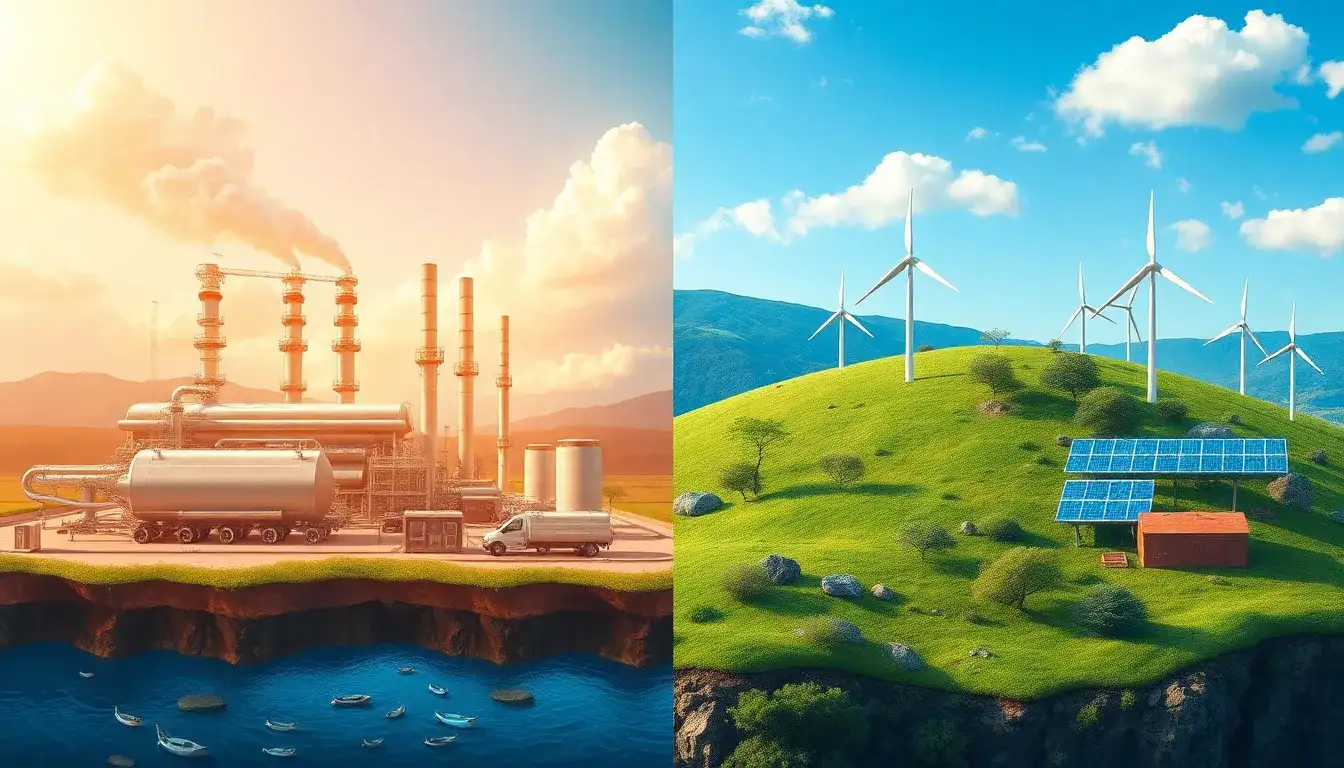
Environmental Impact of Hydrogen Production vs. Battery Energy Storage
Both hydrogen production and battery energy storage have unique environmental impacts. Here’s a comparison focusing on their production and usage:
Hydrogen Production
- Source Dependence: Most hydrogen is currently produced from fossil fuels (like natural gas and coal), which results in significant CO2 emissions—around 830 million tonnes annually for 74 million tonnes of hydrogen. This process contributes to greenhouse gas emissions, negatively impacting the climate.
- Cleaner Alternatives: Green hydrogen, produced using renewable energy sources like wind or solar to electrolyze water, offers a cleaner alternative with virtually zero emissions during production. However, it still requires significant amounts of water and renewable energy.
- Leakage Concerns: Hydrogen, being a small molecule, is prone to leakage, which can lead to indirect warming effects by increasing methane and ozone levels in the atmosphere.
- Resource Efficiency: Producing green hydrogen is energy-intensive, often requiring two to 14 times more energy than using direct electrification for some applications.
Battery Energy Storage
- Production Emissions: Battery production involves material extraction (e.g., lithium, cobalt) and manufacturing processes, which have environmental impacts such as energy consumption and potential pollution.
- Low Operational Emissions: Batteries themselves do not emit greenhouse gases during operation, making them a cleaner energy storage option compared to fossil fuel-based hydrogen.
- Recycling and Waste: As battery technology advances, recycling methods are being developed to reduce waste, though this remains an area needing improvement.
- Efficiency and Cost: Batteries are often more efficient in terms of energy conversion and storage compared to hydrogen, especially for smaller-scale applications like cars and home energy systems.
Comparison Summary
| Aspect | Hydrogen Production | Battery Energy Storage |
|---|---|---|
| Emissions During Production | High (fossil fuel-based), minimal (green hydrogen) | Moderate during manufacture, minimal during operation |
| Resource Use | High energy requirement for green hydrogen; water-intensive | Material extraction and energy consumption during production |
| Efficiency | Energy-intensive process; potential for significant leakage | Generally more efficient for direct electrification applications |
| Operational Emissions | Zero emissions from hydrogen combustion; leakage issues | Zero emissions during operation; recycling challenges remain |
In conclusion, while hydrogen has the potential to be a clean energy carrier, especially when produced from renewable sources, its production and leakage issues pose significant environmental challenges. Battery energy storage offers a more direct and efficient way to manage energy but involves environmental concerns during production and disposal.
Original article by NenPower, If reposted, please credit the source: https://nenpower.com/blog/how-does-the-production-process-of-hydrogen-impact-the-environment-compared-to-battery-energy-storage/

