

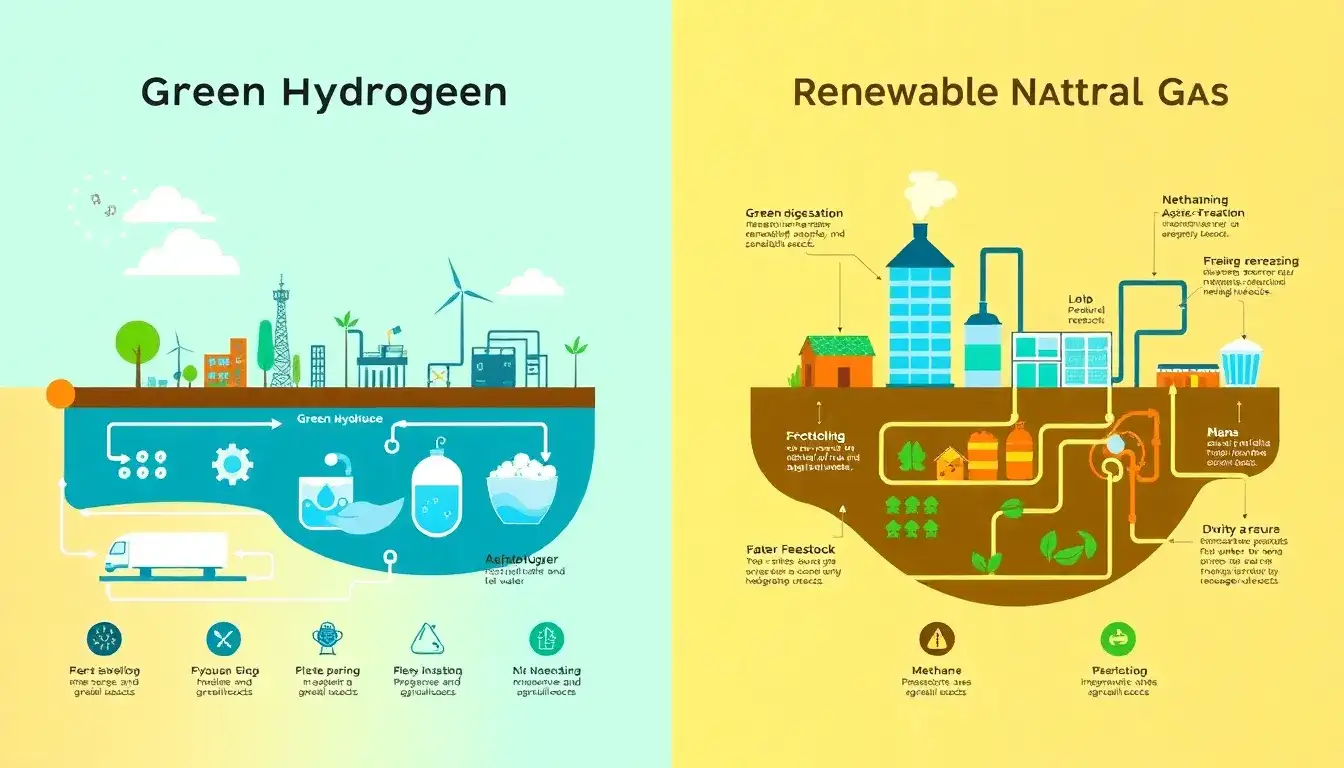
Green Hydrogen Production
Green hydrogen is produced through electrolysis powered exclusively by renewable energy sources such as wind, solar, or hydroelectric power. During electrolysis, an electric current is passed through water, splitting water molecules (H₂O) into oxygen (O₂) and hydrogen (H₂). The key characteristic of green hydrogen production is that the electricity used is entirely renewable, resulting in zero carbon emissions across the production process. This method relies on electrolyzers to carry out the water-splitting reaction efficiently and is considered a clean and sustainable way to generate hydrogen fuel.
Renewable Natural Gas Production
Renewable natural gas, by contrast, is produced biologically. RNG is typically generated by capturing biogas from organic waste sources such as landfills, agricultural waste, or wastewater treatment plants. The biogas primarily consists of methane produced through the anaerobic digestion of organic matter by microorganisms. This methane is then purified to remove impurities and upgraded to pipeline-quality natural gas. Unlike green hydrogen, RNG production is a biological or thermochemical process that recycles carbon contained in biomass, rather than splitting water molecules using electricity.
Summary of Differences
| Aspect | Green Hydrogen | Renewable Natural Gas |
|---|---|---|
| Feedstock | Water (H₂O) | Organic waste (biomass) |
| Production method | Electrolysis powered by renewable electricity | Anaerobic digestion or thermal gasification of biomass |
| Main output | Hydrogen gas (H₂) | Methane (CH₄) |
| Energy input | Renewable electricity (solar, wind, hydro) | Biological/thermochemical processes |
| Carbon emissions | Zero during production (if powered by renewables) | Low-carbon, reuses organic carbon |
| Technology maturity | Commercially available electrolyzers | Well-established biogas capture and upgrading |
In essence, green hydrogen production is an electrochemical process using renewable electricity to split water, whereas renewable natural gas production is a biological or thermochemical conversion of organic waste into methane fuel.
Original article by NenPower, If reposted, please credit the source: https://nenpower.com/blog/how-does-the-production-process-of-green-hydrogen-differ-from-that-of-renewable-natural-gas/

