

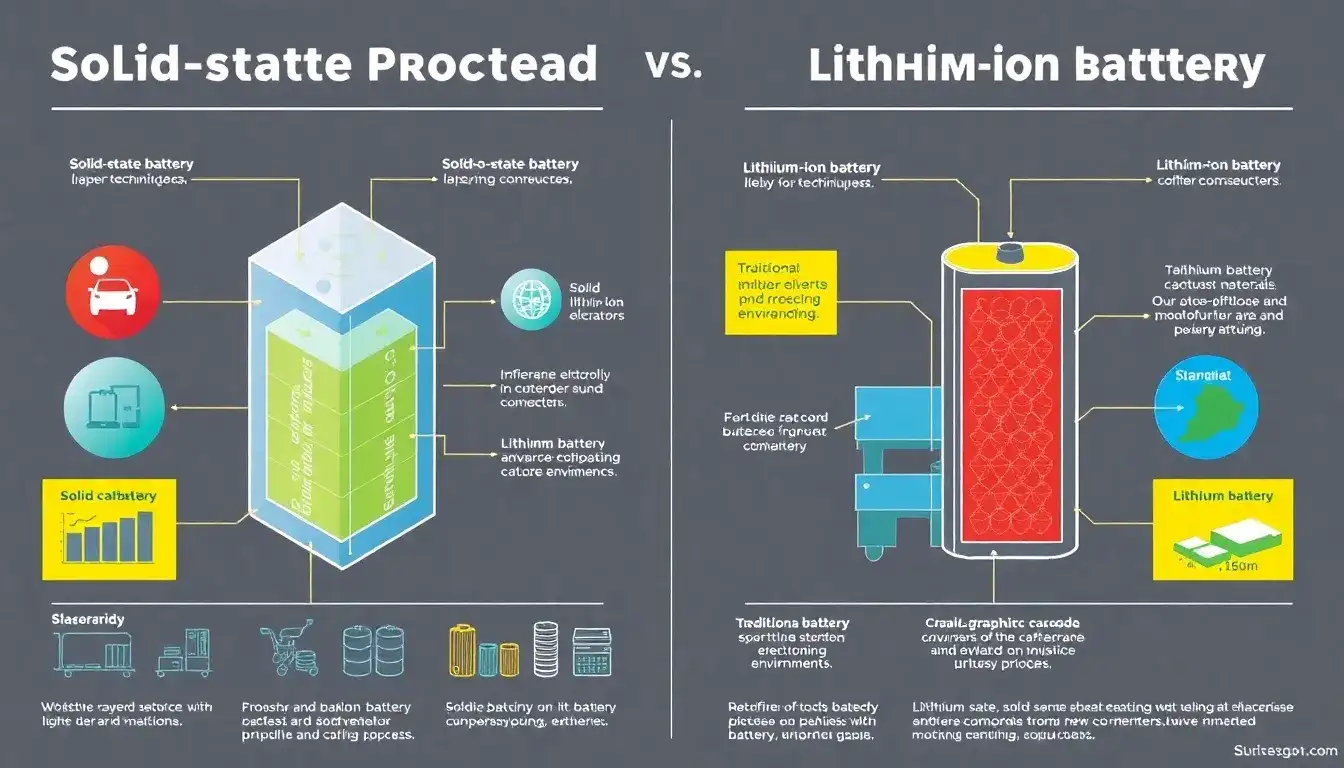
The production of cathodes for solid-state batteries (SSBs) and lithium-ion batteries (LIBs) differ primarily in the materials used, the fabrication process, and the integration with other components. Here are the key differences:
Material Differences
- Lithium-Ion Batteries (LIBs): The cathode in LIBs typically uses lithium metal oxides such as Lithium Iron Phosphate (LFP), Lithium Nickel Manganese Cobalt Oxide (NMC), or Lithium Manganese Oxide (LMO). These materials are well-established and widely used.
- Solid-State Batteries (SSBs): SSBs can also use similar lithium metal oxides, but the challenge lies in stabilizing these materials against the solid electrolyte to prevent oxidative degradation and mechanical issues. Recent developments focus on using composite cathodes with stable interfaces to improve performance.
Fabrication Process
- Lithium-Ion Batteries (LIBs): The production of LIB cathodes involves coating active materials onto a current collector, typically in a slurry form, followed by drying and calendaring processes. This is a mature technology with established processes.
- Solid-State Batteries (SSBs): For SSBs, the cathode fabrication may involve similar coating processes, but integrating these with a solid electrolyte presents challenges such as ensuring mechanical integrity and minimizing electrical resistance at interfaces. Composite designs are being developed to enhance stability and performance.
Integration with Solid Electrolyte
- Lithium-Ion Batteries (LIBs): In LIBs, the cathode is simply coated with active material and then assembled with other components in a liquid electrolyte environment.
- Solid-State Batteries (SSBs): In SSBs, the cathode must be designed to work in conjunction with a solid electrolyte. The solid electrolyte acts as both an insulator and an ion conductor, requiring careful compatibility at the cathode-solid electrolyte interface to prevent reactivity issues.
Production Stages
- Lithium-Ion Batteries (LIBs): Production largely involves electrode coating, cell assembly, and electrolyte filling. The cell can be wound into a cylindrical shape (jelly roll) without significant mechanical stress issues.
- Solid-State Batteries (SSBs): The production process involves electrode and electrolyte production, cell assembly by stacking due to the solid nature of components, and cell finishing. The stacking method helps minimize deformation and stress on brittle components like ceramics.
In summary, while both types of batteries can use similar active materials, the solid-state battery requires careful design and interface management due to its solid electrolyte and potential mechanical and chemical challenges.
Original article by NenPower, If reposted, please credit the source: https://nenpower.com/blog/how-does-the-production-of-the-cathode-differ-between-solid-state-batteries-and-lithium-ion-batteries/

