

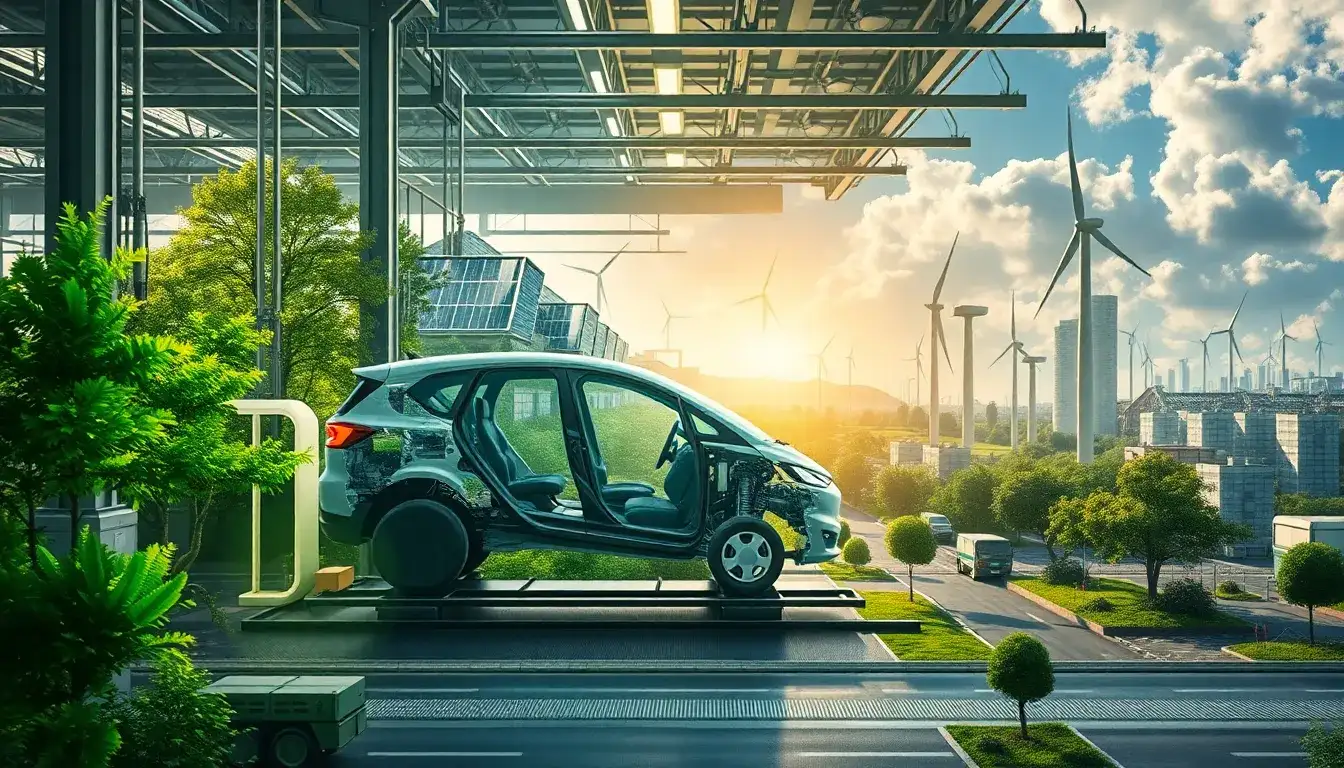
The production of electric vehicles (EVs) has a significant environmental impact, particularly due to the manufacturing of their batteries. Key points on how EV production affects the environment include:
High Carbon Emissions during Production
- Manufacturing an electric vehicle produces substantially more carbon emissions than making a conventional internal combustion engine (ICE) vehicle. One study found that building an EV can generate around 80% more emissions than a comparable gas car, primarily due to battery production.
- Approximately 46% of an EV’s total carbon emissions come from its production process, especially the energy-intensive mining and processing of battery minerals like lithium, cobalt, and nickel.
- For example, creating the lithium-ion battery of a Tesla Model 3 can produce 2.5 to 16 metric tons of CO2, depending on the energy source used in manufacturing. Producing a Nissan Leaf battery emits carbon equivalent to driving a gasoline car 24,000 miles, and a Tesla Model S battery can equal emissions of about 60,000 driving miles of a similar gas car.
Resource Extraction and Energy Use
- Battery production demands mining minerals at high temperatures, often relying on fossil fuels, which substantially raises emissions.
- Manufacturing facilities consume large amounts of electricity, which, depending on the energy mix, can further increase greenhouse gas emissions.
Operational Phase and Lifecycle Emissions
- Although EVs have a higher carbon footprint during production, they generally produce significantly fewer emissions during their operational life compared to ICE vehicles, especially when charged with cleaner electricity sources. Thus, over time, EVs tend to offset their initial higher manufacturing emissions.
- However, the overall environmental benefit depends on the electricity generation mix used to charge EVs. In regions where power is mainly fossil-fuel-based, the environmental advantage is reduced.
Challenges in Renewable Energy and Grid Demand
- The increased electricity demand from widespread EV adoption challenges current renewable energy capacities and requires significant grid infrastructure upgrades.
- Many EVs are still charged from grids reliant on fossil fuels, meaning the total emissions associated with EV use remain substantial.
In summary, EV production—especially battery manufacturing—creates notable environmental impacts through carbon emissions and resource extraction. While EVs offer lower emissions during use compared to gasoline cars, their production phase is energy- and emission-intensive, and the overall benefit depends on cleaner energy sources for manufacturing and charging.
Original article by NenPower, If reposted, please credit the source: https://nenpower.com/blog/how-does-the-production-of-electric-vehicles-affect-the-environment/

