

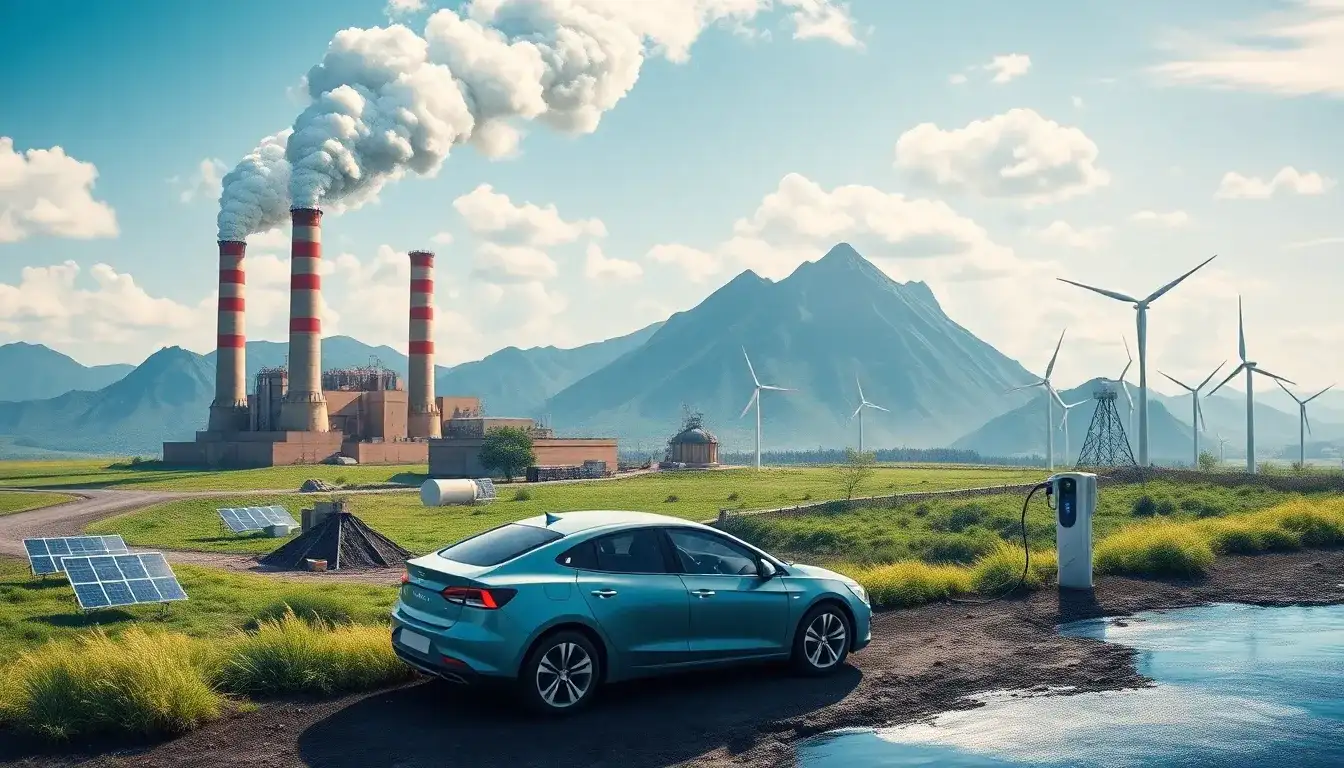
The production of electric vehicle (EV) batteries significantly impacts their overall emissions, contributing a substantial share of the total greenhouse gas (GHG) emissions associated with EVs. This impact comes primarily from the energy-intensive processes of mining, refining, and manufacturing the battery materials.
Key Points on Battery Production Emissions
- High CO2 Emissions During Production: Manufacturing a single electric car releases almost 4 tonnes of CO2, with a large portion attributed specifically to battery production. For example, producing a typical EV battery pack (around 75-80 kWh) emits over 7 tons of CO2 alone.
- Battery Production Footprint Compared to ICE Vehicles: An EV’s overall production footprint is roughly double that of a conventional internal combustion engine (ICE) vehicle, mainly due to the emissions embedded in battery production. Both vehicle types share similar emissions for body and chassis production (5 to 10 tons CO2e), but the battery adds significant additional emissions for EVs.
- Range of Emissions per kWh: Studies show that battery production emissions range widely between about 56 to 494 kilograms of CO2 per kilowatt-hour (kg CO2/kWh) of battery capacity. This variance depends heavily on the materials used, manufacturing processes, and energy sources.
- Energy-Intensive Manufacturing Steps: The production of battery components, such as the anode and cathode materials, requires high temperatures (800 to 1,000°C), typically achieved by burning fossil fuels like coal or natural gas, which increases carbon emissions.
- Material Sourcing and Energy Source Influence: The carbon footprint of battery production depends greatly on where and how the raw materials (nickel, cobalt, lithium, manganese, graphite) are mined and processed, as well as the energy sources powering manufacturing plants. For instance, about 77% of lithium-ion batteries are made in China, where coal is the primary energy source, resulting in higher emissions compared to using renewable energy.
- Long-Term Emission Payback: Although battery production emits substantial CO2 upfront, electric vehicles generally offset these emissions over their lifetime due to zero tailpipe emissions and the availability of cleaner electric grids relative to fossil fuel combustion.
Summary
The production of EV batteries accounts for up to 60% of an electric vehicle’s embedded greenhouse gas emissions, primarily due to the energy-intensive extraction and processing of materials, and the fossil fuel-powered manufacturing processes. The carbon intensity varies widely depending on the choice of raw materials, geographic sourcing, and the energy mix used in production. While this upfront emission burden is significant, it is typically outweighed over the vehicle’s operational life by the lower emissions from driving on electricity instead of gasoline or diesel.
In essence, reducing the carbon footprint of EV batteries hinges on cleaner energy use in manufacturing, improved battery chemistry, efficient material sourcing, and recycling innovations to lower the environmental impact across the battery life cycle.
Original article by NenPower, If reposted, please credit the source: https://nenpower.com/blog/how-does-the-production-of-electric-vehicle-batteries-impact-their-overall-emissions/

