

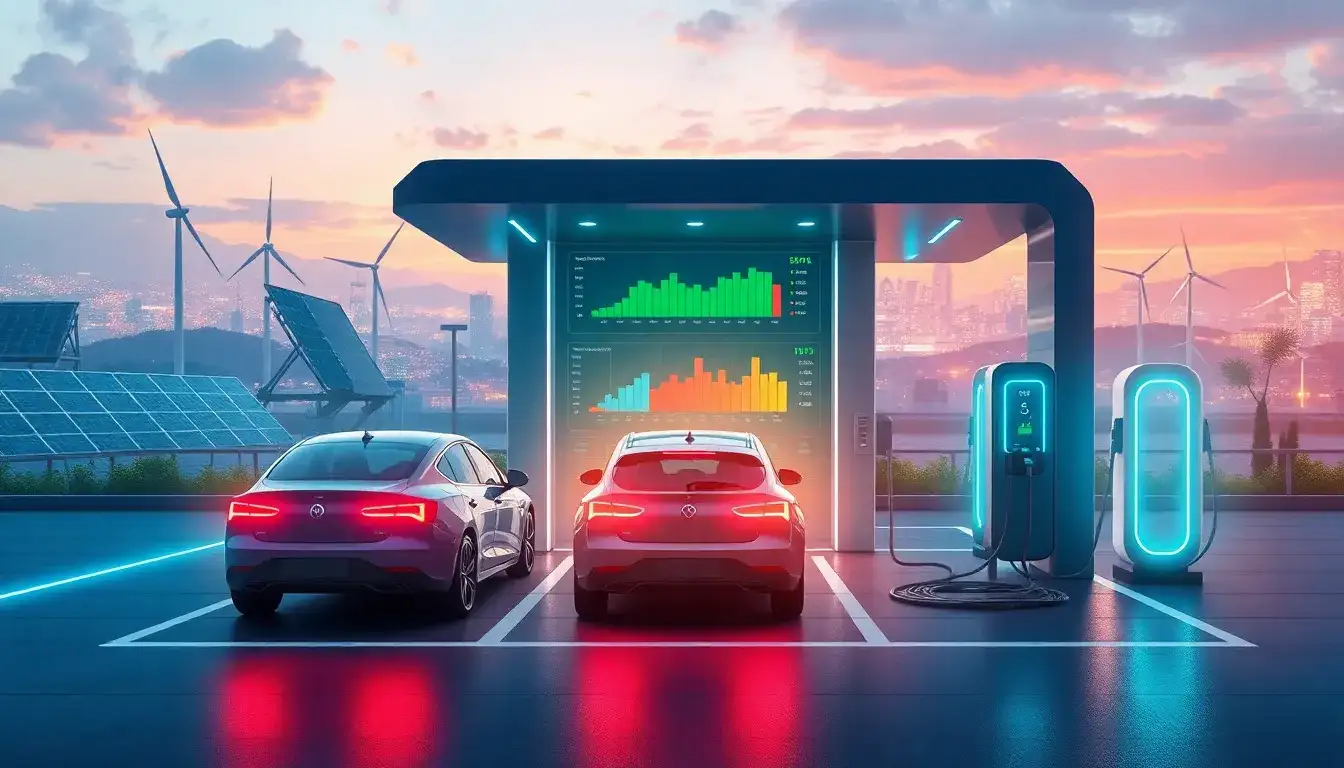
The power-to-energy ratio (E/P ratio, or energy capacity divided by power rating) critically determines the operational capabilities and use-case suitability of EV charging systems, particularly when energy storage is involved. Here's how it influences performance:
1. Charging Speed vs. Duration
- High power/low E/P ratio (e.g., 0.25 hours for 8 MWh/32 MW):
Enables ultra-fast charging (e.g., 150-350 kW DCFC) but limits sustained output duration.- Example: A 500 kWh battery with 600 kW output (E/P ≈ 0.83 hours) could deplete in <1 hour at full power, risking interruptions during peak demand.
- Ideal for short, high-demand charging sessions (e.g., highway corridors).
- Low power/high E/P ratio:
Supports longer charging sessions at lower power (e.g., overnight Level 2 charging), but is impractical for fast-charging needs.
2. Grid Dependency Mitigation
- Optimal E/P ratios in battery-buffered systems reduce grid strain:
A 500 kWh battery paired with 200 kW grid input (E/P=2.5 hours) can serve 150 kW ports for ~2.5 hours without grid support, cutting peak power needs by 50-80%. - Higher E/P ratios (e.g., 10:1) enable multi-hour backup, critical for grid-constrained areas.
3. Cost and Efficiency Trade-offs
- Low E/P systems (high power) incur higher upfront costs but improve utilization in high-traffic areas.
- High E/P systems prioritize energy capacity, lowering per-kWh costs for long-duration needs but risking underutilization if power is insufficient for modern EVs (e.g., 200-kWh truck batteries requiring 150+ kW charging).
4. Application-Specific Design
| Use Case | Recommended E/P | Rationale |
|---|---|---|
| Urban Fast-Charge Hubs | 1-2 hours | Balances fast charging (150 kW+) with 1-2 hours of peak demand coverage. |
| Highway Corridors | 0.5-1 hour | Prioritizes maximum power (350 kW) for short stops, even if grid-limited. |
| Workplace Charging | 3-6 hours | Matches 8-hour workdays with moderate 6-22 kW Level 2 charging. |
5. Safety and Utilization Risks
- Undersized E/P leads to rapid battery depletion, forcing charge throttling (e.g., 500 kWh battery at 600 kW output depletes in <1 hour).
- Oversized E/P increases costs without improving charging speed, reducing ROI in high-turnover sites.
Key Standards Evolution
- Megawatt Charging System (MCS): Upcoming 3.75 MW chargers (with E/P tailored for heavy-duty EVs) will require dynamice E/P management to handle 1,000+ kWh batteries efficiently.
- NREL guidelines emphasize First Hour and Design Day metrics to size storage, ensuring ports meet sudden demand surges without grid overload.
In summary, the power-to-energy ratio dictates whether a charging system prioritizes speed, duration, or cost—requiring careful alignment with user behavior, grid capacity, and vehicle technology trends.
Original article by NenPower, If reposted, please credit the source: https://nenpower.com/blog/how-does-the-power-to-energy-ratio-influence-the-performance-of-electric-vehicle-charging-systems/

