

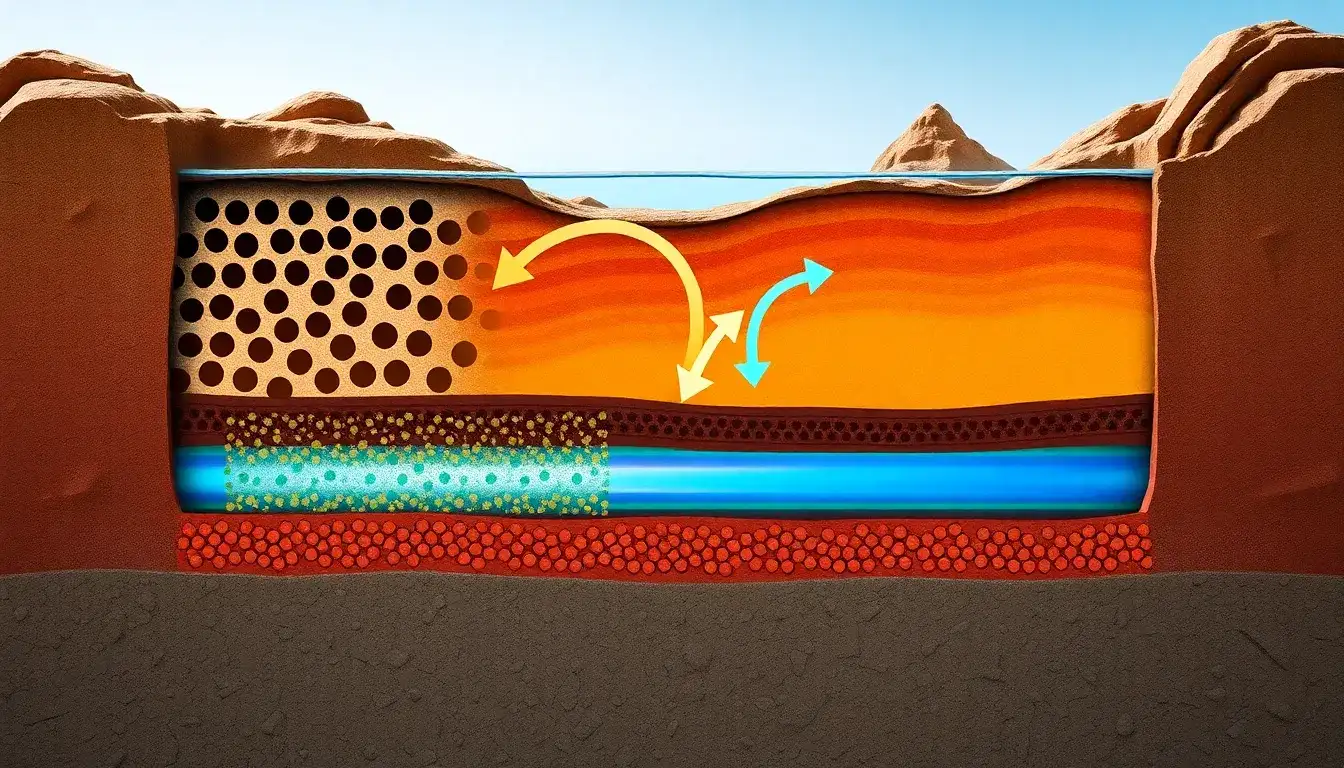
The porosity of depleted natural gas reservoirs plays a crucial role in their ability to store compressed air effectively. Porosity refers to the volume of void spaces or pores within the reservoir rock, which determines how much gas the rock can hold. In the context of depleted natural gas reservoirs, higher porosity means more available pore space to store compressed air or gas, as the gas can occupy these voids left after the original natural gas has been extracted.
Since natural gas reservoirs are typically composed of sedimentary rocks like sandstone and carbonate with inherently high porosity, they are well-suited for gas storage. The effectiveness of these reservoirs for compressed air energy storage (CAES) largely depends on this porosity, as it dictates the storage capacity. However, porosity alone is not sufficient; the reservoir also needs adequate permeability to allow the injected air to flow through the rock and an impermeable cap rock layer to trap the gas and prevent leakage.
In summary, the porosity of depleted natural gas reservoirs directly impacts their ability to store compressed air by determining the volume of gas they can contain. High porosity provides more storage space in the rock matrix, making these reservoirs viable candidates for compressed air storage, provided the reservoir also maintains sufficient permeability and cap rock integrity to retain the injected air under pressure.
Original article by NenPower, If reposted, please credit the source: https://nenpower.com/blog/how-does-the-porosity-of-depleted-natural-gas-reservoirs-impact-their-ability-to-store-compressed-air/

