

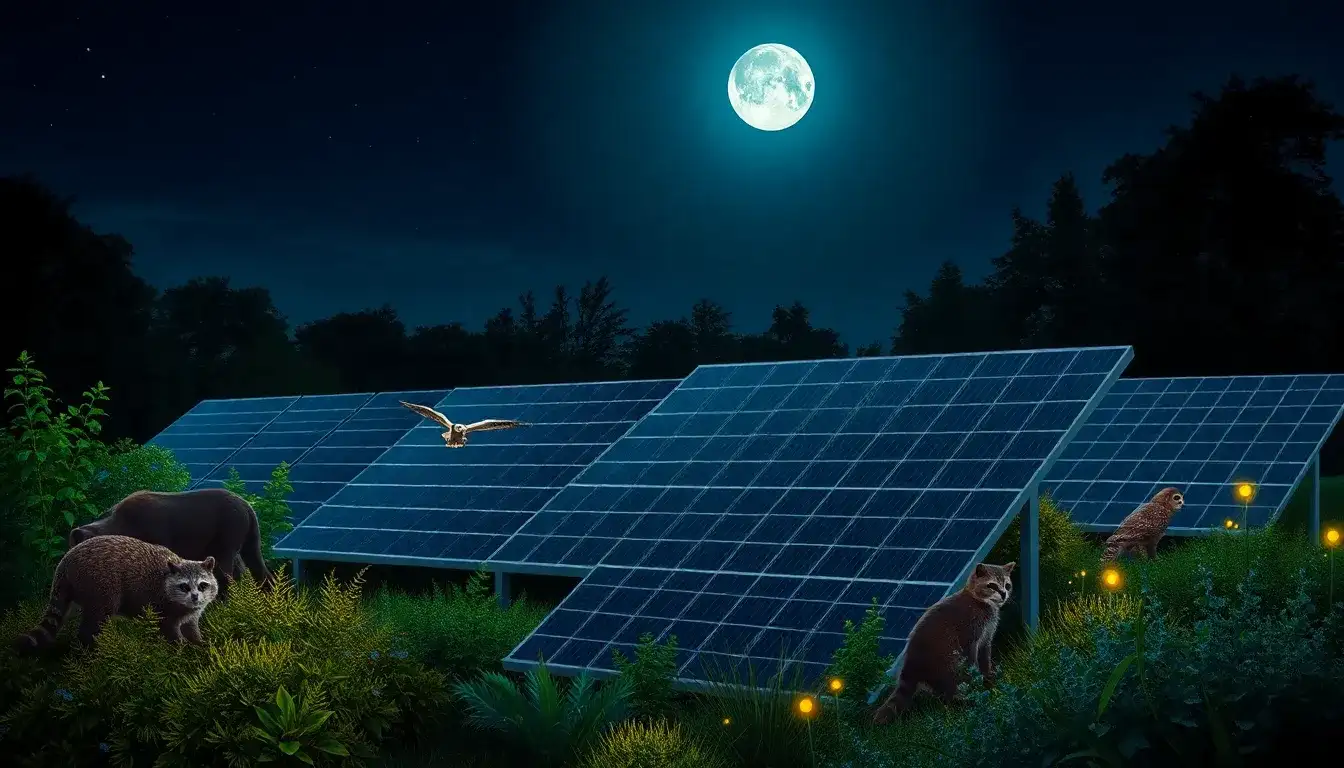
Impact on Nocturnal Species
- Light Pollution: Solar facilities can produce light pollution, either directly from operational lights or indirectly from reflective surfaces, which may alter the nocturnal environment. This can attract nocturnal animals, change their behavior, and disrupt natural migration schedules.
- Reflective Surfaces: Solar panels’ reflective surfaces can mimic water bodies, attracting waterbirds and other nocturnal avian species. This can lead to collisions or stranding, particularly for water-obligate species.
Mitigation Strategies
- Panel Orientation: Optimal orientation and tilt angles of solar panels can reduce reflective surfaces and minimize light pollution, thus tempering disturbances to nocturnal species like bats and night-flying insects.
- Habitat Integration: Installing panels on raised platforms creates shaded areas that can serve as habitats for wildlife, potentially helping nocturnal species by providing shelter.
- Technological Innovations: Designs that reduce reflectivity or mimic more natural environments can help nocturnal species avoid solar installations. Measures like bird diverters and wildlife fencing can also reduce collisions.
In summary, while solar panels can disrupt nocturnal species, careful placement and innovative design can mitigate these effects, promoting a more wildlife-friendly environment.
Original article by NenPower, If reposted, please credit the source: https://nenpower.com/blog/how-does-the-placement-of-solar-panels-affect-nocturnal-species/

