

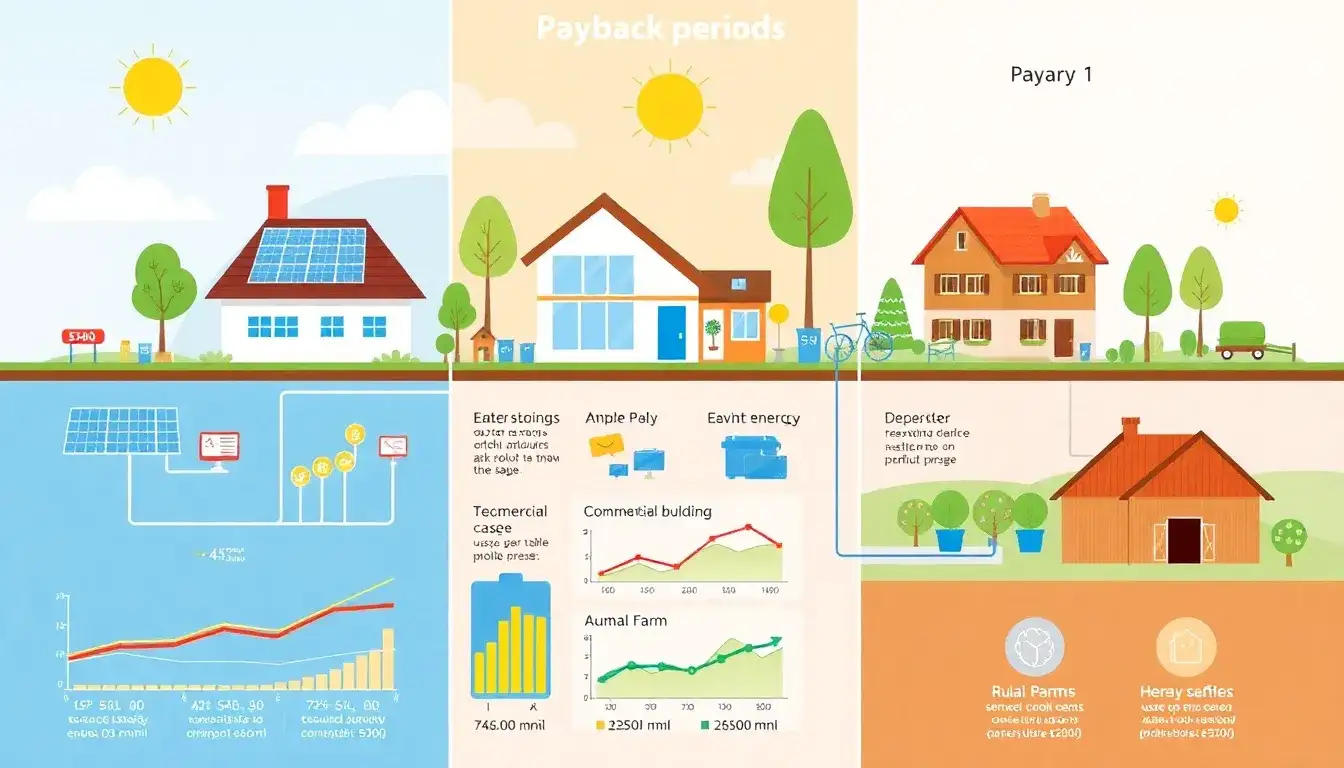
The payback period for solar batteries is influenced by several factors tied to usage scenarios. Here are some key considerations:
Factors Affecting Payback Period
- Energy Consumption and Generation:
- High Consumption Homes: If a home uses a lot of energy, a larger solar system may be required. This can increase upfront costs but also leads to higher savings, which can shorten the payback period if the system generates enough electricity.
- Efficient Energy Use: Using energy-efficient appliances and smart home systems can minimize reliance on the grid, further optimizing savings.
- Tariff Structures:
- Peak and Off-Peak Pricing: Being on tariffs that differentiate between peak and off-peak hours can optimize savings. For instance, storing energy in batteries for use during peak hours can significantly reduce bills.
- Export Tariffs: Tariffs that pay higher rates for exporting energy to the grid during peak times can enhance savings and shorten the payback period.
- Battery Capacity and Integration:
- Battery Size: A larger battery allows more energy to be stored for later use, which can increase self-consumption and reduce grid reliance, potentially shortening the payback period.
- System Compatibility: Using batteries compatible with specific tariffs can be crucial. For example, not all batteries can work with advanced tariffs, which might affect savings and payback period.
- Location and Incentives:
- Solar Irradiance: The amount of sunlight a system receives affects energy production and, consequently, savings. Regions with high sunlight have shorter payback periods.
- Local Incentives: Tax credits, rebates, or government incentives can significantly reduce upfront costs, thereby shortening the payback period.
- Technological Options:
- Inverter Types: The choice between string inverters, microinverters, or integrated systems like Tesla Powerwall can influence upfront costs and efficiency, impacting the payback period.
Calculating Payback Period
The payback period is typically calculated by dividing the total upfront cost (minus any incentives) by the annual savings realized from reduced electricity bills and earnings from exporting energy to the grid.
Example Calculation:
- Total Upfront Cost: $15,000
- Annual Savings: $1,500
- Payback Period: $15,000 / $1,500 = 10 years
However, if electricity rates rise, savings increase, and the payback period shortens.
In summary, the payback period for solar batteries varies with different usage scenarios due to factors like energy consumption patterns, tariff structures, and available incentives. Optimizing these factors can significantly reduce the payback period.
Original article by NenPower, If reposted, please credit the source: https://nenpower.com/blog/how-does-the-payback-period-for-solar-batteries-change-with-different-usage-scenarios/

