

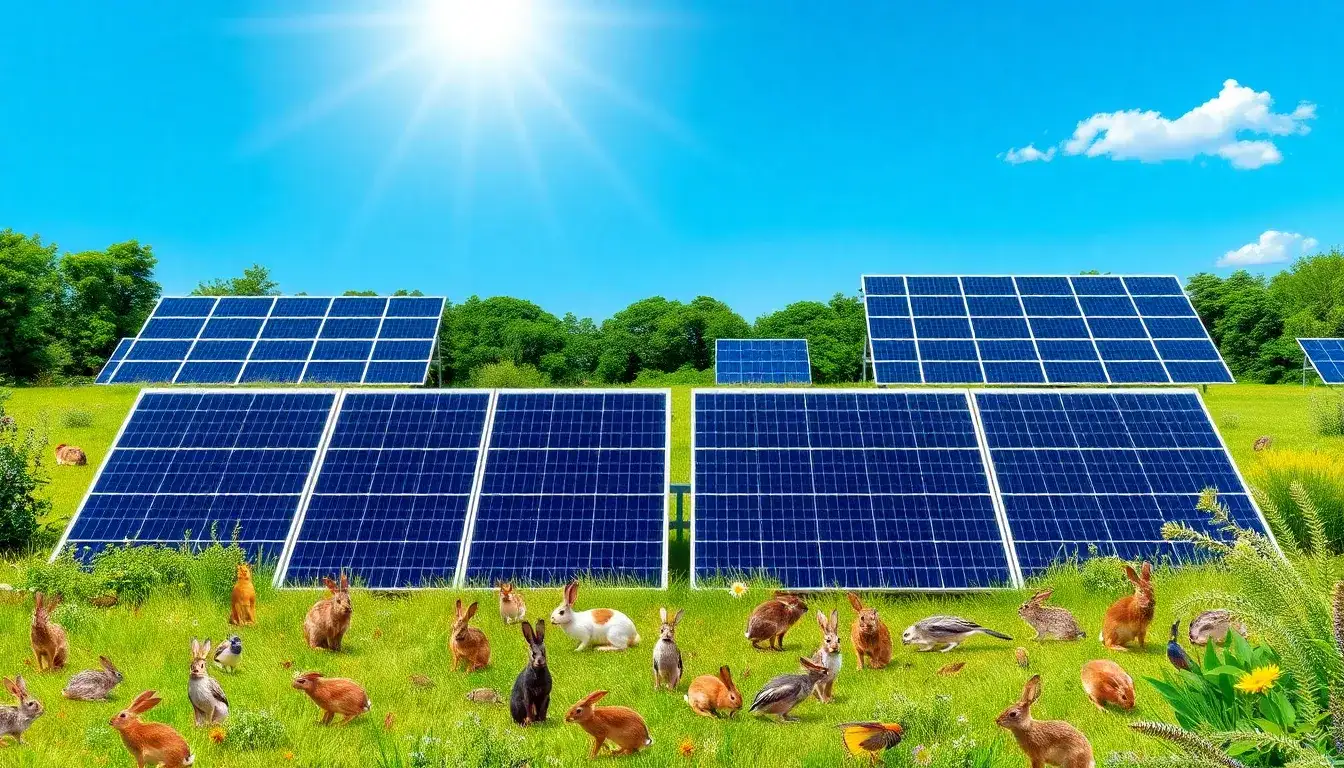
The orientation of solar panels significantly impacts wildlife, mainly through effects related to reflection, light pollution, and habitat disruption.
Reflective Surfaces and Wildlife Disruption
How solar panels are oriented affects the amount and direction of reflected sunlight. Panels poorly oriented or tilted can create intense reflective surfaces that may cause glare, which disrupts nocturnal species such as bats and night-flying insects by interfering with their natural behaviors. Furthermore, solar panel arrays can create an optical illusion of water, especially if oriented flat or in a way that maximizes reflection, which can attract water birds that mistake the panels for real bodies of water. These birds may attempt to land on the panels and suffer injury or become stranded, as they cannot take off from dry surfaces.
Light Pollution and Nocturnal Wildlife
The orientation and placement of solar panels influence light pollution levels around the installation. Improper orientation can increase light glare, adversely affecting night-time navigation, migration, and other critical behavioral cues for wildlife, including birds and insects. Wildlife-friendly designs seek to reduce reflective surfaces and light emissions through optimal orientation, helping to temper disruptions to nocturnal species.
Habitat Fragmentation and Animal Movement
Beyond the direct impact of panel orientation in terms of reflection and light, the physical placement of solar panels can fragment habitats. While orientation itself primarily affects solar capture and reflection, the overall site layout—which includes how panels are tilted and spaced—can create barriers to animal movement, reducing access to food, water, and shelter and fragmenting critical habitats.
Mitigation Through Orientation and Design
Innovative wildlife-friendly solar designs focus on orienting and tilting panels to reduce glare and reflective surfaces. For example, panels can be tilted at angles that minimize reflections visible to wildlife or oriented to avoid directing light into sensitive habitats. Additionally, designs might incorporate surfaces that break up reflections to help birds distinguish the panels from water.
In summary, the orientation of solar panels influences how much light they reflect and where that light goes, which can disrupt wildlife navigation, attract or confuse animals, and contribute to habitat fragmentation. Careful consideration and design of panel orientation can mitigate many negative impacts on wildlife, making solar energy development more compatible with ecological conservation goals.
Original article by NenPower, If reposted, please credit the source: https://nenpower.com/blog/how-does-the-orientation-of-solar-panels-impact-wildlife/

