

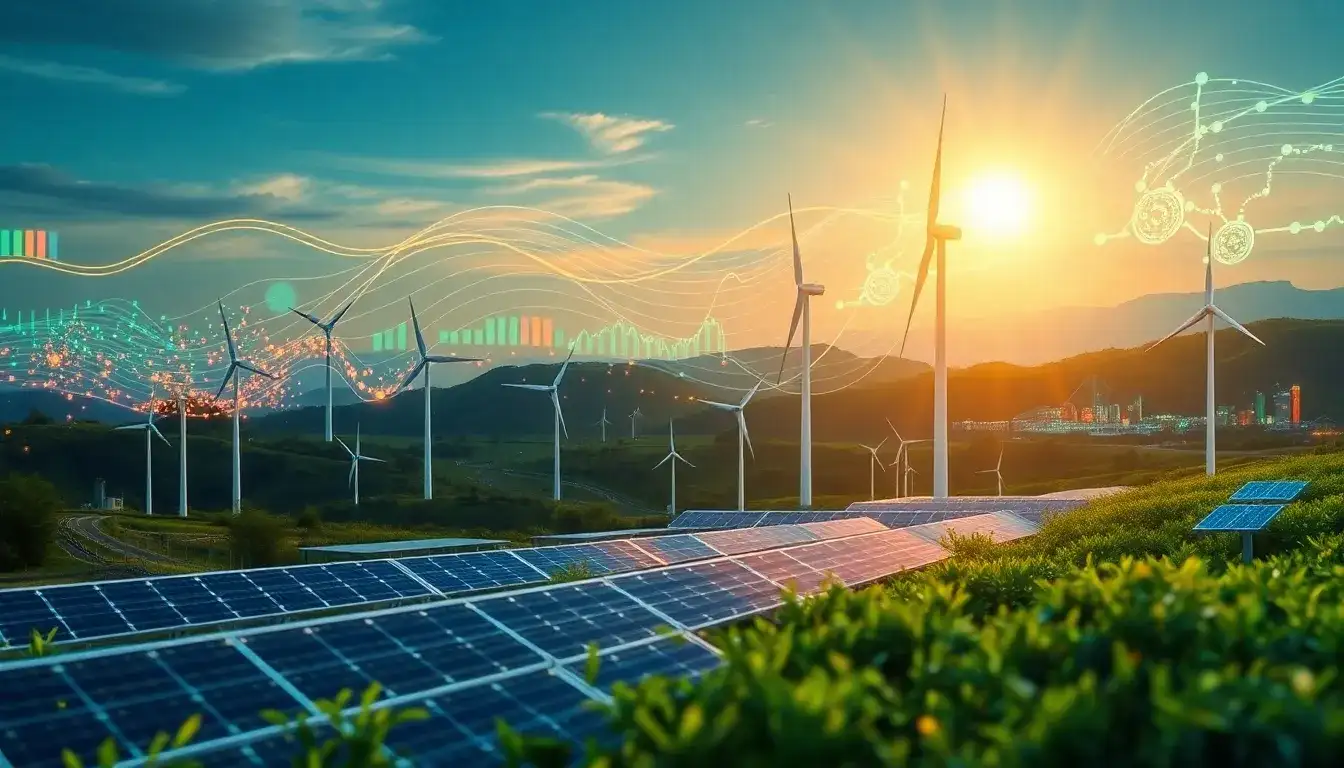
The modeling of fluctuations in renewable energy sources addresses several key challenges inherent to their variable and intermittent nature. Renewable energy, such as wind and solar, is stochastic and highly dependent on temporal factors like time of day, season, and weather conditions. Models therefore need to accurately represent these fluctuations to support utility planning, investment valuation, and system integration.
How Models Handle Fluctuations in Renewable Energy
- Representation of Stochastic Nature and Variability: Models capture renewable energy output as stochastic processes with inherent randomness, incorporating hourly and seasonal variability as well as spatial and temporal correlations. This allows the simulation of realistic generation patterns over time rather than static averages.
- Integration of Multiple Time Scales: Effective models combine short-term (hourly or sub-hourly) variability with long-term planning horizons to consider both operational challenges and strategic investment decisions. For example, variability and fluctuations are modeled hourly to reflect the fast changes in solar and wind generation, while also capturing seasonal patterns and annual trends.
- Use of Multiple Modeling Approaches Within a Framework: Because no single model can capture all aspects of renewable variability, integrated resource planning frameworks use a suite of models together. This allows capturing reliability impacts, economic valuation, and system dispatch under uncertainty comprehensively.
- Modeling Electricity Price Interactions: Since renewable output and spot electricity prices are correlated, state-of-the-art models incorporate how fluctuating generation affects and is affected by market prices. This includes features such as mean reversion, price spikes, and negative prices during periods of oversupply. Properly modeling these interactions is critical for accurate valuation of renewable projects.
- Decomposition of Renewable Projects into Operational Options: To handle intermittency in valuation, some models break down renewable energy projects into operational options that reflect real-world dispatchability and curtailment possibilities, enabling more efficient and realistic investment analysis.
- Improving Utility Planning Tools: Traditional utility planning models were not designed for renewables’ unique attributes. Recent advances enhance these models to account for variability and intermittency, such that renewable penetration can be increased without compromising system reliability.
In summary, renewable energy fluctuation modeling is achieved by combining stochastic representations of supply variability, incorporating multi-scale temporal dynamics, integrating electricity market price behaviors, and using versatile modeling frameworks that support both operational and investment decisions. This approach addresses the challenges posed by the uncertain and dynamic nature of renewable generation and supports its reliable and economic integration into power systems.
Original article by NenPower, If reposted, please credit the source: https://nenpower.com/blog/how-does-the-model-handle-fluctuations-in-renewable-energy-sources/

