

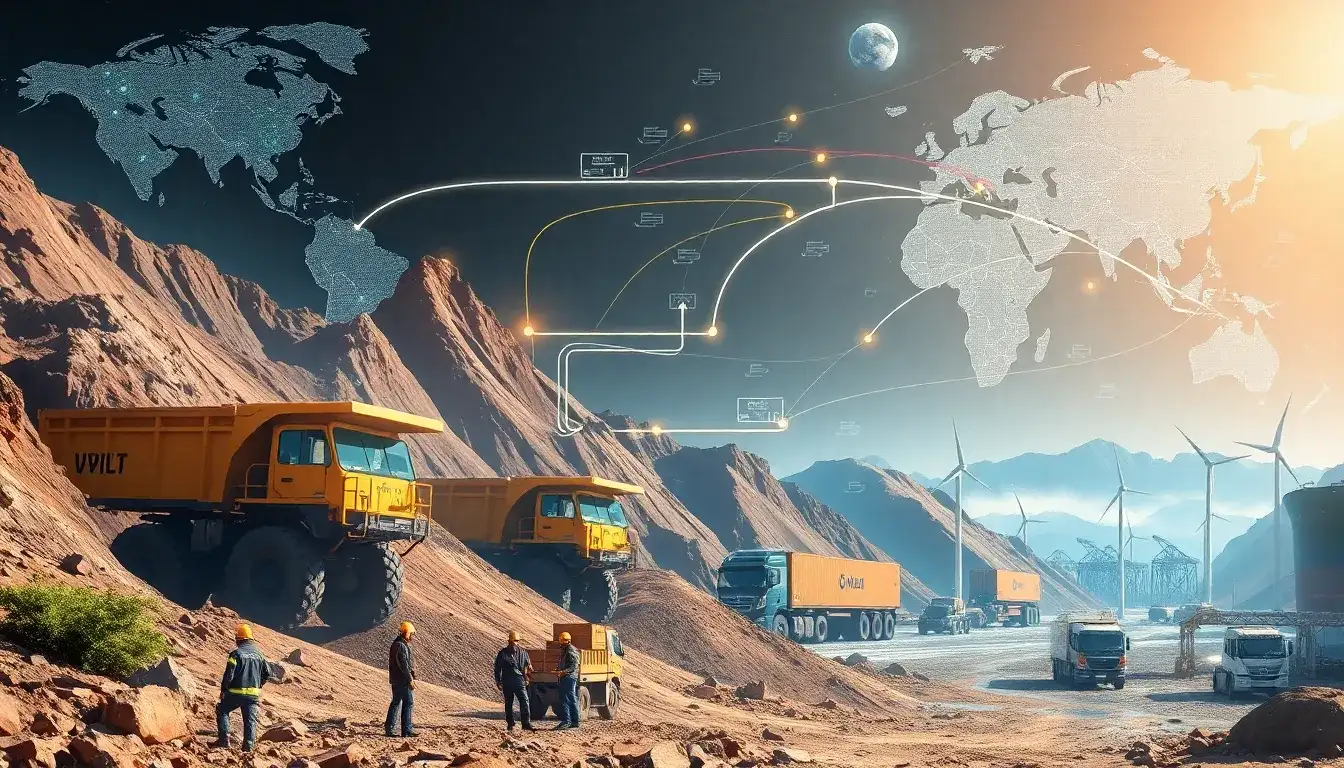
Raw Material Dependence and Bottlenecks
EV batteries rely heavily on these critical minerals, creating a concentrated upstream supply chain vulnerable to geopolitical risks, trade restrictions, and resource nationalism. Limited diversification in mining locations (e.g., cobalt in the Democratic Republic of Congo, lithium in Australia/Chile) heightens vulnerability to disruptions.
Price Volatility and Profitability Pressures
- Oversupply risks: Recent expansions in mining capacity (2023) led to lithium supply exceeding demand by over 10%, cobalt by 6.5%, and nickel by 8%, driving price drops.
- Margins for miners: Lower prices reduce profitability, jeopardizing future investments needed to meet projected demand growth.
Geopolitical and Market Dynamics
China’s dominance in mineral processing (e.g., refining lithium, cobalt) enables market influence, using surplus capacity to lower prices while controlling key supply chain nodes. This creates dependency for non-Chinese manufacturers and complicates efforts to build resilient, diversified supply chains.
Environmental and Sustainability Trade-offs
- Upstream emissions: Mining and refining contribute significantly to EVs’ early lifecycle emissions, though EVs offset this within two years of use.
- Sustainability goals: Decarbonizing mining operations and improving labor practices remain critical to meeting ESG standards, but cost pressures from low commodity prices may slow progress.
Future Supply Chain Resilience
The IEA emphasizes the need for accelerated mining and refining investments to avoid bottlenecks, particularly as EV demand grows 3-5x by 2030. Strategies include diversifying suppliers, recycling, and advancing alternative battery chemistries reducing cobalt/nickel reliance.
Original article by NenPower, If reposted, please credit the source: https://nenpower.com/blog/how-does-the-mining-of-battery-metals-for-evs-affect-global-supply-chains/

