

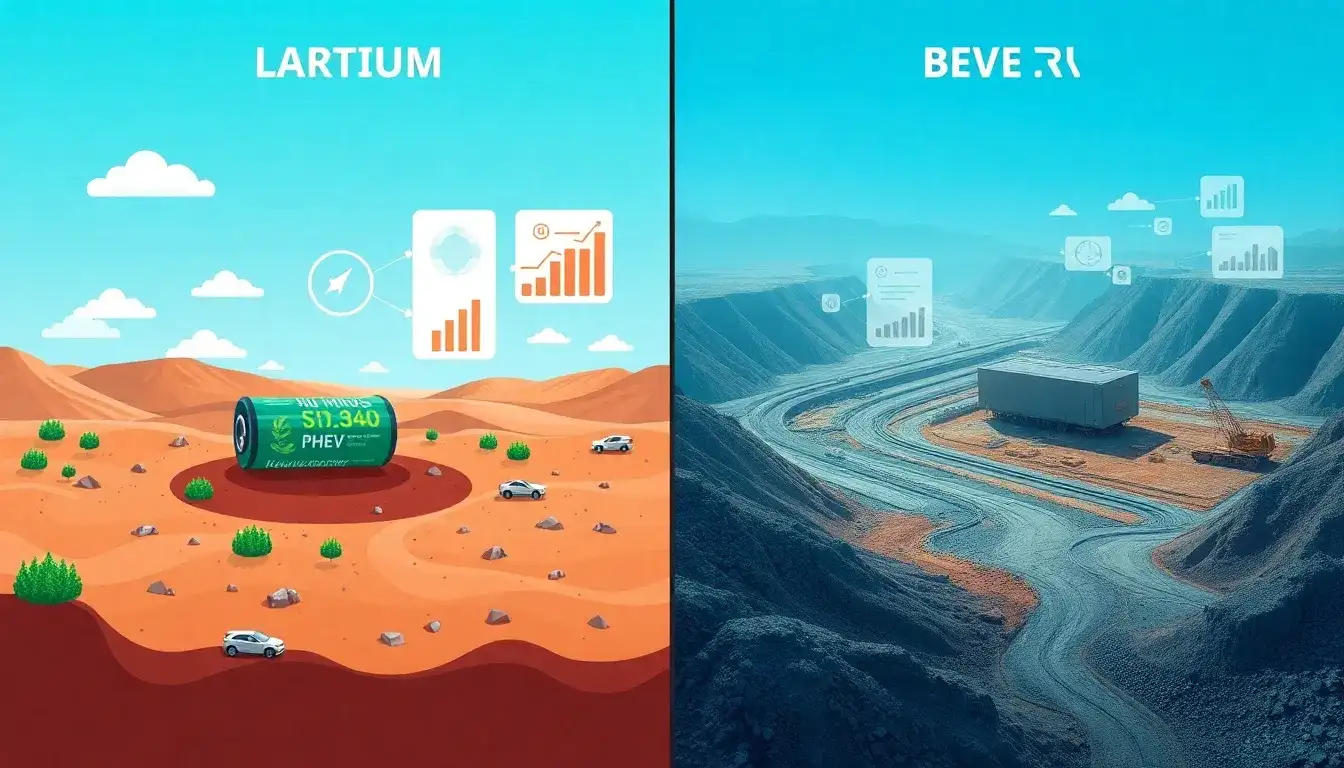
Here’s a concise comparison of mining footprints between PHEV and BEV batteries:
Size and Material Use
PHEVs have smaller batteries (typically 8-20 kWh) compared to BEVs (50-100+ kWh), requiring significantly fewer raw materials like lithium, cobalt, and nickel.
Mining Footprint
The reduced battery size directly translates to a lower mining footprint for PHEVs. While total global mineral demand isn’t an existential threat, material efficiency remains a key advantage for hybrids.
Carbon Impact
Though smaller batteries mean lower production emissions (60 kg CO₂ eq./kWh average for both), PHEVs’ overall mining footprint is proportionally reduced due to:
- Fewer battery cells requiring mining
- Lower material needs per vehicle
- Reduced critical mineral dependence compared to BEVs
Lifetime Balance
While BEVs benefit from zero tailpipe emissions, PHEVs achieve comparable lifetime emissions reductions (46% in the U.S.) with less upfront mineral use. This makes them particularly effective where grid cleanliness is moderate or battery production remains carbon-intensive.
Key Trade-Off
BEVs require 35,000-55,000 miles of driving to offset their higher production emissions against ICE vehicles, while PHEVs face no similar “carbon debt” from battery production. However, PHEV emissions depend on real-world charging behavior, which often falls short of ideal.
Original article by NenPower, If reposted, please credit the source: https://nenpower.com/blog/how-does-the-mining-footprint-of-smaller-phev-batteries-compare-to-larger-bev-batteries/

