

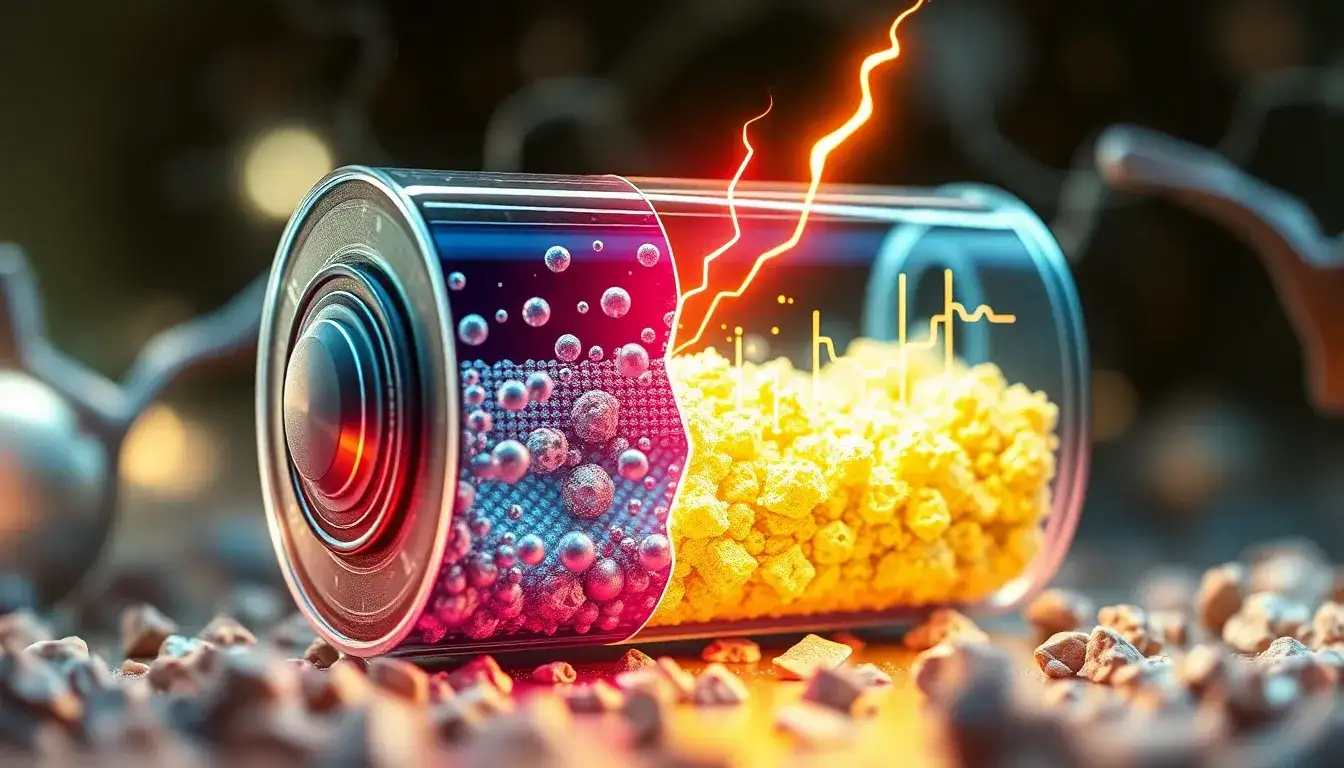
Material instability in lithium-sulfur (Li-S) batteries significantly affects their performance, primarily by causing short cycle life, reduced capacity retention, and safety concerns. This instability arises from key chemical and physical processes inherent to Li-S battery operation:
- Polysulfide shuttling effect: During battery cycling, elemental sulfur in the cathode reacts to form various polysulfide compounds (chains of sulfur atoms). Some of these polysulfides dissolve in the electrolyte and migrate (shuttle) between the cathode and the lithium metal anode. This shuttling leads to the loss of active sulfur material from the cathode because polysulfides deposit irreversibly on the anode side, reducing the amount of sulfur available for electrochemical reactions. The result is diminished battery capacity and shortened cycle life.
- Lithium metal instability: The lithium metal anode is highly reactive and prone to forming unstable and dendritic structures that pose safety hazards such as short circuits and flammability. This instability further compromises battery durability and safety.
- Electrolyte instability: The dissolution of polysulfides in the electrolyte not only causes active material loss but can also induce continuous side reactions that degrade the electrolyte over time, impacting overall cell stability.
The material instability manifests as:
- Poor cycle stability, often meaning the battery loses capacity rapidly over repeated charge-discharge cycles.
- Reduced electrochemical utilization of active materials due to irreversible polysulfide loss.
- Safety risks from lithium metal reactivity and flammable electrolytes.
To address these issues, researchers are developing strategies such as:
- Using electrolyte additives that form protective films to suppress polysulfide shuttling without consuming active materials excessively.
- Engineering cathodes with advanced materials like graphene-based composites to trap polysulfides and enhance conductivity.
- Stabilizing lithium metal and reducing electrolyte flammability to improve safety and longevity.
In summary, material instability in Li-S batteries—mainly involving polysulfide dissolution and lithium metal reactivity—reduces battery cycle life, lowers energy efficiency, and raises safety concerns, constraining their commercial viability despite their high theoretical energy density.
Original article by NenPower, If reposted, please credit the source: https://nenpower.com/blog/how-does-the-material-instability-in-lithium-sulfur-batteries-affect-their-performance/

